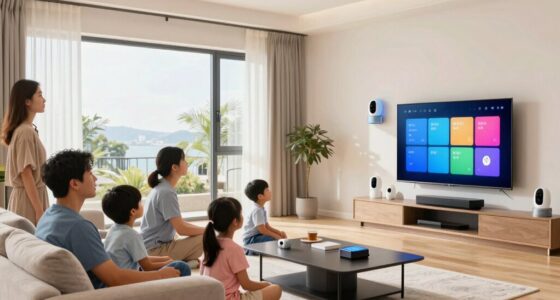

Your expectations for smart homes are rising quickly because you want devices that seamlessly work together for convenience, security, and energy efficiency. You desire quick control and smarter automation that adapts to your routines, while privacy concerns influence your choices. Compatibility issues and performance reliability also matter to you, prompting demand for better integration and real-time responses. If you stay informed, you’ll discover how industry advancements are shaping these growing expectations even further.

Get home appliances delivered free — and shop member deals
- Fast, free delivery on millions of items
- Access to Prime Big Deal Days deals on October 6–7
- Prime Video, Amazon Music and more included
Key Takeaways
- Increasing demand for seamless, integrated devices that offer convenience and easier control at users’ fingertips.
- Rising privacy concerns and data security risks influence consumer trust and expectations.
- Compatibility challenges and fragmentation create frustration, prompting higher standards for interoperability.
- Users expect faster, more reliable device performance with minimal lag or false triggers.
- The desire for intelligent, adaptive systems that predict needs and continuously improve drives rapid expectation growth.

As smart home technology becomes more advanced and accessible, your expectations for convenience, security, and energy efficiency are rising. You want devices that seamlessly work together, giving you control at your fingertips and making everyday tasks easier. However, this surge in expectations also brings some concerns. Privacy issues are at the forefront as you worry about how your data is collected, stored, and used. With so many devices connected to the internet, there’s a real risk of sensitive information being exposed or misused, which makes you more cautious about the smart home systems you choose.
Alongside privacy concerns, integration challenges play a significant role in shaping your expectations. You expect all your smart devices—lights, thermostats, security cameras, and voice assistants—to work harmoniously. But the reality often falls short. Different brands and platforms sometimes lack compatibility, forcing you to juggle multiple apps or settle for limited functionality. This fragmentation can lead to frustration, making you question whether the convenience is worth the hassle. As technology evolves rapidly, staying updated with integration standards becomes a challenge, and you may feel overwhelmed trying to keep everything synchronized. Additionally, the pace of innovation can sometimes outstrip your ability to adapt, further intensifying these integration issues. To bridge these gaps, manufacturers are increasingly adopting interoperability protocols, which can help create a more cohesive ecosystem. Staying informed about industry standards can also empower you to make smarter choices in selecting compatible devices.
Integration issues and device incompatibility often disrupt smart home harmony, leading to frustration and skepticism about convenience.
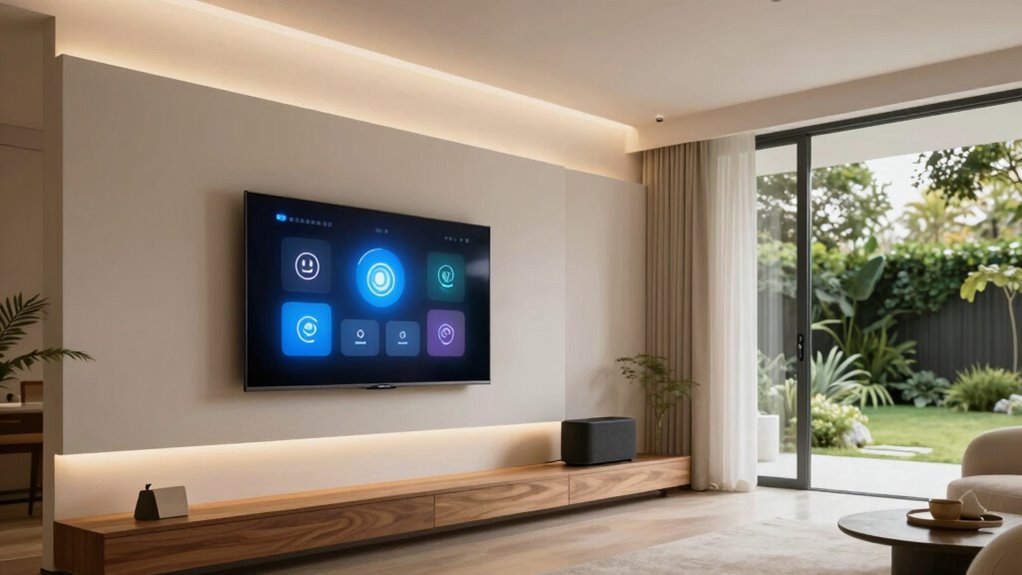
Your desire for a smooth, unified smart home experience drives your expectations higher. You envision a home where voice commands turn on lights, adjust the temperature, and lock doors without a second thought. Yet, inconsistent performance, lag, or false triggers can hinder this vision. These issues shape your perception of smart home reliability and influence whether you’ll invest more into these systems. Meanwhile, as new devices flood the market, your expectations also increase for better security features, faster response times, and more intuitive interfaces that don’t require a tech degree to operate.
Furthermore, your expectations extend beyond basic functionality. You want your smart home to adapt to your routines, predict your needs, and provide real-time insights. This means demanding not just automation but also intelligent responses that improve your lifestyle. As a result, you anticipate continuous improvements and updates that refine your experience, which raises the bar for manufacturers and developers. They must address the balancing act of delivering advanced features while ensuring user privacy and seamless integration—something that’s easier said than done. Keeping up with technological advancements is crucial for manufacturers to meet these rising expectations and stay competitive.
Frequently Asked Questions
How Do Smart Homes Impact Overall Energy Consumption?
Smart homes profoundly reduce your overall energy consumption by improving energy efficiency and optimizing consumption patterns. When you use smart devices, you can better control heating, cooling, and lighting, avoiding waste. These systems learn your habits, adjusting settings automatically to save energy without sacrificing comfort. As a result, your smart home helps lower utility bills and environmental impact, making your household more sustainable and energy-conscious.
Are Smart Home Devices Secure From Hacking Threats?
Smart home devices can be secure from hacking threats if you prioritize device encryption and stay vigilant about hacking vulnerabilities. Always update firmware regularly, choose devices with strong encryption, and use complex passwords. While no system is entirely foolproof, these steps considerably reduce risks. By staying proactive and informed, you can enjoy the convenience of smart technology without compromising your home’s security.
What’s the Average Cost of Upgrading to a Smart Home?
Upgrading your home is like planting a garden; costs vary based on your desired features. On average, it’s around $1,500 to $3,000, but adding voice control and personalized automation can increase expenses. You’ll spend more if you opt for high-end devices or extensive system integration. Think of it as nurturing your smart garden—investing wisely guarantees your home blooms with convenience and tailored comfort.
How User-Friendly Are Most Smart Home Systems for Seniors?
Most smart home systems are designed with senior accessibility and ease of use in mind, making them fairly user-friendly for older adults. You’ll find features like simple interfaces, voice commands, and customizable controls that cater to seniors’ needs. While some systems may have a learning curve initially, many brands now prioritize intuitive design, ensuring seniors can comfortably manage their smart devices and enjoy enhanced independence at home.
Can Smart Homes Integrate With Existing Non-Smart Appliances?
Think of your smart home as a translator, bridging the gap between new tech and your existing appliances. Yes, smart homes can integrate with non-smart appliances, often through voice control devices or smart plugs. However, compatibility issues can arise—like trying to fit puzzle pieces that don’t quite match. You might need adapters or hubs to guarantee everything works smoothly, turning your home into a seamless, intelligent space.
Conclusion
As smart home technology advances, your expectations will only grow. Some believe that seamless automation and perfect security are just around the corner, making your life easier and safer. While these promises are exciting, they often come with hurdles like privacy concerns and technical glitches. But if history teaches us anything, it’s that innovation steadily pushes boundaries. So, stay hopeful—your smarter, more connected home is on its way, even if it takes a little time to get there.
Fall yard work Picks
leaf blowers
As an affiliate, we earn on qualifying purchases.