
TL;DR

Get home appliances delivered free with Prime
- Fast, free delivery on millions of items
- Prime Video, Amazon Music and more included
- Member-only deals all year
Lane oil patterns significantly impact professional bowling strategy, with recent technological advances allowing precise control and analysis. This development is vital for top bowlers and enthusiasts aiming to improve performance.
Recent technological advances in lane oiling machinery are transforming professional bowling, enabling precise application and analysis of oil patterns that directly influence game strategy and performance.
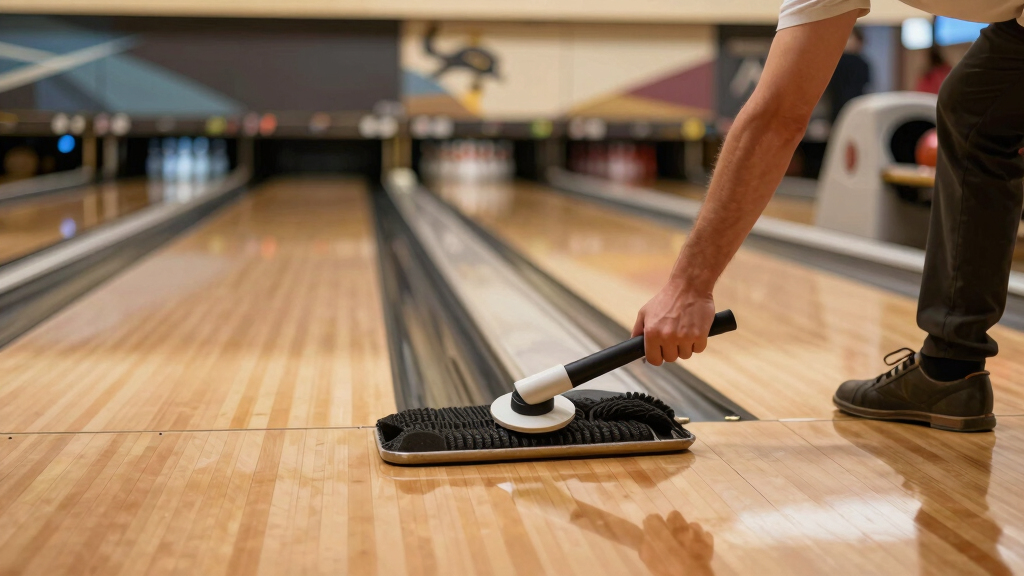
Major companies like Kegel and Brunswick have developed automated, battery-powered lane oiling machines that can apply oil with high precision, mimicking a process similar to inkjet printing. These machines have evolved from manual or semi-automated systems to fully automated, no-human-intervention models, allowing for consistent and customizable oil patterns across lanes.
In professional bowling, oil patterns are more complex than in amateur settings, with ratios as low as 1:1 in some cases, creating more challenging conditions that require precise shot placement, speed, and ball revolutions. The patterns can vary in length and distribution, adding strategic layers to the game. Top bowlers like EJ Tackett emphasize that understanding and reacting to these patterns is now one of the most critical skills for success.
Why It Matters
This technological shift impacts both professional and amateur bowling by increasing the importance of lane conditions in game outcomes. For pros, it means more sophisticated game planning and adaptability, potentially widening the skill gap. For amateurs, awareness of lane oiling can improve game strategy and consistency, especially as lane conditions become more variable and complex.
As an affiliate, we earn on qualifying purchases.
Background
Historically, lane oil was primarily for protecting the lane surface, with inconsistent application techniques leading to unpredictable conditions. In the 1980s, innovations by John Davis and companies like Kegel introduced standardized, automated oiling technology that has since advanced significantly. Today’s machines can precisely control oil patterns, which are integral to professional game strategy, unlike the more uniform and less predictable conditions in amateur bowling.
“All of us as professionals are playing a guessing game by watching our bowling ball go down the lane. And trying to figure out where the oil has moved from and has moved to.”
— EJ Tackett
“It looks almost like an inkjet printer. You have this head that travels back and forth, and it applies that stream on whatever board we want to apply it to.”
— Chris Chartrand, CEO of Kegel
automatic bowling lane oil pattern applicator
As an affiliate, we earn on qualifying purchases.
As an affiliate, we earn on qualifying purchases.
What Remains Unclear
It is not yet clear how widespread the adoption of these advanced oiling systems will become outside professional leagues, or how much they will influence amateur game strategies in the future. Additionally, the full impact of these technological improvements on game fairness and standardization remains under discussion.
professional bowling lane oil pattern kit
As an affiliate, we earn on qualifying purchases.
As an affiliate, we earn on qualifying purchases.
What’s Next
Next steps include further technological refinement of lane oiling machines, potential standardization of patterns across leagues, and increased education for bowlers on how lane conditions influence game outcomes. Ongoing research will also assess how these innovations affect the competitive landscape.
As an affiliate, we earn on qualifying purchases.
Key Questions
How do lane oil patterns affect my game as an amateur?
Lane oil patterns influence ball movement and accuracy. Understanding how oil is distributed can help you choose the right ball and shot placement, improving consistency and scores.
Are professional lane oil patterns different from those at local alleys?
Yes. Pros use more complex, lower ratio patterns that require precise adjustments, whereas amateur lanes typically have simpler, higher ratio patterns with more predictable conditions.
What technological advances are used in lane oiling today?
Modern systems include automated, battery-powered machines that apply oil with high precision, resembling inkjet printers, and can adjust patterns in real-time without human intervention.
Will these advances make bowling more fair or more challenging?
It could do both. Increased precision can lead to fairer conditions in professional play, but the complexity of patterns might make the game more challenging for amateurs to master.
Cold & flu season Picks
humidifiers
As an affiliate, we earn on qualifying purchases.