Finding a high-quality espresso machine for small counters can be challenging, especially when space is limited but coffee quality remains a priority. The Breville Bambino stands out as the best overall choice for compact spaces thanks to its small footprint and reliable performance. For those seeking a more advanced experience, the Breville Barista Touch offers touchscreen controls and customization, though it takes up slightly more space. The main tradeoffs in this category involve balancing size with features—smaller models may lack certain advanced capabilities or durability found in larger units. Continue reading for a detailed comparison to help you pick the best fit for your small kitchen.

Get home appliances delivered free with Prime
- Fast, free delivery on millions of items
- Prime Video, Amazon Music and more included
- Member-only deals all year
Complete the kit


Key Takeaways
- The Breville Bambino offers the best blend of size and performance, ideal for tight spaces without sacrificing espresso quality.
- The Barista Touch provides touchscreen control and customization, but its larger size may be a concern for very small counters.
- Budget-conscious buyers should consider the Bambino Plus, which balances affordability with useful features, though it lacks some advanced options.
- The Barista Express Impress introduces semi-automatic features that appeal to enthusiasts, but it is slightly larger than entry-level models.
- All models share a common tradeoff: more compact units often have fewer advanced features or longer heat-up times compared to larger counterparts.
| Breville Bambino Espresso Machine, Brushed Stainless Steel | 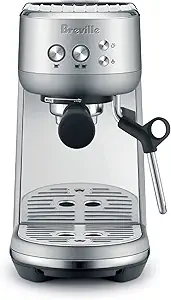 | Best Compact Entry-Level Model | Power: 1560 Watts | Voltage: 110-120 Volts | Included Accessories: 1 and 2 cup filter baskets, milk jug, portafilter, tamper, cleaning tools | VIEW ON AMAZON | See Our Full Breakdown |
| Breville Bambino Plus Espresso Machine, Brushed Stainless Steel |  | Best for Automatic Milk Texturing & Speed | Power: 1560 Watts | Voltage: 110-120 Volts | Dimensions: 7.7 inches wide | VIEW ON AMAZON | See Our Full Breakdown |
| Breville BES880BTR Barista Touch Espresso Machine, Black Truffle |  | Best for Customization & Touchscreen Control | Power: 1680 Watts | Voltage: 110-120V | Water Tank Capacity: 67 oz | VIEW ON AMAZON | See Our Full Breakdown |
| Breville BES876BSS Barista Express Impress, Brushed Stainless Steel |  | Best for Manual Control with Built-In Grinder | Weight: Not specified | Capacity: 250g bean hopper, 2L water tank | Grind Settings: 25 | VIEW ON AMAZON | See Our Full Breakdown |
| Breville BES870BTR Barista Express Espresso Machine, Black Truffle |  | Best for Manual Brewing & Built-in Grinder | Capacity: 1/2 lb Bean Hopper | Water Tank: 67 oz | Power: 1600 Watts | VIEW ON AMAZON | See Our Full Breakdown |
| Breville BES878BSS Barista Pro Espresso Machine, Brushed Stainless Steel |  | Best Overall for Small Counters | Capacity: 1/2 lb Bean Hopper | Water Tank: 67 oz | Power: 1680 Watts | VIEW ON AMAZON | See Our Full Breakdown |
| breville espresso machines for small counters guide 3 | Power | Voltage | Warranty | Included Accessories |
|---|---|---|---|---|
| Breville Bambino Espresso Mach | 1560 Watts | 110-120 Volts | 1 Year Limited | 1 and 2 cup filter baskets, milk jug, portafilter, tamper, cleaning tools |
| Breville Bambino Plus Espresso | 1560 Watts | 110-120 Volts | 2 Years | — |
| Breville BES880BTR Barista Tou | 1680 Watts | 110-120V | 2 Years | — |
| Breville BES876BSS Barista Exp | — | — | — | Portafilter, milk jug, filters, cleaning tablets |
| Breville BES870BTR Barista Exp | 1600 Watts | 120 Volts | — | — |
| Breville BES878BSS Barista Pro | 1680 Watts | 120 Volts | 2 Years | Single & Dual Wall Filter Baskets, Razor Dose Trimming Tool, Milk Jug, Cleaning Kit, Water Filter |
More Details on Our Top Picks
Breville Bambino Espresso Machine, Brushed Stainless Steel
The Breville Bambino stands out for its ultra-compact size, making it perfect for small kitchens where space is at a premium. Its ThermoJet rapid heat-up system ensures quick readiness, surpassing many similar models that take longer to warm up. While it offers a simple interface and automatic steam wand, it lacks a built-in grinder and requires manual operation for perfect shots, which might challenge beginners. Compared with the Bambino Plus, it doesn’t include automatic milk texturing, but its lower price and straightforward design make it more accessible for those just starting out. Tradeoffs include limited features—it’s best suited for home users who prioritize size and simplicity over advanced customization.Pros:- Compact design fits small kitchens and countertops
- Fast heat-up with ThermoJet system
- Precise temperature control for better extraction
Cons:- No built-in grinder, requiring pre-ground beans
- Limited to basic home use, not suitable for high-volume brewing
Best for: Small-space dwellers seeking an affordable, straightforward espresso machine for occasional use
Not ideal for: Serious espresso enthusiasts who want advanced features like automatic milk texturing or a built-in grinder
- Power:1560 Watts
- Voltage:110-120 Volts
- Included Accessories:1 and 2 cup filter baskets, milk jug, portafilter, tamper, cleaning tools
- Brew Settings:1 or 2 cups, hot water, steam
- Warranty:1 Year Limited
Our verdict“This machine is ideal for those with limited space who want a simple, quick espresso setup without bells and whistles.”
Breville Bambino Plus Espresso Machine, Brushed Stainless Steel
The Breville Bambino Plus improves on the original Bambino by adding an automatic milk frothing system, making it a better choice for users who want café-quality milk drinks with minimal effort. Its fast heat-up and precise temperature control match or exceed the Bambino, but the Plus offers a more streamlined experience for those focused on milk-based beverages. Compared to the Barista Express models, it sacrifices some manual flexibility for automation, which can be a plus or minus depending on your skill level. Its sleek, compact profile makes it ideal for small kitchens, but the price point can be higher without offering much in the way of customization. Best suited for home baristas who prioritize convenience and speed over manual control.Pros:- Automatic milk texturing for barista-quality microfoam
- Fast heat-up with ThermoJet system
- Compact, space-efficient design
Cons:- Price is higher than basic models
- Limited customization options for brew settings
Best for: Home users who want quick, automatic microfoam for lattes and cappuccinos without complex setup
Not ideal for: Espresso aficionados seeking full manual control or those on a tight budget
- Power:1560 Watts
- Voltage:110-120 Volts
- Dimensions:7.7 inches wide
- Water Pressure:19 grams portafilter, low pressure pre-infusion
- Warranty:2 Years
Our verdict“This pick is perfect for those who desire quick, automated milk frothing and a sleek countertop footprint.”
Breville BES880BTR Barista Touch Espresso Machine, Black Truffle
The Breville BES880BTR Barista Touch takes automation further with a touchscreen interface and extensive preset options, making it ideal for users who want to personalize their coffee experience. Its automatic microfoam milk texturing and customizable brew settings set it apart from simpler machines like the Bambino Plus, but it comes at a significantly higher cost. The inclusion of accessories and pre-programmed recipes appeals to those who want variety without complex manual adjustments. However, the high price and learning curve mean it’s less suitable for users new to espresso or those on a budget. Compared to the Barista Express models, it offers more automation but less hands-on control.Pros:- Touchscreen interface with customizable profiles
- Automatic microfoam milk texturing
- Includes accessories and pre-programmed settings
Cons:- High price may be prohibitive
- Complex features require a learning curve
Best for: Tech-savvy home baristas who value customization and user-friendly touchscreen controls
Not ideal for: Beginners who prefer straightforward machines or users with limited counter space due to its larger footprint
- Power:1680 Watts
- Voltage:110-120V
- Water Tank Capacity:67 oz
- Bean Hopper Capacity:0.5 lbs
- Display:Touchscreen
- Warranty:2 Years
Our verdict“This machine suits those who want a highly customizable, easy-to-use espresso experience with modern features.”
Breville BES876BSS Barista Express Impress, Brushed Stainless Steel
The Barista Express Impress offers a compelling balance of manual control and convenience, thanks to its integrated conical burr grinder and manual microfoam wand. It is better suited for users who want to dial in their espresso shots while still benefiting from automation features like the auto-correct dosing system. Compared to the BES870, the Impress emphasizes user control with its assisted tamping and grinder with multiple settings, but it lacks the larger water capacity found in some other models. Its setup can be complex for newcomers, but experienced home baristas will appreciate the ability to fine-tune every shot. It’s a good choice for those who want a semi-automatic with a built-in grinder without the premium price of fully manual machines.Pros:- Built-in conical burr grinder with 25 adjustable settings
- Manual microfoam wand for latte art
- Auto-dosing system for consistent shots
Cons:- Setup may be complex for first-time users
- Limited water capacity could require frequent refilling
Best for: Home baristas who want manual shot control and integrated grinding in a compact design
Not ideal for: Beginners who prefer plug-and-play machines or those with limited counter space for larger units
- Weight:Not specified
- Capacity:250g bean hopper, 2L water tank
- Grind Settings:25
- Included Accessories:Portafilter, milk jug, filters, cleaning tablets
- Heating System:ThermoCoil with PID control
Our verdict“Ideal for enthusiasts seeking a semi-automatic machine with integrated grinder and manual control features.”
Breville BES870BTR Barista Express Espresso Machine, Black Truffle
The Barista Express remains a favorite for its manual control and built-in grinder, offering a more traditional espresso-making experience. Its PID temperature control and powerful steam wand make it easy to craft high-quality beverages, but its relatively high price can put it out of reach for casual users. Compared to the BES876, it offers similar core features but with a more straightforward layout, though it might require more hands-on effort. Its compact size suits small kitchens, but the learning curve may challenge newcomers. It’s best for users who want a balance of manual skill and convenience, prioritizing shot quality over automation.Pros:- Built-in conical burr grinder for fresh grounds
- Precise PID temperature control
- Powerful steam wand for microfoam
Cons:- Higher price point for home espresso machines
- Learning curve for new users
Best for: Experienced home baristas who want manual control with a built-in grinder and consistent results
Not ideal for: Total beginners seeking a simple, fully automatic machine or users with very limited space
- Capacity:1/2 lb Bean Hopper
- Water Tank:67 oz
- Power:1600 Watts
- Voltage:120 Volts
- Included:Portafilter, tamper, milk jug, cleaning tools
Our verdict“Best suited for those who want hands-on control with reliable results in a compact form.”
Breville BES878BSS Barista Pro Espresso Machine, Brushed Stainless Steel
The Breville BES878BSS Barista Pro stands out for its combination of speed, precision, and user-friendly features, making it ideal for those who want professional-quality espresso without sacrificing countertop space. Unlike the Breville Bambino Plus, which offers simplicity but fewer customization options, the Barista Pro provides a high level of control through its digital interface and precise temperature regulation, resulting in consistently better extraction. Its rapid heat-up time with ThermoJet technology is a game-changer for busy mornings, though this efficiency comes with a higher power draw and a steeper learning curve for absolute beginners. The included accessories streamline maintenance and help new users get started, but more experienced home baristas will appreciate its advanced features. Overall, this machine offers a compelling balance between performance and compactness, though at a premium price point.
Pros:- Fast heat-up time with ThermoJet system for quick mornings
- Precise temperature control enhances espresso quality
- Includes essential accessories for convenience
- User-friendly LCD interface supports customization
Cons:- Relatively high power consumption may impact energy costs
- Complexity could overwhelm complete novices
- Price is higher compared to simpler models
Best for: Home baristas who want professional-quality espresso in a compact footprint and are comfortable with some learning curve
Not ideal for: Absolute beginners seeking the simplest possible setup or those with very limited electrical capacity
- Capacity:1/2 lb Bean Hopper
- Water Tank:67 oz
- Power:1680 Watts
- Voltage:120 Volts
- Included Accessories:Single & Dual Wall Filter Baskets, Razor Dose Trimming Tool, Milk Jug, Cleaning Kit, Water Filter
- Warranty:2 Years
Our verdict“This machine suits serious home brewers who prioritize speed, control, and quality in a small space, accepting a higher price and learning curve.”

How We Picked
These espresso machines were evaluated based on space efficiency, build quality, ease of use, feature set, and value for small kitchens. Priority was given to models that fit comfortably on limited counter space while still delivering quality espresso and user-friendly operation. We also considered durability, maintenance needs, and customer feedback to determine which models strike the best balance between performance and size. The ranking reflects a combination of space-saving design, feature availability, and overall value, helping buyers find the most suitable options for small counters without sacrificing too much in functionality.Factors to Consider When Choosing Breville Espresso Machines For Small Counters Guide 3
Choosing a Breville espresso machine for small counters requires balancing several key factors. It’s important to consider size, but also how the machine’s features align with your brewing needs and skill level. Smaller models may save space but could lack certain advanced functions or durability. Understanding these tradeoffs helps prevent buying a machine that underdelivers or doesn’t fit your routine. The following sections highlight the main considerations to keep in mind when selecting a compact espresso machine for your kitchen.Size and Footprint
Space is the most obvious factor for small counters. Look for machines with a compact footprint that can slip into tight spots without crowding other appliances. Measure your available space carefully and compare it with the machine’s dimensions, including height, width, and depth. Remember that some models have protruding parts like cup trays or steam wands, which may require extra clearance. Choosing a slim, streamlined design helps maximize your kitchen’s efficiency without compromising on performance.
Ease of Use and Setup
For small kitchens, a machine that’s quick to set up and simple to operate is essential. Avoid overly complex models with many manual controls if space and convenience are priorities. Features like automatic milk frothing or one-touch brewing can save valuable time and reduce clutter. Consider whether the machine requires frequent maintenance or cleaning, as this can impact usability in a compact space. A straightforward interface often means fewer mistakes and faster coffee prep.
Features and Customization
While compact machines tend to have fewer features, look for models that include key functionalities relevant to your coffee style. For example, a good pressure gauge, adjustable grind size, or pre-infusion options can enhance brewing quality. Be aware that some advanced features add bulk or complexity, which may not suit a small space. Decide which features are must-haves versus nice-to-have to avoid overpaying for extras you won’t use.
Build Quality and Durability
Small size doesn’t mean sacrificing durability. Check the materials—stainless steel components tend to last longer than plastic ones. A well-built machine reduces the risk of breakdowns and the need for frequent repairs, which is especially important in a compact kitchen where space for replacements may be limited. Read customer reviews to gauge long-term reliability and maintenance ease, ensuring your investment pays off over time.
Value and Price
Price points vary widely among small espresso machines. While it’s tempting to opt for the cheapest option, investing a bit more can unlock better performance, durability, and features. Balance your budget with your priorities—if you’re a casual drinker, a modestly priced model might suffice. For serious enthusiasts, spending more on a machine with advanced controls and robust build quality is often justified. Consider long-term costs, including maintenance and accessories, to find the best overall value.
Frequently Asked Questions
Will a smaller espresso machine compromise on espresso quality?
Not necessarily. Many compact models from Breville are designed with high-quality brewing components that deliver excellent espresso. The key is to choose a model with good pressure control, consistent heating, and quality accessories. While smaller machines may lack some advanced features or larger boilers, they can still produce café-quality espresso if configured correctly and used properly. Always check user reviews and specifications to ensure the model meets your quality expectations.
Are compact espresso machines suitable for beginners?
Yes, many small Breville models are suitable for beginners due to their intuitive controls and straightforward operation. Machines like the Bambino Plus feature automatic milk frothing and one-touch brewing, making them easier to master. However, some semi-automatic units require more user input and understanding of espresso fundamentals. If you’re new to espresso making, look for models with clear instructions, automatic features, and simple interfaces to build confidence and produce consistent results.
How much counter space do I need for a small Breville espresso machine?
The ideal amount of space depends on the specific model, but generally, you should allow at least 6-8 inches of clearance in width and depth for safe operation and cleaning. Taller models like the Barista Touch may need more vertical space for the steam wand and cup clearance. Always measure your available area carefully and compare with the machine’s dimensions, including any protruding parts, to avoid overcrowding and ensure comfortable use.
Do small espresso machines take longer to heat up?
Many compact models feature rapid heat-up times, often within 3-5 minutes, due to their smaller boilers. However, some budget-friendly or less advanced models may take slightly longer or require pre-heating routines. Faster heat-up times mean less waiting before brewing, which is especially important in small kitchens where convenience matters. Always check the manufacturer’s specifications for heat-up duration to ensure it matches your routine needs.
What maintenance do small Breville espresso machines require?
Maintenance for small Breville models is generally straightforward, involving regular descaling, cleaning the drip tray, and rinsing the brew head. Some units have automatic cleaning cycles or indicators to simplify upkeep. Because space is limited, it’s helpful to choose models with easily accessible components for cleaning. Consistent maintenance prolongs the machine’s lifespan and maintains optimal performance, so follow the manufacturer’s recommended routines carefully.
Conclusion
For buyers prioritizing overall performance in a small space, the Breville Bambino offers a compelling combination of size, ease of use, and quality, making it ideal for most small kitchens. Those seeking a more feature-rich experience with touchscreen controls should consider the Barista Touch, despite its slightly larger footprint. Budget-conscious users will find the Bambino Plus provides excellent value without sacrificing core functionality. Beginners will benefit from models with automatic features, while espresso enthusiasts might lean toward semi-automatic options like the Barista Express Impress. Ultimately, your choice should match your space constraints, skill level, and desired features to ensure satisfying coffee experiences every day.