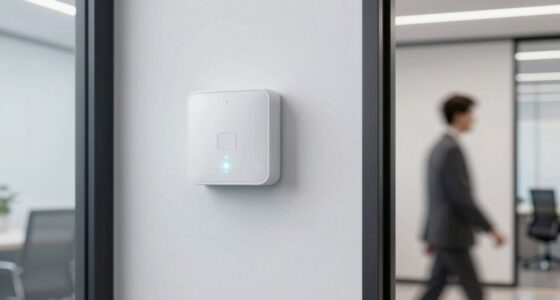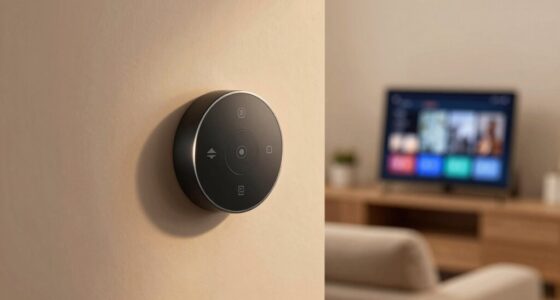

Mesh networks help your large smart home stay reliable by providing consistent, high-speed Wi-Fi coverage everywhere. Multiple nodes work together to eliminate dead zones and prevent lag, even when many devices are connected. Their dynamic routing ensures data takes the fastest, clearest path. Plus, they support various smart devices and keep your network secure with advanced features. Want to learn how to optimize your setup and stay connected seamlessly? Keep exploring for more tips.

Get home appliances delivered free with Prime
- Fast, free delivery on millions of items
- Prime Video, Amazon Music and more included
- Member-only deals all year
Key Takeaways
- Mesh networks provide extensive Wi-Fi coverage, eliminating dead zones in large smart homes.
- Multiple nodes ensure consistent connectivity, supporting numerous devices simultaneously.
- Dynamic routing optimizes data paths for faster, more reliable internet performance.
- Built-in security features protect connected devices and data from cyber threats.
- Scalable infrastructure allows easy addition of new smart devices without compromising network stability.

In large smart homes, maintaining a reliable and seamless internet connection can be challenging, especially as the number of connected devices increases. That’s where mesh networks come into play. Unlike traditional routers that rely on a single point of connection, mesh systems use multiple nodes that work together to blanket your entire home with strong Wi-Fi signals. This setup guarantees you don’t experience dead zones or lag, even when multiple devices are streaming, gaming, or controlling smart appliances simultaneously. With a mesh network, you’re less likely to face interruptions because the system dynamically routes data through the clearest, fastest path available. This adaptability keeps your smart home running smoothly, regardless of how many devices you add or where they are located. Additionally, mesh networks are designed to support a broad range of smart home devices, ensuring compatibility and optimal performance across your connected ecosystem. Device compatibility is another key benefit. Mesh networks are designed to support a broad range of smart home devices, from security cameras to voice assistants, without sacrificing performance. Modern systems are built to be compatible with various standards and protocols, making it easier for you to integrate new gadgets. You won’t have to worry about whether your smart locks or thermostats will work seamlessly with your network—most mesh systems are engineered to accommodate the diverse devices in your home. Plus, they often include user-friendly apps that simplify setup and management, so you can keep everything connected and functioning properly without advanced technical knowledge. Moreover, wireless security features, such as WPA3 encryption, are an essential aspect of protecting your large smart home. Mesh networks often feature robust security protocols, such as WPA3 encryption, to protect your data and prevent unauthorized access. Because the network is spread across multiple nodes, it’s harder for intruders to compromise the entire system. Many mesh systems include built-in firewalls and automatic updates to patch vulnerabilities, keeping your devices and personal information safe. Implementing security features within your mesh network further enhances protection, ensuring your smart home remains resilient against cyber threats. A reliable network infrastructure is crucial for maintaining the integrity of your smart home environment, especially with numerous connected devices. Ensuring your network scalability is sufficient to accommodate future device additions is also vital for long-term performance. This level of security is essential given the number of connected devices in a smart home, each of which could be a potential entry point for cyber threats. By choosing a mesh system that prioritizes wireless security, you gain peace of mind knowing your smart home ecosystem is safeguarded.
best mesh Wi-Fi system for large smart homes
As an affiliate, we earn on qualifying purchases.
As an affiliate, we earn on qualifying purchases.
Frequently Asked Questions
How Long Does It Take to Set up a Mesh Network?
Setting up a mesh network usually takes about 15 to 30 minutes, depending on your home’s size and layout. You’ll start by placing the main router and connecting it to your modem, then add satellite nodes throughout your house. As you do this, the system automatically optimizes wireless coverage and signal strength, ensuring reliable connections for all your smart devices. The process is straightforward and designed to enhance your home’s overall Wi-Fi experience quickly.
Can Mesh Networks Support All Smart Home Devices Simultaneously?
Did you know that a typical smart home has over 20 connected devices? Yes, and a mesh network can support them all simultaneously. It offers excellent device compatibility and network scalability, allowing you to add more devices without losing performance. With a mesh network, your smart home remains reliable, even as you expand your device ecosystem. You won’t have to worry about dropped connections or slowdowns, no matter how many gadgets you connect.
What Is the Average Cost of a Mesh Network System?
A typical mesh network system costs between $200 and $500, depending on the brand and coverage size. When doing a cost comparison, consider the benefits of fewer dead zones and better reliability for your smart home devices. Installation challenges are usually minimal, as most systems are user-friendly and come with step-by-step guides. Investing in a good mesh network can save you money and frustration in the long run.
How Does a Mesh Network Improve Security for Smart Homes?
A mesh network improves your smart home’s security by using wireless encryption to protect your data across all devices. It also supports device isolation, which limits each device’s access to others, reducing the risk if one gets compromised. This setup helps prevent unauthorized access, keeps your network safer, and guarantees your smart home remains reliable and secure, even as more devices connect.
Are There Any Drawbacks to Using Mesh Networks in Large Homes?
Imagine a bustling city where roads connect every neighborhood. In large homes, mesh networks can face traffic jams from wireless interference, slowing data flow. Plus, if some devices aren’t compatible, it’s like trying to fit a square peg in a round hole—causing gaps in connectivity. These drawbacks mean you might need extra planning or upgrades to keep your smart home running smoothly and reliably.
mesh network router with security features
As an affiliate, we earn on qualifying purchases.
As an affiliate, we earn on qualifying purchases.
Conclusion
As you upgrade your smart home, it’s no coincidence that mesh networks often become the unsung hero. They seamlessly connect all your devices, ensuring reliable coverage where you need it most—often in the places you least expect. With a mesh system, you might find yourself pleasantly surprised how effortlessly your smart home stays connected, even when you think all hope is lost. Sometimes, the best solutions are the ones you didn’t see coming.
Wi-Fi mesh nodes for smart home devices
As an affiliate, we earn on qualifying purchases.
As an affiliate, we earn on qualifying purchases.
As an affiliate, we earn on qualifying purchases.
Fall Picks
fall essentials
As an affiliate, we earn on qualifying purchases.