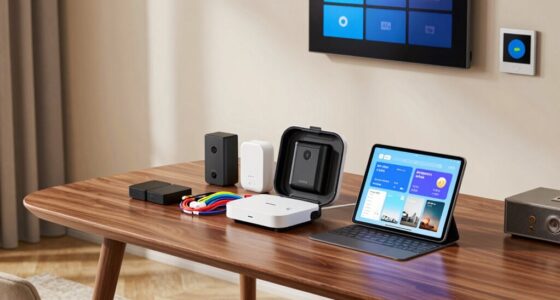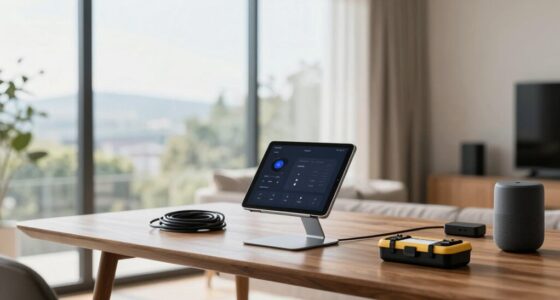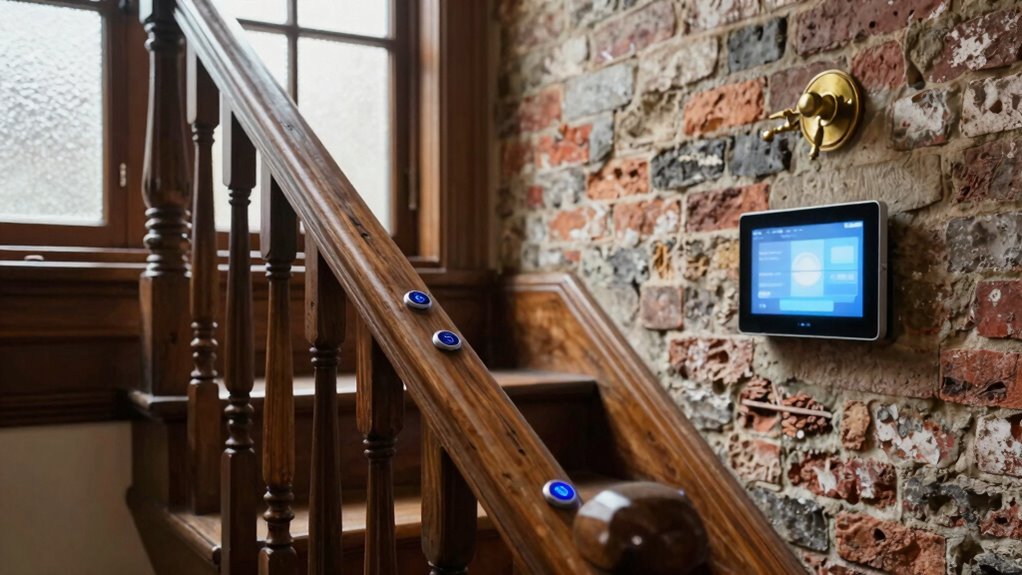

When building a smart home in an older house, prioritize upgrading your electrical system to handle modern devices and guarantee reliable power. Focus on improving wireless connectivity by strengthening your Wi-Fi with a central router and range extenders to avoid dead spots. Opt for easy-to-install, compatible devices that can grow with your needs, and plan your infrastructure carefully. Keep these essentials in mind, and you’ll set a strong foundation for a seamless, future-proof smart home.

Get home appliances delivered free with Prime
- Fast, free delivery on millions of items
- Prime Video, Amazon Music and more included
- Member-only deals all year
Key Takeaways
- Upgrade the electrical system to handle the increased power demands of smart devices.
- Ensure strong, reliable Wi-Fi coverage throughout the home with proper router placement and possible extenders.
- Use surge-protected outlets and centralized power sources for safe and efficient energy management.
- Choose compatible, easy-to-install smart devices that integrate seamlessly with existing systems.
- Plan for future scalability by building a solid, flexible infrastructure for easy expansion.
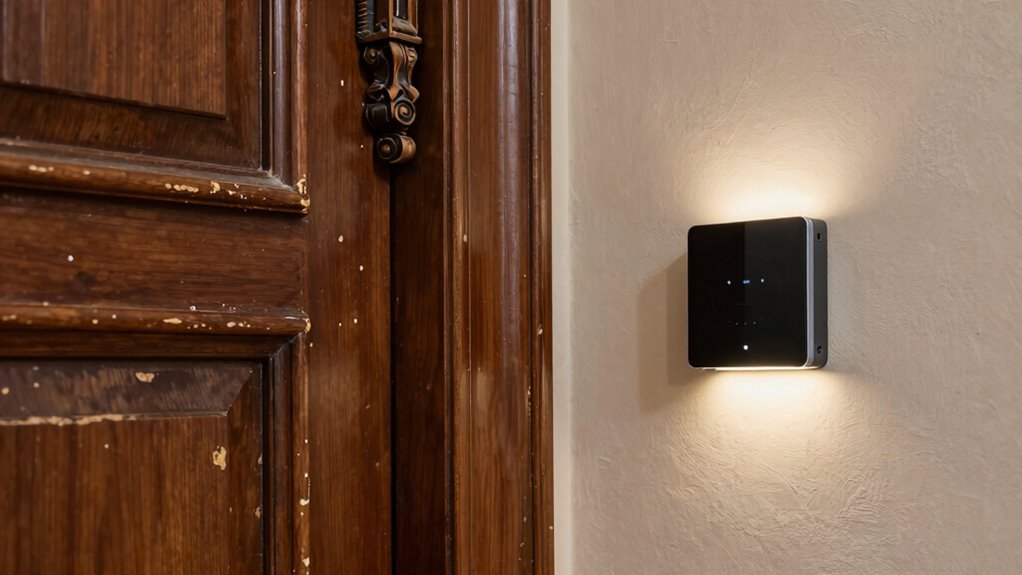
Transforming an older house into a smart home can be both exciting and overwhelming, especially if you’re unsure where to start. The first step is to focus on establishing dependable wireless connectivity. Older homes often have thick walls or outdated wiring that can interfere with Wi-Fi signals. You’ll want to evaluate your current internet setup and consider upgrading your router or adding range extenders to guarantee seamless coverage throughout your home. A strong, stable wireless network is the backbone of any smart home system because it connects all your devices, from security cameras to voice assistants. Without dependable connectivity, your devices can lag, disconnect, or malfunction, defeating the purpose of a smart home. Prioritizing wireless connectivity means placing your router centrally, avoiding physical obstructions, and choosing devices compatible with your network standards.
Next, think about power management. Many older homes weren’t built with the electrical capacity needed for modern smart devices. You might find that your existing wiring can’t support the number of smart gadgets you want to install, especially if you plan on integrating smart lighting, thermostats, or security systems. To avoid overloads or frequent tripped breakers, you should evaluate your electrical system and upgrade it if necessary. Smart devices are often low-power, but their cumulative load can be significant, so proper power management is vital. Installing smart outlets or power strips with surge protection can help manage energy use and prevent electrical issues. Additionally, consider centralizing your power sources for easier control and monitoring, which is especially beneficial in an older house where wiring might be inconsistent. Ensuring your electrical system is suitable for smart technology may involve assessing your electrical capacity, which is crucial for a reliable setup. Taking into account power consumption is also essential to prevent future issues and optimize energy efficiency. Being aware of your energy infrastructure can further assist in planning a scalable smart home setup that adapts to your evolving needs.
Beyond connectivity and power, you’ll want to think about ease of installation and future scalability. With wireless connectivity, you can often avoid invasive wiring projects, making your upgrades less disruptive. Look for devices that can be easily integrated into your existing setup and that are compatible with your preferred smart home platform. As you plan, keep in mind that a good foundation—reliable network and sound electrical setup—sets the stage for smoother expansion down the line. This approach saves you time, money, and frustration, guaranteeing that your smart home functions efficiently and reliably.
Wi-Fi range extender for smart home
As an affiliate, we earn on qualifying purchases.
As an affiliate, we earn on qualifying purchases.
Frequently Asked Questions
How Much Does Smart Home Installation Typically Cost in Older Houses?
Smart home installation in older houses usually costs between $2,000 and $10,000, depending on your system’s complexity. You’ll want to focus on energy efficiency upgrades and aesthetic integration to guarantee seamless operation and appearance. Budget considerations include smart thermostats, lighting, and security. Investing wisely in these areas can make your home more comfortable, energy-efficient, and visually appealing, all while fitting your budget.
Are Wireless Systems Better Than Wired for Older Homes?
Wireless systems are often better for older homes because of their flexibility and ease of installation, offering wireless advantages like avoiding invasive wiring and accommodating structural limitations. However, wired systems provide superior reliability and consistent performance, which might be vital for security or automation. You should weigh these factors based on your home’s layout and your priorities—if you want quick upgrades and fewer disruptions, go wireless; for dependability, choose wired.
Can Smart Devices Be Integrated With Existing Home Wiring?
Yes, smart devices can often be integrated with your existing home wiring, but it depends on device compatibility and the extent of wiring modifications needed. Some smart systems work seamlessly with current wiring, avoiding costly upgrades. However, you might need minor wiring modifications for maximum performance or device compatibility. Consulting a professional ensures your smart devices will integrate smoothly, making your older house smarter without unnecessary hassle or expense.
What Are the Best Security Options for Smart Homes in Older Houses?
For your older house, opt for smart security systems with robust encryption to protect your privacy. Choose devices with features like two-factor authentication and secure cloud storage. Position cameras and sensors strategically to cover vulnerable areas while maintaining privacy. Regularly update firmware to patch vulnerabilities. By prioritizing smart security with strong privacy measures, you guarantee your home stays safe without compromising your personal data.
How Do I Ensure Compatibility With Existing Home Infrastructure?
You can’t afford to ignore compatibility—it’s the backbone of your smart home! Start by evaluating your legacy wiring, noting any outdated or incompatible systems. Plan infrastructure upgrades where necessary, such as replacing old wiring or adding new outlets, to ensure seamless integration. Use universal hubs and wireless devices that work with your existing setup, making smart tech feel like it was built for your house from day one, no matter its age.
As an affiliate, we earn on qualifying purchases.
Conclusion
As you weave smart technology into your aging home, think of it as planting seeds for a brighter, more efficient future. Prioritize what truly matters—security, comfort, and convenience—and watch your house transform into a symphony of modern harmony. With each upgrade, you’re turning your old house into a storybook of innovation, where every chapter is written with smart solutions that make everyday living feel like a warm embrace. Embrace the journey—your home’s next chapter awaits.
As an affiliate, we earn on qualifying purchases.
As an affiliate, we earn on qualifying purchases.
NFL season / tailgating Picks
team gear
As an affiliate, we earn on qualifying purchases.