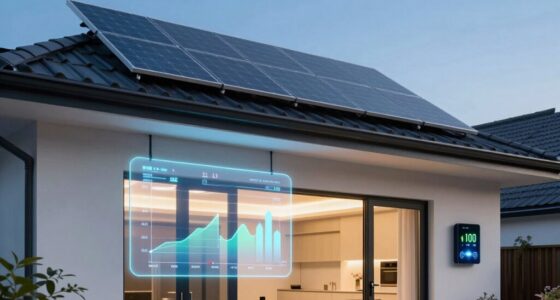
AI can help you use your solar energy more efficiently by analyzing your consumption and solar production patterns, optimizing when to charge or discharge batteries, and balancing energy flow with the grid. It learns from your habits and weather forecasts to make proactive adjustments, reducing costs and increasing self-sufficiency. It also monitors your system to prevent issues and maximize performance. If you’re curious, uncover how these smart solutions can transform your energy use and savings.

Get home appliances delivered free — and shop member deals
- Fast, free delivery on millions of items
- Access to Prime Big Deal Days deals on October 6–7
- Prime Video, Amazon Music and more included
Key Takeaways
- AI analyzes consumption and solar data to optimize battery charging and discharging, enhancing energy efficiency.
- It enables seamless communication with the grid, balancing supply and demand for better energy utilization.
- AI learns user habits and weather patterns to proactively adjust energy use, increasing solar efficiency.
- It reduces grid reliance and costs by optimizing energy storage and sent-back energy, maximizing savings.
- AI monitors and predicts system issues, supporting maintenance and ensuring peak solar system performance.
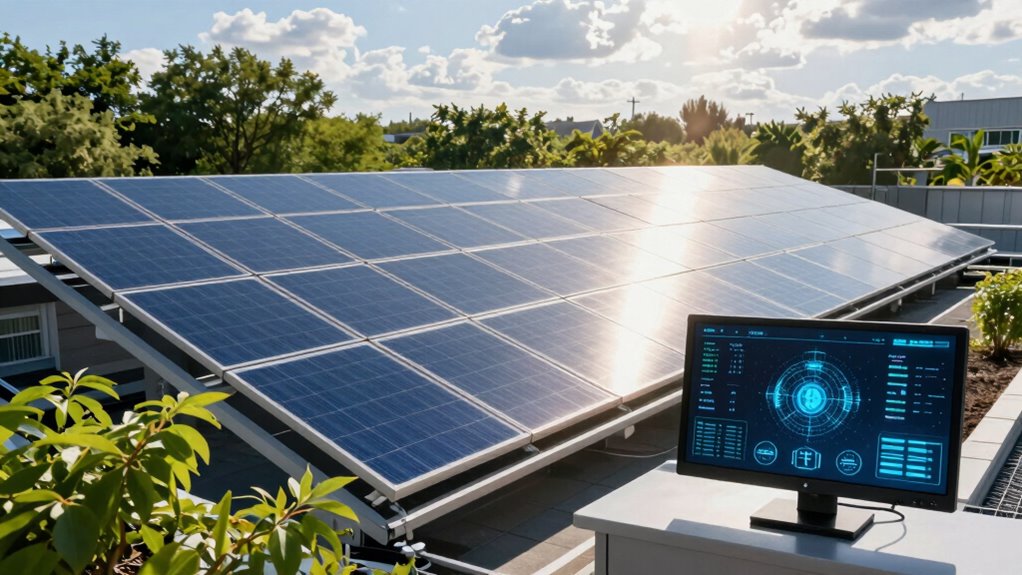
Have you ever wondered how artificial intelligence is transforming solar energy? Thanks to AI, your home’s solar system can now operate more efficiently, making the most of every ray of sunshine. One of the key ways AI does this is through smarter energy storage. Instead of simply storing excess energy in a battery and hoping to use it later, AI algorithms analyze patterns in your energy consumption and solar production. This means your storage system can predict when you’ll need power most, such as during evening hours or cloudy days, and optimize when to charge or discharge batteries. As a result, you reduce reliance on the grid and maximize your solar investment. Additionally, AI enhances technology reviews by providing real-time data and insights to improve overall system performance.
AI optimizes energy storage by predicting usage patterns, reducing grid reliance, and maximizing solar investment efficiency.
AI also plays a vital role in enhancing grid integration. Your home isn’t isolated; it’s part of a larger energy network. With AI, your solar system communicates seamlessly with the grid, helping balance supply and demand on a broader scale. During peak sunlight hours, AI can decide whether to store excess energy or send it back to the grid, earning you credits or income. Conversely, when the grid is strained or solar output dips, AI guarantees your home draws from stored energy or the grid intelligently, preventing power shortages. This real-time coordination makes energy flow more efficient and stable, reducing waste and lowering costs. Furthermore, smart grid technology enables more precise control and coordination between homes and utilities, enhancing overall efficiency. Integrating energy management systems further improves the coordination and performance of your solar setup.
Furthermore, AI-driven systems learn from your habits and local weather forecasts, continuously improving their predictions. If a cloudy week is ahead, your system can preemptively adjust to save more energy for later. If you tend to use more power during certain times of the day, AI notices these patterns and fine-tunes your system’s operation. This adaptability ensures your home uses solar energy more effectively, cutting down on unnecessary energy purchases from the grid and increasing self-sufficiency.
The integration of AI with energy storage and grid systems also simplifies maintenance and troubleshooting. Intelligent monitoring detects issues early, alerting you or technicians before minor problems turn into costly repairs. This proactive approach keeps your solar setup running at peak performance, guaranteeing you get the maximum benefit from your investment.
AI-powered solar battery management system
As an affiliate, we earn on qualifying purchases.
As an affiliate, we earn on qualifying purchases.
Frequently Asked Questions
How Does AI Predict Solar Energy Production Variability?
AI predicts solar energy production variability through solar forecasting and weather modeling. It analyzes real-time weather data, cloud cover, temperature, and solar irradiance to forecast future energy output accurately. By learning from historical patterns, AI models identify trends and fluctuations, enabling you to optimize your solar system’s performance. This proactive approach helps you manage energy use efficiently, reducing waste and ensuring a steady power supply even with changing weather conditions.
Can AI Optimize Energy Storage for Household Solar Systems?
Like a conductor guiding an orchestra, AI can optimize your household solar system’s energy storage. It uses smart grid data and advanced battery management to determine the best times to store or use energy, reducing waste and saving money. This real-time coordination guarantees your home efficiently balances energy supply and demand, making your solar setup more reliable and sustainable. AI transforms your energy system into a harmonious, eco-friendly powerhouse.
What Are the Costs of Implementing AI in Home Solar Setups?
Implementing AI in home solar setups involves costs like installing smart systems, sensors, and software, which can add to your initial investment. Energy policy and regulatory challenges may influence expenses, requiring compliance and possibly increasing costs. While these costs might seem high upfront, AI can improve energy efficiency and savings over time. You should weigh these factors, including potential policy changes, to determine if the long-term benefits outweigh the initial investment.
How Secure Is AI Data Management in Solar Energy Systems?
AI data management in solar energy systems is generally secure, but you should stay vigilant about data privacy and cybersecurity threats. Developers implement encryption and regular security updates to protect your information. However, it’s essential you choose reputable providers and stay informed about potential vulnerabilities. By doing so, you help guarantee your home’s solar data remains safe from cyberattacks, maintaining your privacy and system integrity.
Will Ai-Driven Solutions Reduce Overall Household Energy Bills?
Yes, AI-driven solutions can substantially cut your household energy bills. Imagine a smart grid that learns your energy consumption patterns, optimizing when your solar system generates and stores power. This intelligent management minimizes waste and maximizes savings, all without you lifting a finger. As AI fine-tunes your home’s energy use, you’ll discover how smart technology transforms your energy expenses into manageable, predictable costs—making your home more efficient than ever before.
As an affiliate, we earn on qualifying purchases.
Conclusion
Imagine a world where your home runs seamlessly on solar power, yet behind the scenes, AI is working tirelessly—an unseen force maximizing every watt. While solar panels capture the sun’s energy, AI guarantees you get the most out of each drop, balancing supply and demand effortlessly. It’s a quiet revolution, where technology and sustainability collide, empowering you to save money and protect the planet. Together, they’re shaping a smarter, greener future—one home at a time.
solar energy storage batteries with AI
As an affiliate, we earn on qualifying purchases.
As an affiliate, we earn on qualifying purchases.
grid-connected solar inverter with AI
As an affiliate, we earn on qualifying purchases.
As an affiliate, we earn on qualifying purchases.
Fall yard work Picks
leaf blowers
As an affiliate, we earn on qualifying purchases.