
Occupancy detection helps you optimize energy use by ensuring lighting, heating, and cooling only run when spaces are occupied. By accurately sensing presence, you can prevent energy waste in unoccupied areas and improve comfort where needed. This technology supports automatic adjustments to environmental systems, saving costs and reducing environmental impact. Understanding how occupancy detection works can help you make smarter building choices and maximize efficiency — there’s more to discover about its benefits.
Key Takeaways
- Accurate occupancy detection enables automatic adjustment of lighting and climate control, reducing unnecessary energy consumption.
- It prevents energy waste by turning off devices in unoccupied spaces, optimizing overall building efficiency.
- Real-time data on space usage informs better planning and resource allocation, enhancing operational sustainability.
- Dynamic controls based on occupancy patterns improve occupant comfort while minimizing energy use.
- Integrating occupancy data supports predictive maintenance and smarter building management, further conserving energy.

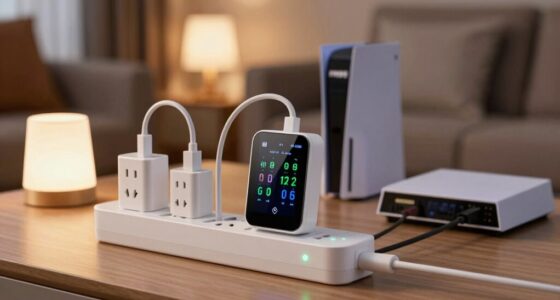
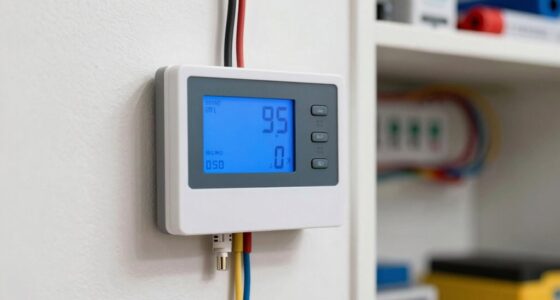
Imagine a technology that can automatically identify whether a room is occupied and adjust the lighting, heating, or cooling accordingly. That’s the power of occupancy detection, and it’s transforming how we save energy in buildings. At the core of this innovation are smart sensors, which continuously monitor space activity to determine occupancy status in real time. These sensors don’t just detect presence; they provide data that helps optimize energy use, reducing waste and lowering utility bills. When a room is unoccupied, the system can turn off or dim the lights, lower the heating or cooling, and deactivate appliances, ensuring energy isn’t wasted when no one’s around. This seamless adjustment not only conserves resources but also enhances comfort and convenience for users.
Smart sensors detect occupancy in real time, optimizing energy use and enhancing comfort by adjusting lights and climate automatically.
What makes smart sensors particularly effective is their ability to integrate with behavioral incentives. When occupants know that their presence directly influences energy consumption, they’re more likely to adopt energy-conscious behaviors. For example, building occupants may be encouraged to turn off devices or adjust thermostats when they leave a room, knowing that their actions will be reflected in real-time energy savings. Over time, this feedback loop fosters a culture of sustainability, where individuals become active participants in energy conservation. Behavioral incentives can be reinforced through apps or notifications that show energy savings or environmental impact, motivating continued participation.
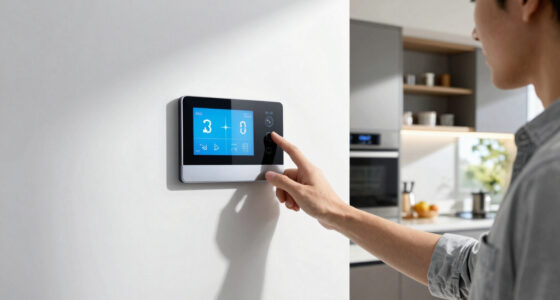
Implementing occupancy detection with smart sensors isn’t just about cutting costs; it’s about creating smarter, more sustainable spaces. These systems can adapt dynamically to changing occupancy patterns, whether it’s a small conference room or a large office. As a result, energy isn’t wasted on unoccupied areas, and comfort is maintained only where needed. This precise control also extends to HVAC systems, which can respond to occupancy data, ensuring that heating or cooling is only active when necessary. In high-traffic areas, sensors can even identify peak usage times, helping facility managers plan maintenance or upgrades more effectively. Additionally, space utilization insights gained from these systems can support better design and resource management. Incorporating smart sensors also supports predictive maintenance, which can prevent equipment failures before they happen and sustain energy efficiency. Moreover, integrating occupancy detection with building automation systems can further streamline energy management and operational efficiency.
Ultimately, occupancy detection matters because it aligns energy use with actual needs. When combined with smart sensors and behavioral incentives, it empowers you to operate buildings more efficiently. You reduce unnecessary energy consumption, save money, and contribute to environmental preservation—all without sacrificing comfort. It’s a smart approach to sustainability that benefits everyone, making your space more responsible and responsive to those who use it.

Lafaer Wireless Human Presence Sensor LWR01, mmWave Radar, Occupancy & Motion Sensor, Battery-Powered, IPX3 Water Resistant, Matter Over Thread, Requires Thread-Compatible Smart Home Hub/Router
- Device Compatibility: Requires specific smart home hubs and OS versions
- Human Presence Detection: Detects subtle movement and stillness up to 6m
- Water Resistance: IPX3 splashproof for daily use
As an affiliate, we earn on qualifying purchases.
As an affiliate, we earn on qualifying purchases.
Frequently Asked Questions
How Accurate Are Current Occupancy Detection Technologies?
Current occupancy detection technologies are quite accurate, with sensor accuracy often reaching around 85-95%. You can rely on detection reliability for most applications, especially with advanced sensors like infrared, ultrasonic, or camera-based systems. While no technology is perfect, improvements continue to enhance detection precision, minimizing false positives or negatives. This means you can confidently use these systems to optimize energy use, knowing they detect occupancy effectively.
What Privacy Concerns Are Associated With Occupancy Detection?
Think of occupancy detection as a sensitive whisper in your home; it can reveal when you’re there or not. You might worry about privacy, but data encryption acts as a fortress protecting your information. Always guarantee your device asks for user consent, so you’re in the driver’s seat. By staying informed, you keep your privacy safe while enjoying the energy-saving benefits of smart technology.
How Much Can Buildings Realistically Save With Occupancy Detection?
You can realistically save up to 30% on energy costs with occupancy detection, provided you optimize sensor calibration and data integration. Accurate sensor calibration ensures devices respond correctly, while seamless data integration allows your systems to adapt in real-time. These factors help eliminate energy waste by turning off lights and HVAC systems when spaces are unoccupied. With proper implementation, occupancy detection becomes a powerful tool for meaningful energy savings.
Are There Any Legal Regulations for Using Occupancy Sensors?
Yes, there are legal regulations for using occupancy sensors, and you need to guarantee legal compliance. Regulations vary by location, so you should check local sensor regulations and privacy laws. In some areas, you might need to inform occupants about sensor use, especially if data collection occurs. To avoid legal issues, follow all relevant standards and guidelines, and consider consulting legal experts to ensure your occupancy detection system complies with applicable laws.
What Are the Initial Costs of Implementing Occupancy Detection Systems?
Thinking about diving into occupancy detection? Expect initial costs to include sensor calibration and setup, which might make your wallet gasp. You’ll also need to budget for maintenance, because these systems aren’t set-and-forget devices. While prices vary, investing upfront guarantees accurate detection and long-term savings. So, yes, it’s an investment, but one that pays off by preventing energy wastage while keeping your space efficiently monitored.

6 Pack Under Cabinet Lighting, 32 LED Motion Sensor Light Indoor Rechargeable Magnetic Closet Lights Battery Operated, Under Counter Lights for Kitchen, Wardrobe, Hallway, Stairs White Light
- Motion Sensor Activation: Automatically turn on within 120°, 10 feet
- Manual On/Off Mode: Set lights to always on or off
- Fade In Fade Out Lighting: Soft, eye-care friendly illumination
As an affiliate, we earn on qualifying purchases.
As an affiliate, we earn on qualifying purchases.
Conclusion
Just as the wise owl knows when to stay silent or hoot loudly, occupancy detection helps you choose when to save energy or use it freely. By understanding when spaces are occupied, you turn the quiet night into a time of smart savings, much like the moon’s gentle glow guiding sailors safely. Embrace occupancy detection, and you’ll harness the subtle power of awareness, making your energy use as clever and instinctive as nature’s own design.

Leviton Fluorescent/Incandescent Power Pack for Occupancy Sensor with HVAC Relay, 20 Amp FL/INC, 120-277V, OSP20-RD0, Black
- Power Supply Compatibility: Supports all OS Series sensors and Add-A-Relay
- Load Switching Capabilities: Controls incandescent, fluorescent, low-voltage, and motor loads
- Compact and Lightweight: Easy to mount via knockout or ballast channel
As an affiliate, we earn on qualifying purchases.
As an affiliate, we earn on qualifying purchases.

ecobee SmartSensor 2-Pack – Temperature & Occupancy Detection
- Occupancy Detection: Detects room occupancy up to 60 ft
- Temperature Communication: Sends temperature data to thermostat
- Comfort Optimization: Adjusts temperature for comfort
As an affiliate, we earn on qualifying purchases.
As an affiliate, we earn on qualifying purchases.