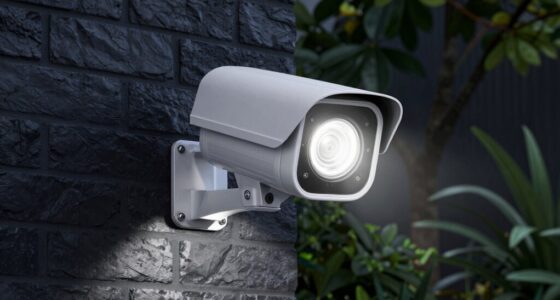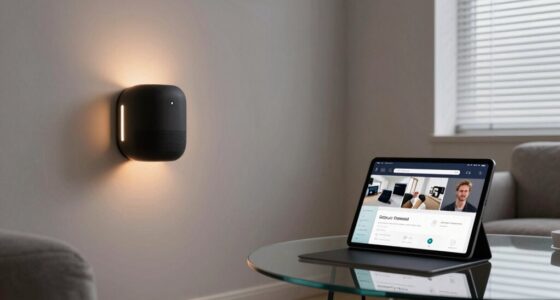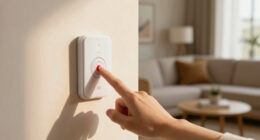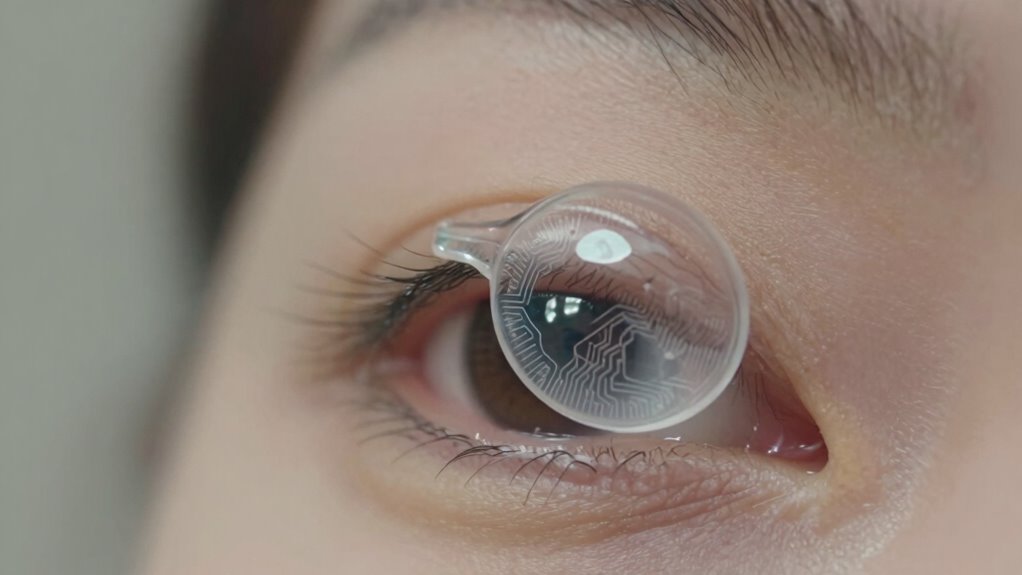
Smart contact sensors still outperform cameras in reliability, especially in poor visibility or obstructed environments, as they operate based on contact rather than line of sight. They provide instant alerts if doors or windows are tampered with, offering quicker responses than cameras. Plus, they protect your privacy by not capturing images or video. If you want to understand how these sensors guarantee consistent security and easy integration, keep exploring their benefits.

Get home appliances delivered free — and shop member deals
- Fast, free delivery on millions of items
- Access to Prime Big Deal Days deals on October 6–7
- Prime Video, Amazon Music and more included
Key Takeaways
- Provide immediate, unambiguous alerts based on contact status, reducing response time in critical situations.
- Function reliably in poor visibility or obstructed environments where cameras may fail.
- Enhance privacy by not capturing images or videos, addressing privacy and data security concerns.
- Detect tampering or movement of entry points, offering faster response than visual confirmation.
- Easily integrate into existing security systems with minimal wiring and maintenance requirements.
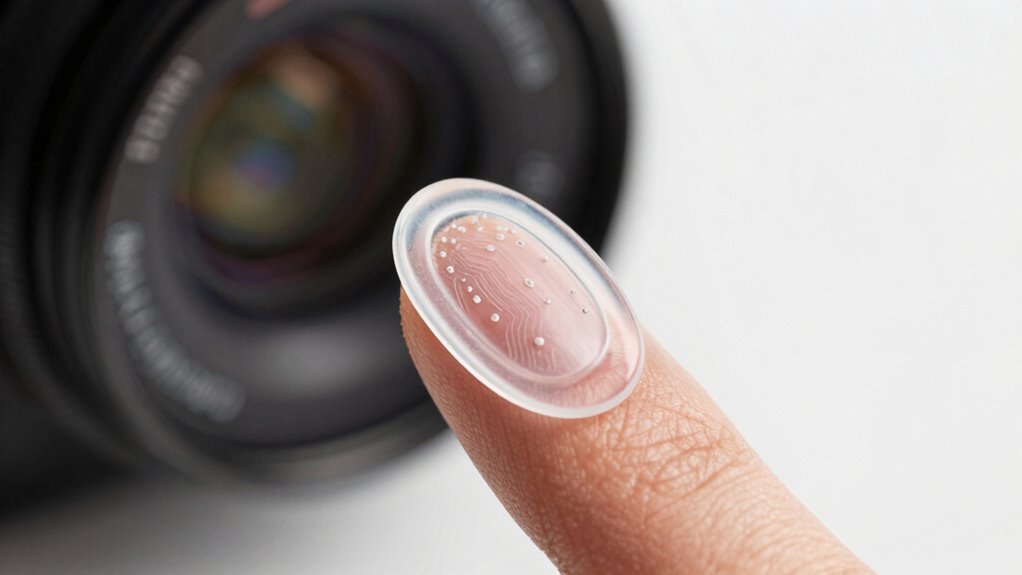
When it comes to home security and monitoring, smart contact sensors and cameras offer different advantages, and understanding their features can help you choose the right solution. While cameras provide visual surveillance, smart contact sensors excel in detecting physical changes and offering specific, real-time alerts. One area where smart contact sensors shine is in their ability to monitor physical states or conditions without requiring visual input. Think of them as the wearable technology of security devices—they’re small, unobtrusive, and capable of delivering critical data instantly. For example, just like medical diagnostics rely on sensors to monitor vital signs, contact sensors can detect whether a door or window is opened or closed, providing immediate notifications to your phone. This capability is particularly useful for securing entry points or sensitive areas, where visual confirmation isn’t always necessary or practical.
Additionally, because they are unaffected by lighting conditions or visual obstructions, contact sensors are reliable even in environments with poor visibility or physical barriers. Unlike cameras, which can be limited by lighting conditions or obstructions, smart contact sensors are unaffected by visual barriers. They work based on contact or proximity, making them reliable in environments where visibility is compromised. This means you get continuous, silent monitoring that doesn’t depend on a clear line of sight. If someone tries to tamper with a sensor, it immediately triggers an alert, giving you a faster response than a camera might provide, especially if the camera’s view is blocked or compromised. This makes contact sensors especially valuable in high-security zones or for safeguarding valuable assets. Knowing that they can function effectively regardless of environmental conditions further emphasizes their reliability in various settings. In addition, their ability to operate independently of visual data enhances overall security system robustness. Moreover, because they do not rely on visual data, they contribute to a privacy-conscious security setup, addressing concerns about surveillance privacy.
Another key benefit is their ability to integrate seamlessly into broader smart home or security systems. You can set them to trigger specific actions—like sounding an alarm or activating lights—when contact is broken, creating a layered security approach. Plus, they’re easy to install and maintain, often requiring no complex wiring or power sources beyond batteries. This simplicity means you can position them in places cameras might not fit or where visual monitoring isn’t feasible. Their unobtrusive design also means they can be discreetly placed in sensitive areas without drawing attention. In terms of privacy and data security, contact sensors pose fewer concerns since they don’t capture images or video. If privacy is a priority—say, in sensitive areas of your home—these sensors provide a discreet alternative to cameras. They also excel in scenarios where you need quick, unambiguous alerts, such as confirming if a package has been delivered or if a door has been left ajar. Interestingly, the reliance on physical contact makes them a privacy-conscious solution in situations where visual data could be intrusive or undesirable. Overall, smart contact sensors offer a targeted, dependable, and privacy-conscious approach that cameras can’t match in certain applications, making them an essential component for exhaustive home security.
smart contact door/window sensors
As an affiliate, we earn on qualifying purchases.
As an affiliate, we earn on qualifying purchases.
Frequently Asked Questions
Can Smart Contact Sensors Detect Tampering or Sabotage?
Yes, smart contact sensors can detect tampering or sabotage. They actively monitor for tampering detection by sensing changes in contact status or physical interference, alerting you instantly if someone tries to disable or sabotage them. This real-time monitoring enhances sabotage prevention, ensuring your security system remains intact. Unlike cameras, contact sensors provide direct, immediate feedback on physical tampering, making them a reliable choice for safeguarding sensitive areas or equipment.
How Do Contact Sensors Perform in Extreme Weather Conditions?
Think of your contact sensors as sturdy trees weathering a storm; they’re built to withstand extreme conditions. In harsh weather, their weather resistance keeps them functioning, unlike cameras that can fog up or freeze. You’ll find signal reliability remains strong, even in heavy rain or snow. This resilience guarantees your security system stays active, giving you peace of mind, no matter the weather’s fury.
Are Contact Sensors More Energy-Efficient Than Cameras?
Yes, contact sensors are generally more energy-efficient than cameras. They consume less power and have longer battery longevity because they only activate when they detect motion or contact, unlike cameras that continuously stream or record. This minimal power consumption makes contact sensors ideal for long-term use without frequent battery replacements, especially in remote or hard-to-reach areas. Their low power needs help you save energy and maintain reliable security.
Can Sensors Differentiate Between Humans and Animals?
Yes, sensors can differentiate between humans and animals through advanced animal detection and human differentiation technologies. You can set these sensors to recognize specific movement patterns or thermal signatures, allowing them to identify whether a person or an animal triggers the alert. This helps reduce false alarms and improves security. Unlike cameras, sensors focus on activity detection, making them effective for real-time alerts without needing visual confirmation.
Do Contact Sensors Require Wi-Fi or Cellular Connectivity?
Contact sensors typically don’t require Wi-Fi or cellular connectivity to function, as they often operate on local wireless connectivity like Bluetooth or Zigbee. This setup provides you with power source flexibility, since many sensors run on batteries or wired power. You can place them in areas where Wi-Fi signals are weak or unavailable, ensuring consistent monitoring without relying on external internet or cellular networks.
wireless contact sensors for home security
As an affiliate, we earn on qualifying purchases.
As an affiliate, we earn on qualifying purchases.
Conclusion
While cameras certainly have their charm, smart contact sensors quietly excel in subtlety and intimacy. They tend to blend seamlessly into your environment, offering a discreet layer of awareness without drawing undue attention. In many ways, they serve as the gentle guardians of your space, providing reliable insights while respecting your privacy. Sometimes, it’s the understated touch that truly elevates your sense of security—making these sensors a refined choice in today’s intelligent world.
As an affiliate, we earn on qualifying purchases.
battery operated contact sensors
As an affiliate, we earn on qualifying purchases.
As an affiliate, we earn on qualifying purchases.
NFL season / tailgating Picks
team gear
As an affiliate, we earn on qualifying purchases.