
TL;DR
TP-Link’s Tapo brand has announced the C825, a $149.99 indoor camera that combines 2K pan-and-tilt monitoring with a 4-inch touchscreen for two-way video calls. It also offers on-device detection, microSD storage and a privacy mode; subscription-free use is available, with optional paid cloud features.
TP-Link’s Tapo brand has announced the C825, a $149.99 indoor security camera that pairs 2K pan-and-tilt monitoring with a 4-inch touchscreen for two-way video calls. The combination gives the device a role beyond surveillance: people at home can use it to call family or friends, while the camera can also track movement around a room.

Get home appliances delivered free with Prime
- Fast, free delivery on millions of items
- Prime Video, Amazon Music and more included
- Member-only deals all year
The C825 uses a rotating base to pan through 360 degrees, while its camera module tilts up and down by as much as 156 degrees. Its stated field of view is 114.5 degrees, and it has infrared night vision for monitoring in low light. Together, those features are intended to let the camera cover more of a room than a fixed-position device, though actual coverage will depend on placement and obstacles.
For security monitoring, Tapo says the camera uses on-device AI processing to distinguish between types of subjects, including pets and different people through facial recognition. It can also detect sounds and send alerts for events such as a baby crying or a dog barking. Event video can be stored on a microSD card up to 512GB; a subscription is not required for that local-storage option.
The touchscreen supports video calls initiated through the Tapo mobile app. Two C825 devices can also call one another by selecting a preconfigured contact on the screen. Outside calls, the display can show a digital photo frame, weather or a clock. Tapo Care is an optional monthly-fee service that adds cloud storage and features including video summaries and weekly reports.
Security camera meets video calling
TP-Link’s Tapo C825 pairs room monitoring with a touchscreen for calls, giving households one device for check-ins and security.
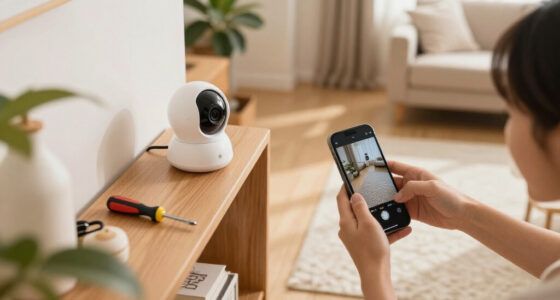
One device, two roles
The camera combines monitoring with ways to connect to people at home.
Moves around the room
Its base pans 360 degrees and the camera tilts up to 156 degrees to follow activity.
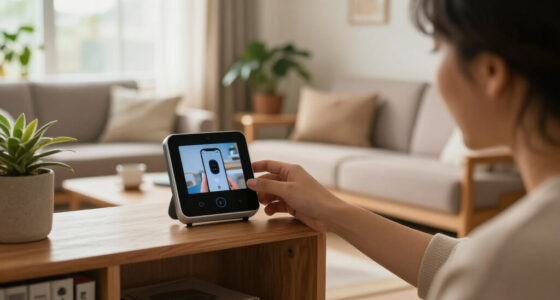
Calls through the screen
Call from the Tapo app, or connect two C825 cameras using an onscreen contact.
More than a call screen
The display can also show photos, weather or a clock.
Storage and privacy choices
Local recording is available without a subscription; cloud features are optional.
| Option | What it offers | Subscription |
|---|---|---|
| microSD card | Event video, up to 512GB | ✓ No |
| Tapo Care | Cloud storage, video summaries and weekly reports | ✓ Paid |
When you want monitoring to pause
The announcement describes two ways to limit what the camera watches.
Choose areas to exclude in the Tapo app.
The camera turns toward the ceiling and pauses monitoring.
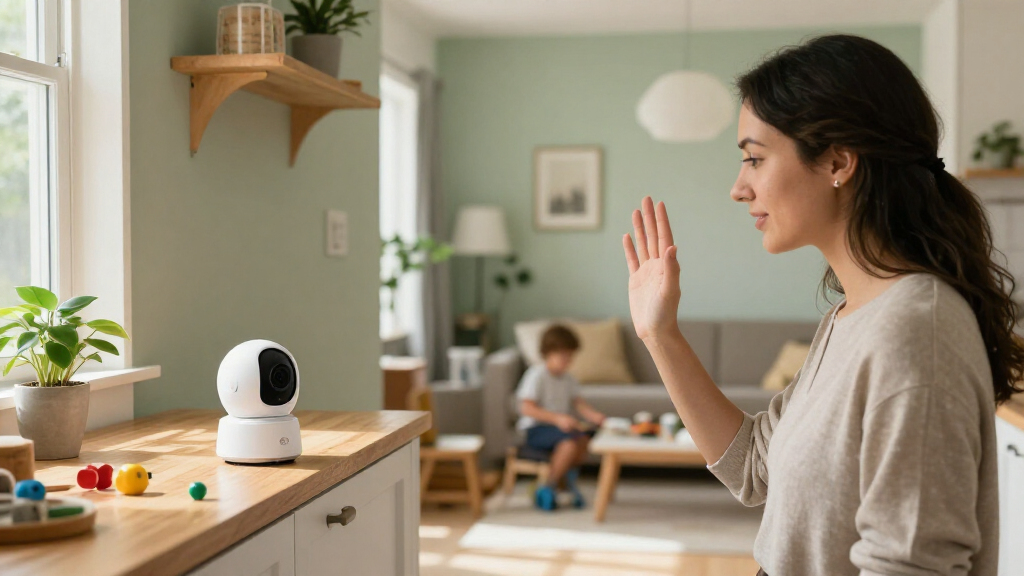
A Camera Designed for Calls at Home
The C825 brings video calling into a device designed to stay in a room and monitor it, rather than requiring someone to pick up a phone or tablet. Tapo presents the screen-and-camera setup as a way for family members to connect with people who may find separate apps and devices less convenient. That could be useful for older relatives, but the product details do not establish how easy it will be for different users to set up or operate.
For households, the appeal is the combination of monitoring and communication in one device. The camera can follow movement while a call is underway, according to the announcement, potentially keeping people in frame as they move around. The same combination also makes privacy controls relevant: users may want a camera in a shared indoor space for security or check-ins, but not at all times.
The price is $149.99, which is relatively high for a 2K camera, according to the product coverage. Its touchscreen and calling functions distinguish it from a camera bought only for recording or alerts. Whether those additions justify the price will depend on how often a household uses them and how well the tracking and calling work in practice.
Products Worth Considering

Samsung Galaxy Tab A11+ 11-Inch Wi-Fi Tablet, 128GB, 6GB RAM, Silver

Amazon Kindle Paperwhite (2024, 16 GB) – 7-inch Display, Black

Apple Watch SE 3 GPS 40mm Smartwatch
As an affiliate, we earn on qualifying purchases.
How the C825 Handles Privacy and Storage
The C825 sits between a conventional indoor security camera and a simple video-call screen. It retains common monitoring functions such as pan-and-tilt movement, night vision, sound alerts and remote access through a phone app, while adding a display that can be used for calls and other information. The announcement describes calls to the camera through the app and direct calls between two C825 devices using onscreen contacts.
Its storage options separate basic local use from paid cloud features. Users can save event videos to a microSD card up to 512GB without a subscription. Tapo Care, offered for a monthly fee, adds cloud storage as well as video summaries and weekly reports. The announcement does not provide the subscription price or clarify how long recordings remain available under each option.
Tapo also describes two ways to limit camera viewing. Users can set privacy zones in the app, or switch on privacy mode, which turns the camera toward the ceiling and pauses monitoring. These controls address times when a household does not want the camera recording or watching its usual area, although the announcement does not detail how the controls are indicated to people in the room.
“The C825 is designed to keep an eye on a home while residents are away or connect them with family and friends while they are at home.”
— TP-Link’s Tapo brand
Performance and Subscription Details
The product announcement gives specifications and listed features, but does not provide independent test results for tracking accuracy, facial recognition, sound detection or night vision. It is also unclear how well the camera keeps a caller in frame in a busy room, or how its 2K image compares with higher-resolution cameras in everyday use.
Other details remain unspecified, including the monthly cost of Tapo Care, the duration of cloud and local recordings, and whether every detection feature works without a subscription. The announcement also does not describe the security protections applied to video calls or recordings. Those points may affect buyers weighing the camera’s convenience against privacy and ongoing costs.
Availability and Hands-On Testing
The C825 is listed as available starting today for $149.99. Buyers can use local microSD storage without subscribing, while Tapo Care is available as a paid option for cloud storage and additional reporting features. The exact subscription price was not provided in the announcement.
The next useful evidence will come from hands-on testing of call setup, room tracking, alerts, local recording and privacy controls. Until those results and the missing service details are available, the announced specifications describe what Tapo says the camera can do, but do not establish how reliably it performs in different homes.
Source: rss
Key Questions
What is the Tapo C825?
It is a 2K indoor security camera with pan-and-tilt movement and a 4-inch touchscreen for video calls, photos, weather and a clock.
How much does the C825 cost?
Tapo lists the camera at $149.99, available starting today according to the announcement.
Does using the camera require a subscription?
No subscription is required for local event-video storage on a microSD card of up to 512GB. Tapo Care is an optional paid service that adds cloud storage and features such as video summaries and weekly reports.
How do video calls work on the C825?
Calls can be made to the camera through the Tapo mobile app. Two C825 devices can also call each other by selecting a preconfigured contact on the touchscreen.
How can users limit monitoring?
Users can create privacy zones in the Tapo app or activate privacy mode, which points the camera at the ceiling and pauses monitoring.
Source: theverge.com