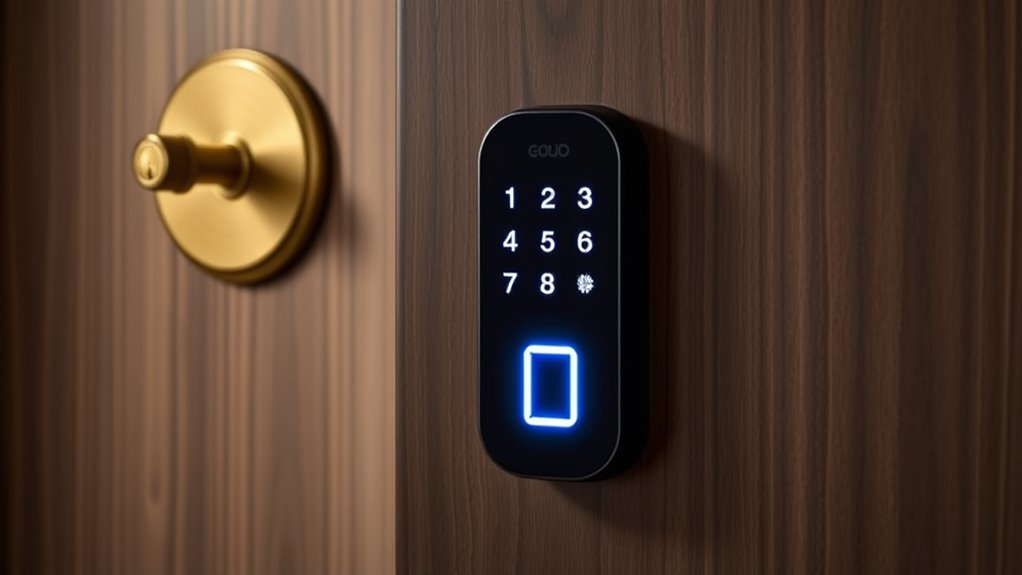

Smart locks can be safer than traditional ones because they offer remote control, activity logs, and temporary access sharing. However, they are vulnerable to hacking if your Wi-Fi isn’t secure, and power or battery issues can lock you out. Traditional locks are simple and reliable but can be physically bypassed. Deciding which is best depends on your environment and risk level—stick around to discover more about their pros and cons.

Get home appliances delivered free with Prime
- Fast, free delivery on millions of items
- Prime Video, Amazon Music and more included
- Member-only deals all year
Key Takeaways
- Smart locks offer remote access logging and real-time alerts, enhancing security monitoring beyond traditional lock capabilities.
- Traditional locks are physically simple but vulnerable to picking, forced entry, or lost keys, risking unauthorized access.
- Smart locks can be hacked if Wi-Fi security is weak, while traditional locks are unaffected by cyber threats but susceptible to physical bypass.
- Power outages can disable smart locks, whereas traditional locks remain functional without electricity.
- The overall safety depends on proper cybersecurity practices for smart locks and physical security measures for traditional locks.
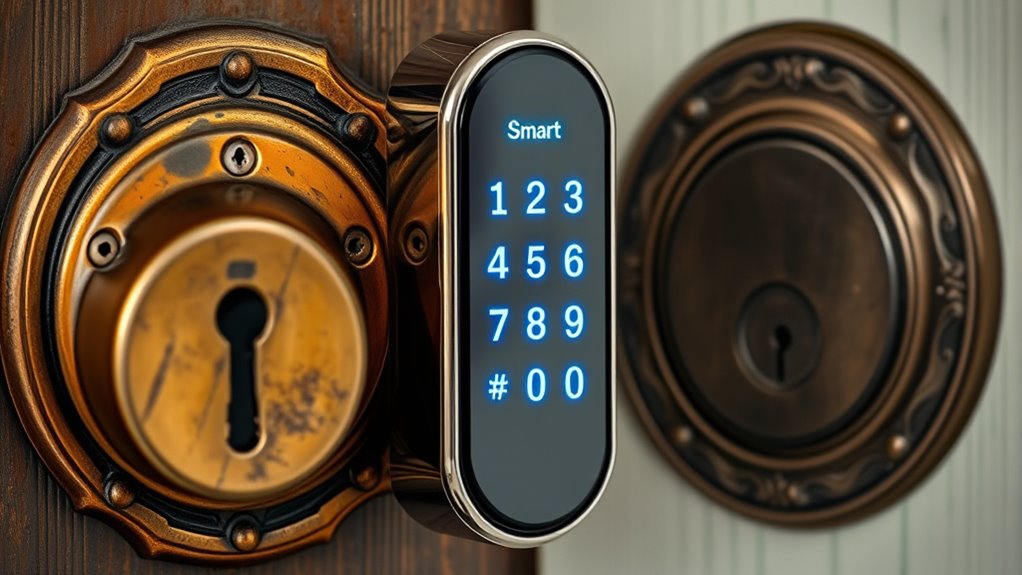
When it comes to securing your home or business, choosing between keyless and traditional locks can be a crucial decision. You want a system that not only keeps your property safe but also offers convenience and peace of mind. Traditional locks, which rely on physical keys, have been the standard for decades. They’re straightforward: you turn a key, and the door opens. The familiarity is comforting, and they don’t require batteries or complex technology. However, they come with their own set of vulnerabilities. Keys can be lost, stolen, or duplicated without your knowledge. If someone has a copy of your key, they can access your property without your consent. Lock picking is another concern; skilled intruders can bypass traditional locks with relative ease if they’re not high-security models.
Traditional locks are simple but vulnerable to lost keys and lock picking.
In contrast, keyless locks—often called smart locks—operate via electronic codes, smartphone apps, or biometric data. They eliminate the need for physical keys, which means you don’t have to worry about losing them or having them stolen. Instead, you can open your door with a code, a fingerprint, or even remotely via a mobile device. This adds a layer of convenience, especially if you frequently host visitors or service providers. You can grant temporary access or change codes easily, which isn’t possible with traditional keys. Plus, many smart locks log entries and exits, giving you a record of who accessed your property and when. This feature can be invaluable for monitoring security and identifying suspicious activity.
But are smart locks safer? They can be, particularly because they offer more control and reduce the risk of unauthorized duplication. However, they’re not immune to hacking or technical failures. If your Wi-Fi network isn’t secure, a hacker could potentially gain access to your lock. Power outages or dead batteries can also lock you out unless the lock has a backup power source or key override. Traditional locks don’t rely on electricity, so they’re unaffected by power issues, but they’re more vulnerable physically. A determined intruder might pick the lock or force the door open if it’s not reinforced.
Additionally, the security of smart locks depends heavily on proper cybersecurity practices and regular updates, making them a cybersecurity concern for some users. Ultimately, the safety of either system depends on your specific needs and the quality of the lock. Smart locks can provide enhanced security features and greater convenience, but they require proper cybersecurity measures and regular maintenance. Traditional locks are simple and reliable but may lack the advanced security controls of their digital counterparts. When choosing, consider your environment, potential risks, and how much you value convenience versus traditional security. Both types can be effective, but understanding their strengths and weaknesses helps you make an informed decision.
As an affiliate, we earn on qualifying purchases.
Frequently Asked Questions
Can Smart Locks Be Hacked Remotely?
Yes, smart locks can be hacked remotely if they’re not properly secured. Hackers may exploit weak passwords, outdated firmware, or vulnerabilities in the app or Wi-Fi network. To protect yourself, always update your lock’s software, use strong, unique passwords, and enable two-factor authentication if available. Regularly monitoring access logs and choosing reputable brands can also help minimize the risk of remote hacking.
Do Keyless Locks Require Wi-Fi or Bluetooth?
Think of your smart lock as a modern knight—sometimes it needs a trusty steed to carry messages. Most keyless locks require Wi-Fi or Bluetooth to connect with your phone or smart home system. Wi-Fi offers remote control from anywhere, while Bluetooth usually works when you’re nearby. Without these connections, your lock’s functionality is limited, making it less flexible but still secure. So, yes, they often depend on Wi-Fi or Bluetooth to work seamlessly.
Are Traditional Locks More Resistant to Physical Tampering?
Traditional locks tend to be more resistant to physical tampering because they rely on mechanical components like metal pins and cylinders, which are harder to pick or force open. You can physically see and assess their integrity, making it easier to detect tampering. Smart locks can be vulnerable if someone hacks or manipulates their electronic systems, but with traditional locks, your main concern is physical force or lock picking.
How Do Smart Locks Handle Power Outages?
Smart locks typically have backup power options, like batteries, ensuring you can still access your home during power outages. In fact, 80% of smart locks include a manual key override or low-battery alerts, so you’re never locked out unexpectedly. You can also connect them to your smartphone or a physical key, giving you multiple ways to disengage your door if power runs out. This redundancy offers peace of mind and reliable security.
Are Smart Locks Compatible With Existing Home Security Systems?
Yes, smart locks can be compatible with your existing home security system, but it depends on the specific model. Many smart locks integrate seamlessly via Wi-Fi, Z-Wave, or Zigbee protocols, allowing you to control and monitor them through your security system. Check your system’s compatibility before purchasing. You might need a hub or an adapter for smooth integration, but most modern smart locks are designed to work with popular security setups.
As an affiliate, we earn on qualifying purchases.
Conclusion
Ultimately, choosing between keyless and traditional locks depends on your security needs and lifestyle. While smart locks offer convenience and advanced features, they aren’t foolproof. Traditional locks have proven reliability, but lack the tech benefits. So, do you want the latest in security or proven simplicity? The right choice varies for everyone, but understanding your options helps you make an informed decision. After all, isn’t peace of mind worth considering both innovation and tradition?
As an affiliate, we earn on qualifying purchases.
As an affiliate, we earn on qualifying purchases.
NFL season / tailgating Picks
team gear
As an affiliate, we earn on qualifying purchases.