
Your smart home’s reliability depends on careful planning, not just picking the right devices. Without a clear strategy, advanced products can underperform, causing frustrations and system conflicts. Proper planning ensures compatibility, stable network design, and energy efficiency, making your system more dependable and user-friendly. Taking time to plan helps you avoid issues like glitches or disruptions. Keep going to discover how thoughtful setup can turn your smart home into a seamless, efficient, and enjoyable environment.
Listen free for 30 days with Audible
Thousands of audiobooks and originals — cancel anytime.
As an affiliate, we earn on qualifying purchases.
Key Takeaways
- Proper planning ensures device compatibility and smooth integration, reducing system failures and conflicts.
- Strategic network design stabilizes connections and minimizes latency, enhancing overall reliability.
- Early energy-efficient planning optimizes resource use, preventing performance issues and reducing costs.
- Thoughtful automation and interoperability improve user experience and system responsiveness.
- Comprehensive planning creates a resilient, sustainable, and dependable smart home environment.
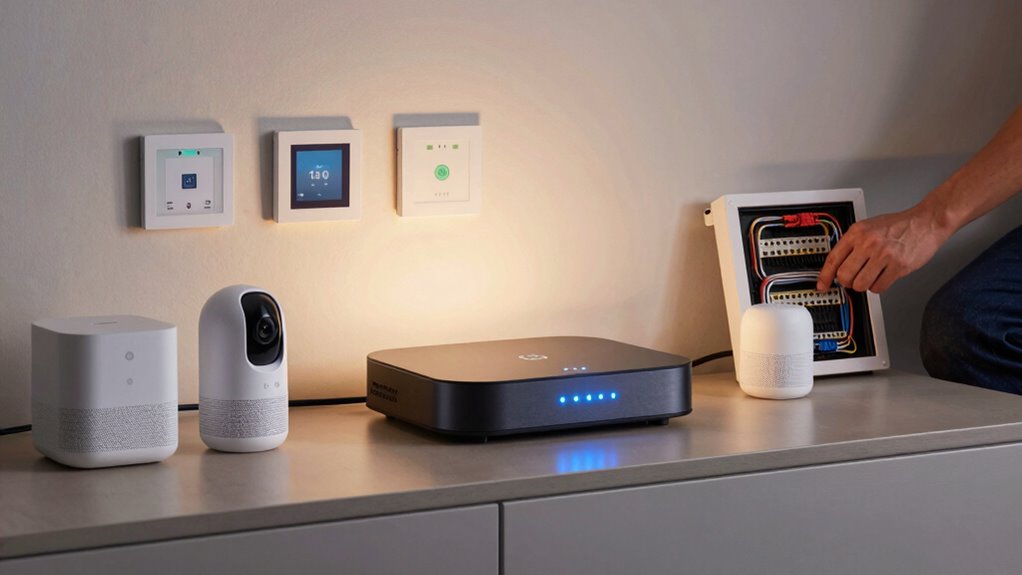
As smart homes become increasingly common, guaranteeing their reliability is more important than ever. You might think that simply installing the latest gadgets and devices guarantees a seamless experience, but the truth is, reliability depends heavily on careful planning. Without a clear strategy, even the most advanced products can fall short, leading to frustration and inefficiency. When you plan your smart home thoughtfully, you create a system that’s not only dependable but also optimized for energy efficiency and a superior user experience.
Good planning starts with understanding your specific needs and how different devices will work together. It’s tempting to buy the newest smart thermostat or security camera, but if you don’t consider how these devices integrate, you risk creating a patchwork system prone to failures or conflicts. By mapping out your entire setup beforehand, you can guarantee compatibility, which reduces the chances of glitches that disrupt your daily routines. This proactive approach helps maintain consistent operation, making your smart home more reliable over time. Incorporating system compatibility and considering how devices communicate can further enhance your setup’s robustness. Additionally, paying attention to network design ensures your devices maintain a stable connection, avoiding common connectivity issues. Properly planning your network topology can also minimize latency and improve overall responsiveness.
Energy efficiency is another essential aspect that planning influences. When you incorporate energy-saving practices into your design, you not only reduce utility costs but also lessen the strain on your electrical system. For example, scheduling devices to operate during off-peak hours or selecting energy-efficient models can considerably cut down your overall consumption. Planning helps you identify these opportunities early on, so your smart home isn’t just about automation—it’s about doing so sustainably. A well-thought-out setup ensures you maximize energy efficiency without sacrificing comfort or convenience. Additionally, considering energy management strategies can help you optimize your system’s overall performance.
Your user experience hinges on how smoothly your devices work together. Rushing into buying multiple smart systems without considering their interoperability can lead to disjointed interactions and frustration. Instead, a strategic plan allows you to select products that are designed to work seamlessly within your ecosystem. It also prepares you for potential issues, such as network congestion or device conflicts, so you can address them before they disrupt your daily life. This foresight results in a more intuitive and satisfying user experience, where your smart home genuinely feels like a unified, dependable environment. Proper planning can also help you establish automation routines that adapt to your lifestyle, making your smart home more responsive and personalized.
In essence, smart home reliability isn’t just about the products you choose—it’s about how you plan their integration. Thoughtful planning ensures your system is resilient, energy-efficient, and user-friendly. It transforms a collection of gadgets into a cohesive, trustworthy home automation network that truly enhances your lifestyle. Without this careful groundwork, even the most advanced devices can fall short of delivering the reliable, efficient, and enjoyable experience you expect. Additionally, understanding how different biodiversity and conservation principles can be integrated into your living space can promote a more sustainable and environmentally conscious lifestyle.
smart home device compatibility checker
As an affiliate, we earn on qualifying purchases.
As an affiliate, we earn on qualifying purchases.
Frequently Asked Questions
How Can I Prevent Smart Home Device Hacking?
To prevent smart home device hacking, you should follow strong cybersecurity protocols and guarantee your devices use up-to-date encryption standards. Regularly update firmware, change default passwords to unique ones, and enable two-factor authentication where available. Network segmentation can isolate smart devices from sensitive data, reducing risk. Being proactive with these steps helps protect your devices from unauthorized access and enhances your overall smart home security.
What Is the Average Lifespan of Smart Home Products?
You might worry about your smart home devices breaking down quickly, but most last about 3 to 5 years. Device durability varies, with well-made products lasting longer. Keep in mind, product obsolescence is common, so manufacturers often update or retire models. To stay ahead, plan for replacements or upgrades, ensuring your smart home remains reliable and secure without unexpected failures or compatibility issues down the line.
How Do I Choose the Right Smart Home System for My Needs?
To choose the right smart home system, focus on integration consistency and user interface. You want a system that seamlessly connects all your devices, so they work together smoothly. Check that the user interface is intuitive and easy to navigate, making daily control simple. Research compatibility with your existing gadgets and read reviews to guarantee reliability. Prioritize systems that fit your lifestyle, so you enjoy convenience without frustration.
Can Smart Home Devices Work During Power Outages?
Smart home devices typically don’t work during power outages unless you add backup power solutions like uninterruptible power supplies (UPS) or generators. Signal boosters can help maintain Wi-Fi connectivity if the outage affects your internet. To guarantee your smart home remains functional, plan ahead by integrating backup power and signal boosters, so your devices stay operational even during outages. This proactive approach enhances reliability and peace of mind.
How Often Should I Update My Smart Home Firmware?
You should update your smart home firmware at least once a month. Studies show that 60% of vulnerabilities are fixed through regular updates, improving security and device compatibility. Firmware updates guarantee your devices run smoothly and stay protected from threats. Ignoring updates can cause compatibility issues or security risks. Set reminders or enable automatic updates to keep your smart home reliable, secure, and functioning seamlessly.
As an affiliate, we earn on qualifying purchases.
Conclusion
To truly enjoy a reliable smart home, you need more than just the shiny gadgets; you need a well-thought-out plan. Imagine your smart home as a symphony, where each device plays its part seamlessly, guided by careful orchestration. Without planning, it’s like trying to conduct a masterpiece with scattered notes. When you prioritize thoughtful setup and anticipation of issues, your smart home becomes a trusted sanctuary—an intricate, harmonious dance you control, not just a collection of products.
energy-efficient smart thermostats
As an affiliate, we earn on qualifying purchases.
As an affiliate, we earn on qualifying purchases.
As an affiliate, we earn on qualifying purchases.
NFL season / tailgating Picks
team gear
As an affiliate, we earn on qualifying purchases.