
TL;DR

Get home appliances delivered free with Prime
- Fast, free delivery on millions of items
- Prime Video, Amazon Music and more included
- Member-only deals all year
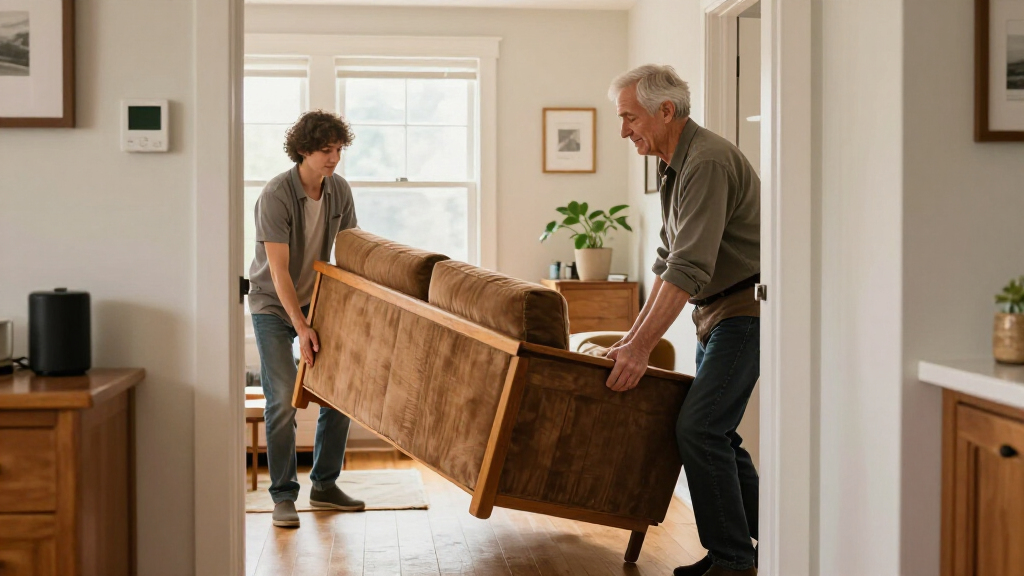
Strength coach Zac Armstrong and physical therapist Joshua Holskey say there is no specific age when someone must stop moving furniture. Their guidance is to judge the task by strength and control, reduce risks with help and equipment, and hire movers when the load feels unsafe.
A Family Handyman report featuring strength coach Zac Armstrong and physical therapist Joshua Holskey says there is no set age at which people should stop moving furniture. The experts advise judging each lift by whether a person can raise and carry the item smoothly and under control, while accounting for health, the route and access to help.
Armstrong says furniture moving can injure the lower back and shoulders, particularly when a person lifts more weight than they can manage or twists while carrying it. Possible injuries listed in the report include muscle strains, sprains, slipped disks and pinched nerves. Armstrong says injuries often happen during the carry, when someone twists to keep an item from falling.
The report also points to falls and fractures as risks. Changes in balance, muscle mass and bone density can make a stumble more consequential, while stairs, tight corners and obstacles add complications. Moving furniture is strenuous and can raise heart rate and blood pressure; the report warns that this may pose serious risks for people with cardiovascular disease. It does not provide rates of injury or quantify risk by age or medical condition.
For people who decide to move an item, Holskey recommends getting help rather than attempting a lift beyond their current capacity. The report also advises clearing the route, planning how to handle turns and stairs, and using dollies, sliders or lifting straps where appropriate. Other suggestions include warming up, moving the item in stages, pushing rather than pulling when practical, and pivoting the whole body instead of twisting under load.
Ability Matters More Than Age
The advice replaces a simple age cutoff with a practical test: can the person handle the specific object and route without losing control? That distinction matters because physical ability varies between individuals, and the same person may be able to move a light chair but not a heavy dresser or an item on stairs. Armstrong says the control test applies at 45 or 75; the source does not claim those ages represent medical thresholds.
For readers, the approach supports making a decision before lifting rather than after discomfort or instability begins. Asking for assistance or paying for an in-home moving service may be a safer choice than risking injury. The report offers general safety guidance, not an individual medical assessment, and does not set clinical limits for lifting.
As an affiliate, we earn on qualifying purchases.
The Report’s Practical Safety Test
The article addresses a common household task that can become harder as strength, balance or health changes. It draws on comments from Armstrong, a strength coach and founder of Executive Health Edge, and Holskey, a doctor of physical therapy at ATI Physical Therapy. The supplied report does not describe a new study, survey or change in formal guidance.
Its central distinction is between a person’s age and their ability to perform a particular lift safely. Furniture weight, grip, carrying distance, stairs and obstacles all affect how demanding a move may be. The article recommends using professional movers when a person is unsure of their ability; it says many companies offer in-home furniture-moving services.
““Is there an age to stop? No.””
— Zac Armstrong, strength coach
As an affiliate, we earn on qualifying purchases.
No Age or Weight Cutoff Given
The report does not give a specific age, maximum weight or clinical test that determines when someone should stop moving furniture. It also does not quantify how much risk changes with age or provide evidence from a study comparing injury rates. Its guidance is general and does not establish whether a particular person with a medical condition can safely lift a particular item.
Anyone uncertain about their health or ability may need advice from a healthcare professional. The source specifically flags cardiovascular disease as a concern but does not explain how people with that or other conditions should assess their individual risk.
lifting straps for heavy furniture
As an affiliate, we earn on qualifying purchases.
As an affiliate, we earn on qualifying purchases.
Assess the Lift Before Moving
The report gives no planned follow-up study or policy change. Its practical next step for readers is to assess the item and route before starting: check whether it can be lifted and carried with control, clear obstacles, plan turns and stairs, and arrange a helper or equipment. If the lift feels unsafe or the person is unsure, the experts’ advice is to ask for help or hire professional movers rather than force the attempt.
As an affiliate, we earn on qualifying purchases.
Key Questions
Is there a specific age when you should stop moving furniture?
No. Armstrong says there is no universal age cutoff. The report says the decision should depend on a person’s current strength and control, along with the demands of the move.
How can I tell if a piece of furniture is too heavy for me?
Armstrong’s test is whether you can pick it up smoothly and carry it under full control. If you cannot, the report advises treating it as too heavy for you to move that day and asking for help.
What precautions does the report recommend?
Get a helper, clear the route, plan for corners and stairs, and use equipment such as dollies, sliders or lifting straps. The report also advises warming up, moving items in stages and avoiding twisting while carrying.
When should I hire professional movers?
The report recommends erring on the side of caution if you are uncertain about your ability. It also flags strenuous lifting as a concern for people with cardiovascular disease and says many moving companies offer in-home furniture-moving services.
Source: rss
Fall yard work Picks
leaf blowers
As an affiliate, we earn on qualifying purchases.