
TL;DR

Get home appliances delivered free with Prime
- Fast, free delivery on millions of items
- Prime Video, Amazon Music and more included
- Member-only deals all year
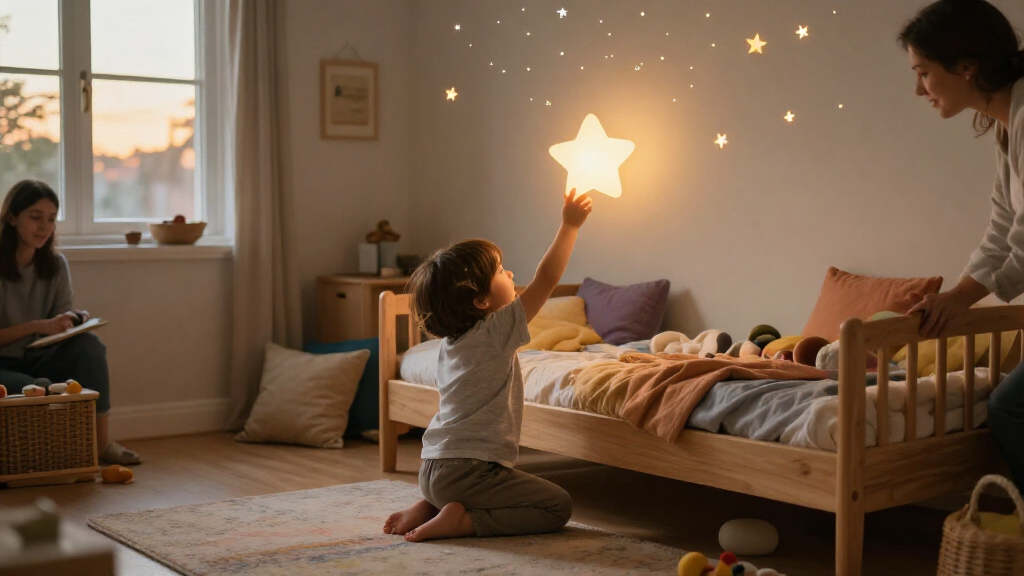
A House Beautiful video featuring Associate Shopping Editor Janae McKenzie presents an IKEA children’s-room design organized around a child’s height and perspective. It highlights accessible storage, play-defining rugs and a reversible bed that can create a small retreat; the report does not provide pricing, safety testing or evidence of outcomes for families.
House Beautiful has presented an IKEA room design built around a child’s point of view, using reachable storage, floor-level play zones and a bed that can form a small hideaway. Associate Shopping Editor Janae McKenzie introduces the concept in a video, which frames the design as a way to pair imaginative play with the everyday needs of a shared family space.
The central idea is to plan the room at a child’s height. The report says that when furniture and storage are reachable, routine tasks such as putting away toys or hanging clothes can become opportunities for children to manage their own belongings. It features IKEA’s house-shaped VITBJÖRN storage unit for toys and a cactus-shaped clothes stand as examples of child-oriented pieces. The source presents these as design suggestions, not as proof that children will independently tidy up.
Floor space is treated as a play area rather than an empty gap between furniture. House Beautiful points to the nature-inspired GREJSIMOJS rug as a soft surface for pretend outdoor play and the HUSSPARV cityscape rug as a setting for games built around roads and a miniature city. The examples suggest using a rug to give play a defined area, while leaving the room’s other functions intact.
The featured KURA reversible bed can be raised to create a nook beneath it, according to the report. A coordinating screen can make the space feel more enclosed and conceal some of the play area, or be removed to open it up. The video’s product-led approach links a child’s private retreat with practical flexibility for adults, though it does not describe room dimensions or how the furniture should be installed in a particular home.
Designing for Everyday Independence
The design matters because children use bedrooms for more than sleeping, while parents and caregivers still need the room to function day to day. A low storage unit or reachable clothes stand can make belongings easier for a child to access without adult assistance. Rugs and a hideaway nook, meanwhile, give play a place within the same room instead of requiring a separate playroom.
That approach also makes the room’s trade-offs visible. A space intended to feel imaginative still has to accommodate storage and changing needs; the report’s examples address this by giving furniture more than one role. The under-bed nook can serve as a reading or play retreat, while the screen can be removed when a more open floor area is wanted. These are proposed benefits of the layout, not measured results or guarantees that it will suit every child or room.
For readers considering a children’s-room redesign, the useful takeaway is the planning principle rather than any single product: place frequently used items within a child’s reach and give play a clear, comfortable zone. The featured IKEA pieces show how House Beautiful applies that principle, but the report does not compare them with other brands or establish that buying them is necessary to achieve the effect.
Products Worth Considering

Sony WH-1000XM5 Premium Noise Cancelling Wireless Headphones – Midnight Blue

Amazon Kindle Scribe (3rd Generation), 64GB, 11-inch Display, Graphite, with Premium Pen

Bose QuietComfort True Wireless Earbuds with Active Noise Cancellation, Bluetooth 5.3, USB-C Charging, IPX4, Black
As an affiliate, we earn on qualifying purchases.
From Sleeping Space to Play Area
The report opens with the idea that a bedroom can be a launchpad for imaginative play, a place to explore or a quiet retreat. It then presents a balance: encourage wonder while keeping the room organized enough for ordinary routines. Its answer is to plan from the child’s perspective, particularly by considering the height at which children interact with furniture and storage.
House Beautiful identifies McKenzie as the video’s presenter and IKEA as the source of the featured products. The article also includes a “Shop the Room” prompt, placing the design in a retail context. It is a design demonstration rather than a reported study of children’s behavior, a review comparing products or a documented installation in a named household.
“Think at their level.”
— House Beautiful, describing the design premise
Details the Video Does Not Provide
The source does not state when the video was published, how much the featured items cost or whether every item is currently available. It also gives no measurements, room plan, installation instructions or information about product testing. Readers would need to check the current product listings and guidance for each item before making purchase or setup decisions.
The report describes possible uses and intended design effects, but it does not include interviews with children or caregivers, research on whether accessible storage changes tidying habits, or evidence that the layout improves independence. It is also unclear how the arrangement would work in a specific bedroom, since room size, the child’s age and needs, and existing furniture are not discussed.
How to Apply the Room Concept
House Beautiful directs readers to watch McKenzie’s video for a demonstration and to its “Shop the Room” section for the products. The source does not announce a launch date, follow-up report or other next milestone. Anyone adapting the idea can start by checking what a child needs to reach, where play can take place and whether the room has enough space for a nook and storage without obstructing everyday use.
Before buying or arranging furniture, families can consult current manufacturer guidance and confirm that each piece fits the room and is assembled as directed. The report leaves those practical checks to the reader; it does not supply a tailored plan or confirm that the featured arrangement is suitable for every household.
Key Questions
What is the main idea behind the room design?
Plan the room from a child’s height, with reachable storage and furnishings alongside areas for imaginative play and rest.
Which IKEA products does the report feature?
The examples are the VITBJÖRN storage unit, a cactus-shaped clothes stand, the GREJSIMOJS and HUSSPARV rugs, and the KURA reversible bed with a coordinating screen.
How does the KURA bed create a hideaway?
According to House Beautiful, raising the reversible bed creates a nook beneath it. A coordinating screen can enclose the area or be removed to open the play space.
Does the report show that the design helps children tidy up?
No. It says reachable storage may encourage children to take ownership of their space, but offers no study or measured results showing an effect on tidying habits.
Are prices and room measurements provided?
The source provides neither product prices nor a room plan or measurements. Availability and setup details should be checked with current product information.
Source: housebeautiful.com