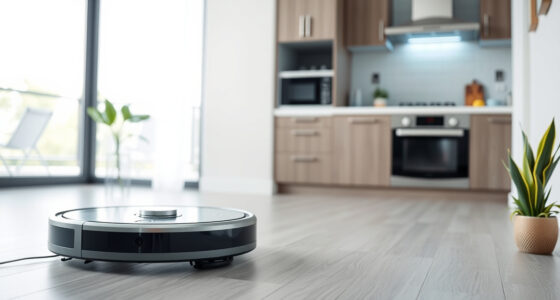
When choosing a robot vacuum, you’ll find lidar offers faster, more precise mapping, even in dim or complex spaces, ensuring thorough cleaning. Cameras are more versatile and affordable, recognizing rooms and objects with advanced image processing, but they struggle in low-light conditions. Both technologies have strengths; lidar focuses on accuracy, while cameras add extra features. To discover which suits your home best, keep exploring how each system works in detail.

Get home appliances delivered free — and shop member deals
- Fast, free delivery on millions of items
- Access to Prime Big Deal Days deals on October 6–7
- Prime Video, Amazon Music and more included
Key Takeaways
- Lidar provides quick, highly accurate 3D mapping, even in low-light or complex environments.
- Cameras rely on visual cues and AI, which may be slower and less effective in dim lighting.
- Lidar detects small objects and furniture precisely, while cameras excel at recognizing rooms and objects visually.
- Lidar is more expensive but offers consistent mapping performance; cameras are more affordable with additional features.
- Overall, Lidar suits precision-focused cleaning, whereas cameras offer versatility and cost-efficiency.
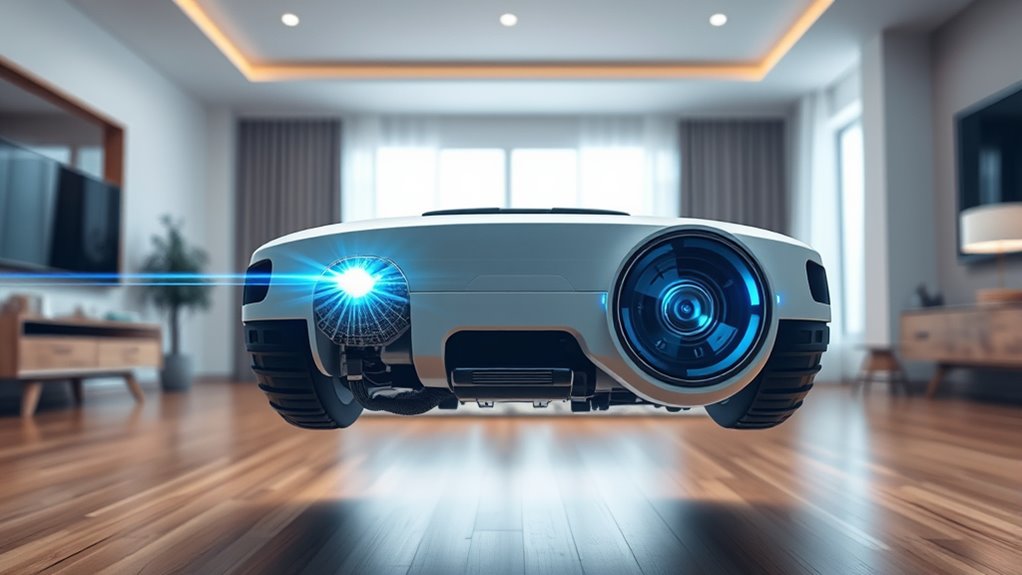
Have you ever wondered which mapping technology truly dominates the industry? When it comes to robot vacuums, understanding how they navigate your home can seem like a mystery. Two main contenders lead the charge: Lidar and cameras. Both have their strengths and weaknesses, but knowing how each works helps you decide which vacuum best fits your needs.
Lidar, short for Light Detection and Ranging, uses laser beams to create precise 3D maps of your environment. As the vacuum moves around, it emits laser pulses that bounce off objects and return to sensors, allowing the device to calculate distances with high accuracy. This technology is like giving your robot a pair of super-powered eyes that can see in the dark and through obstacles. Because of this, Lidar-equipped vacuums tend to map your home quickly and with impressive precision. They can detect furniture, walls, and even small objects, enabling efficient cleaning routes and minimizing missed spots. Plus, their ability to create detailed floor plans means you can usually control where the vacuum cleans and set no-go zones through apps.
On the other hand, cameras rely on visual data to navigate. These robots are equipped with forward-facing cameras that capture images of your home. Using advanced image processing and sometimes artificial intelligence, they interpret the surroundings and build a map. Cameras excel at recognizing patterns and features, which helps them adapt to changes in the environment. Cameras can also benefit from advanced image recognition, allowing them to identify objects and distinguish between different rooms more effectively. They’re often more affordable than Lidar models and can sometimes provide additional functions like real-time video streaming or detailed room recognition. However, cameras can struggle in low-light conditions, and their accuracy may diminish if the environment changes frequently or if lighting is inconsistent. They also require more processing power, which can impact battery life and speed.
While Lidar tends to be more reliable in complex or dimly lit spaces, cameras offer versatility and cost benefits. Your choice depends on what’s most important to you: precision and speed, or affordability and additional features. Both technologies have evolved considerably and continue to improve, but understanding their core differences helps you make an informed decision. Ultimately, whether you value the laser’s pinpoint accuracy or the camera’s visual recognition, knowing how each technology “sees” your home gives you insight into what to expect from your robot vacuum’s cleaning performance.
As an affiliate, we earn on qualifying purchases.
Frequently Asked Questions
How Do Lidar and Camera Systems Perform in Low-Light Conditions?
Lidar systems perform well in low-light conditions because they use laser pulses to map your home, which aren’t affected by lighting. Cameras, on the other hand, rely on ambient light, so they struggle in darkness or dim settings. You’ll find that robot vacuums with lidar maintain accurate navigation at night or in poorly lit areas, while those with cameras may need extra lighting or struggle to see clearly.
Can Robot Vacuums Switch Between Mapping Technologies During Operation?
Yes, many robot vacuums can switch between mapping technologies during operation. They automatically select the best method based on lighting conditions or obstacles. For instance, if the light dims, the vacuum may depend more on Lidar, which isn’t affected by darkness. This flexibility guarantees thorough cleaning and accurate mapping, adapting seamlessly to different environments without your intervention.
What Maintenance Is Required for Lidar Versus Camera Sensors?
You need to keep lidar sensors clean by gently wiping them with a soft, dry cloth to prevent dust buildup that can affect accuracy. For camera sensors, regularly clean the lens with a microfiber cloth and avoid harsh chemicals. Check for smudges or debris frequently. Additionally, verify the sensors are free of obstructions and update the robot’s firmware to keep all components functioning correctly.
Are There Privacy Concerns With Camera-Based Navigation?
Yes, there are privacy concerns with camera-based navigation. Cameras capture visual data of your home, which could include personal or sensitive information. If not properly secured, this data might be accessed or misused by unauthorized parties. You should check your robot vacuum’s privacy settings, ensure data is encrypted, and review the manufacturer’s privacy policy to understand how your data is managed and protect your privacy effectively.
How Do These Technologies Handle Obstacle Detection and Avoidance?
You’ll find that lidar uses laser beams to create precise 3D maps, helping your robot vacuum detect obstacles early and navigate smoothly. Cameras, on the other hand, analyze visual cues to recognize objects and avoid collisions. Both methods are effective, but lidar often excels in low-light conditions, while cameras can identify specific items like cords or pets. Your choice depends on what type of obstacle detection suits your home best.
As an affiliate, we earn on qualifying purchases.
Conclusion
So, next time your robot vacuum confidently navigates your chaos, remember—it’s not really “seeing” your mess, just pretending it does. Whether it trusts its lidar or camera, it’s still clueless about your life’s cluttered chaos. So, enjoy the illusion of a spotless home, because in the end, these tech marvels are just fancy eyes with a limited understanding. Who knew your house’s biggest mystery would be whether your robot’s vision is truly trustworthy?
As an affiliate, we earn on qualifying purchases.
affordable robot vacuum with camera
As an affiliate, we earn on qualifying purchases.
As an affiliate, we earn on qualifying purchases.
NFL season / tailgating Picks
team gear
As an affiliate, we earn on qualifying purchases.