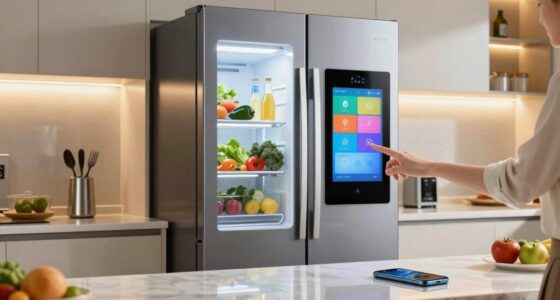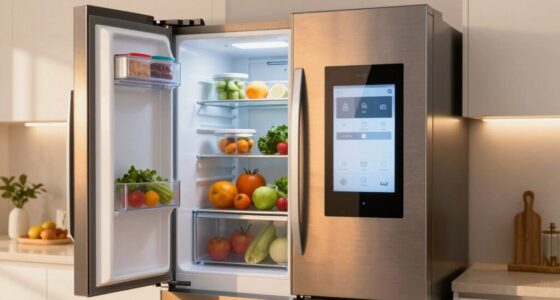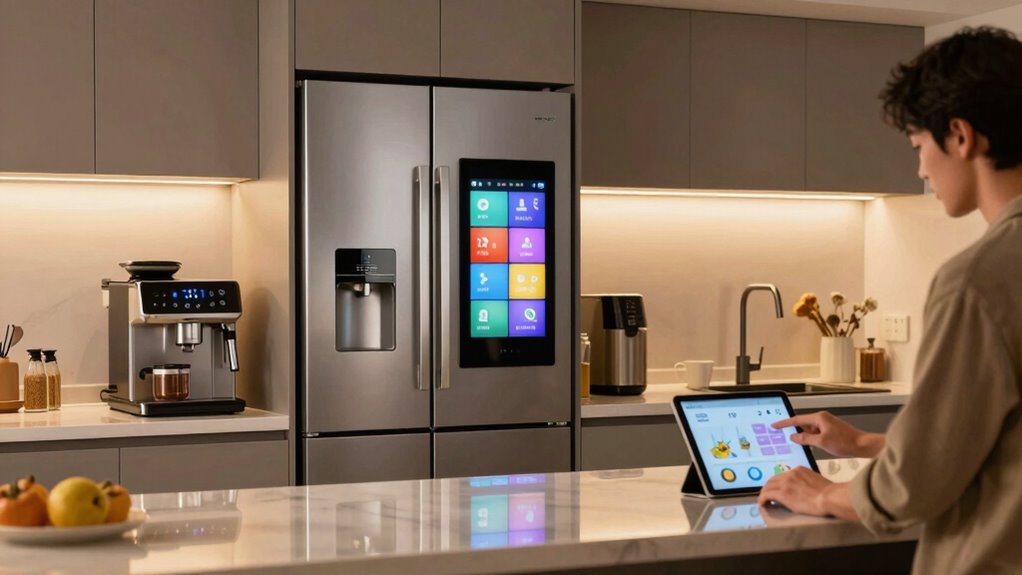
Smart appliances blend convenience with learning curves by automating your daily tasks and adapting to your routines for increased efficiency. They feature user-friendly interfaces, making setup and daily use easier, even for first-timers. Over time, these devices learn your preferences, allowing you to customize settings and optimize energy use effortlessly. As they evolve with your habits, managing your smart home becomes simpler and more intuitive. Keep exploring to discover how these innovations can truly transform your everyday life.
Key Takeaways
- Smart appliances automate routine tasks, enhancing convenience while gradually adapting to user habits for personalized performance.
- User-friendly interfaces simplify setup and daily operation, reducing the learning curve for new users.
- Devices learn routines over time, allowing for tailored adjustments that improve efficiency and user comfort.
- Integration within smart home ecosystems ensures cohesive device coordination, streamlining complex management tasks.
- Personalization features and alerts help users easily customize settings and develop a natural usage rhythm.
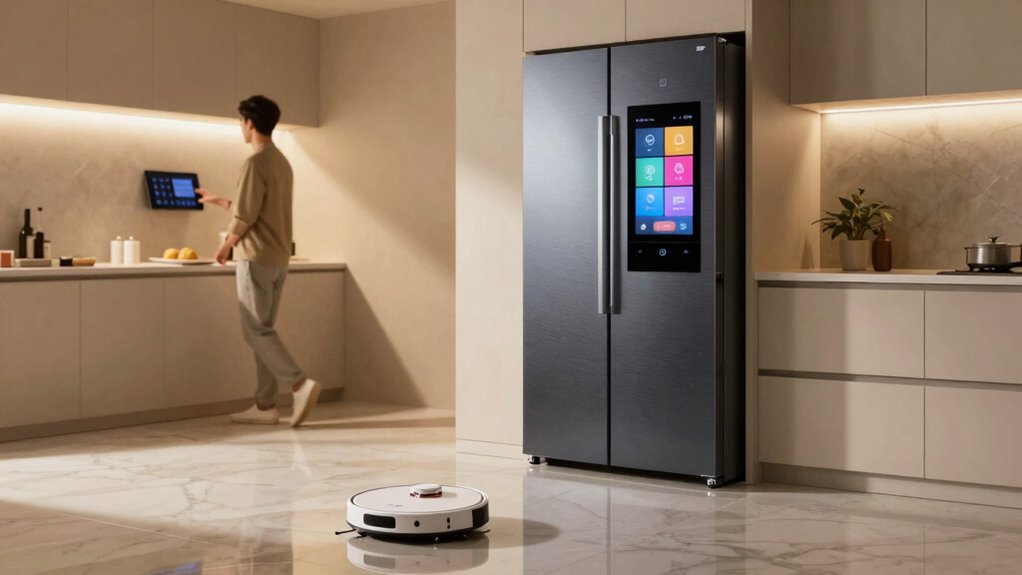
Smart appliances have revolutionized the way you manage daily tasks by seamlessly integrating technology into your home. They’re designed to make life easier, saving you time and effort while also helping you stay more organized. As you start using these devices, you’ll notice how they adapt to your routines, making everyday chores more efficient. One of the key benefits you’ll see is energy efficiency. Smart appliances optimize their operation based on your habits, reducing unnecessary power consumption. For example, a smart thermostat learns when you’re typically home and adjusts the temperature accordingly, helping you save on energy bills without sacrificing comfort. Similarly, smart washing machines can delay cycles to run during off-peak hours, which is better for your utility costs and the environment. With these features, you gain more control over your energy use, making your home not just smarter but also more sustainable. Additionally, many smart appliances feature user-friendly interfaces, designed to help you navigate their functions with ease. These interfaces often incorporate intuitive controls that make setup and daily use more straightforward, even for first-time users. As you explore these devices further, understanding energy management becomes crucial to maximizing their benefits and reducing your environmental impact. Gaining knowledge about smart home ecosystems can also help you see how different devices work together more effectively. As you become more familiar with your smart devices, you’ll also discover how integration with other smart home systems can enhance your overall experience, bringing together various appliances into a cohesive ecosystem. User customization plays a significant role in how you experience these appliances. Many smart devices allow you to personalize settings to suit your preferences. You can set your fridge to send alerts when supplies are running low or customize cooking modes on a smart oven to match your favorite recipes. These options give you a sense of ownership and make your appliances truly fit your lifestyle. As you get more familiar with the technology, you’ll find it easier to tweak settings and create routines that work best for you. The learning curve might seem steep at first, especially as you explore app controls and voice commands, but most devices are designed with user-friendly interfaces. Over time, you’ll develop a natural rhythm for managing your smart appliances, and what once felt complicated becomes second nature.
As an affiliate, we earn on qualifying purchases.
Frequently Asked Questions
How Do Smart Appliances Handle Data Privacy Concerns?
Smart appliances handle data privacy concerns by using data encryption to protect your information from unauthorized access. They also prioritize user consent, ensuring you’re aware of what data is collected and how it’s used. Manufacturers often provide clear privacy policies and options to control your data sharing preferences. By staying informed and managing settings, you can enjoy the convenience of smart appliances while maintaining your privacy and security.
Are Smart Appliances Compatible With All Smart Home Systems?
Smart appliances aren’t compatible with all smart home systems, but many support voice integration, making it easier for you to control them seamlessly. Check if your appliances work with your existing platform, like Alexa or Google Home, to maximize energy efficiency and convenience. Compatibility varies by brand and model, so it’s wise to verify before purchasing. This way, you’ll enjoy smooth integration and enhanced control over your smart home ecosystem.
What Maintenance Is Required for Smart Appliances?
Think of maintaining your smart appliances like tuning a musical instrument—they need regular care. You should clean filters, update firmware, and check connections to keep them running smoothly. Proper maintenance boosts energy efficiency and guarantees user customization features work seamlessly. Just like a well-tuned guitar, your appliances deliver the best performance when kept in good shape. Regular upkeep helps you enjoy all the convenience without unexpected glitches.
Can Smart Appliances Be Used Offline?
Yes, many smart appliances can be used offline, but their offline functionality varies. Some appliances offer limited features without internet access, primarily focusing on core functions like power management. However, for full control and updates, you’ll need to reconnect them online. Keep in mind, offline use might restrict access to advanced features or remote control, so consider your needs when choosing appliances with offline capabilities.
How Long Do Smart Appliances Typically Last?
Smart appliances typically last about 10-15 years, with many owners enjoying their benefits for over a decade. An interesting statistic shows that energy-efficient models can reduce household energy bills by up to 30%. You’ll find that their durability depends on regular maintenance and software updates. Their ability to adapt to your preferences through user customization enhances both longevity and performance, ensuring you get the most out of your investment.
smart thermostat with learning features
As an affiliate, we earn on qualifying purchases.
As an affiliate, we earn on qualifying purchases.
Conclusion
As you embrace smart appliances, you’ll find daily tasks become more effortless, saving you time and energy. Notably, a recent survey found that 78% of users felt more empowered managing their homes with smart devices, highlighting how technology enhances convenience. While there’s a learning curve, the long-term benefits—like increased efficiency and control—make it worth the effort. Ultimately, smart appliances are transforming your home into an intelligent, responsive space tailored to your lifestyle.
smart washing machine with energy saving
As an affiliate, we earn on qualifying purchases.
As an affiliate, we earn on qualifying purchases.
As an affiliate, we earn on qualifying purchases.