
Smart bulbs are individual lights you can control remotely, offer color options, and are easy to install, but they might need frequent replacements. Whole home AI lighting systems provide centralized control over multiple rooms, integrating seamlessly with your smart home for automation, energy savings, and long-term durability. While the system requires a bigger investment, it’s more scalable and easier to manage. Want to understand which option suits your needs? Keep exploring for detailed insights.
Open a free Amazon Business account
Business pricing, bulk buying and tax-exempt orders.
As an affiliate, we earn on qualifying purchases.
Key Takeaways
- Smart bulbs are individual, easy-to-install devices controlled via apps or voice, while whole home systems involve centralized setups with multiple fixtures.
- Whole home AI lighting offers extensive multi-room control, automation, and integration, unlike standalone smart bulbs.
- Smart bulbs are budget-friendly and easier to upgrade individually, whereas whole home systems require higher initial investment but provide better scalability.
- Whole home systems are designed for greater durability, easier maintenance, and long-term expansion; smart bulbs may need more frequent replacements.
- AI-powered systems optimize energy efficiency and automation across the entire home, offering more comprehensive control than individual smart bulbs.
As an affiliate, we earn on qualifying purchases.
Overview of Smart Bulbs and Whole Home Systems
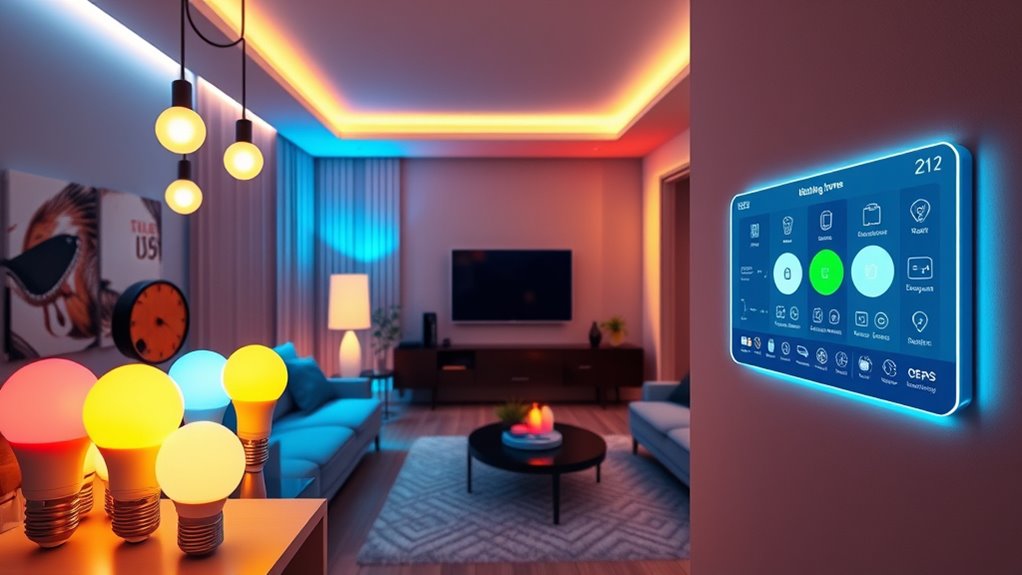
Smart bulbs are individual lighting devices that you can control remotely via smartphone apps or voice commands, offering convenient and customizable lighting options. With voice control, you can turn lights on or off, adjust brightness, and change colors effortlessly. Many smart bulbs come with a wide range of color options, allowing you to set the perfect mood or match your decor. These bulbs are ideal if you want personalized lighting in specific rooms or areas. They’re easy to install and operate, making them a popular choice for tech-savvy homeowners. While they focus on single fixtures, their compatibility with voice assistants ensures quick, hands-free adjustments. Overall, smart bulbs provide flexibility and control, giving you the ability to tailor your lighting experience to your preferences. Incorporating adaptive lighting features can further enhance your comfort and energy efficiency by adjusting color temperature and brightness throughout the day. Additionally, understanding lighting control systems can help you optimize your home’s overall illumination strategy for both convenience and ambiance. Moreover, integrating home automation can enable seamless coordination between your smart bulbs and other connected devices for a smarter living environment. To maximize energy savings and user experience, many systems also support automated scheduling that can turn lights on or off based on your routines.
As an affiliate, we earn on qualifying purchases.
Installation and Setup Processes

Installing smart bulbs is straightforward and typically requires just a few simple steps. You’ll screw the bulb into your existing socket, turn on the power, and connect it to your wireless connectivity network. The setup process is usually quick, with most apps guiding you through pairing and configuration. Because smart bulbs rely on Wi-Fi or Bluetooth, the installation complexity remains low, making it accessible even for beginners. Wireless connectivity setup is generally seamless, especially with user-friendly apps and clear instructions. Whole home AI lighting systems, however, tend to involve more involved installation, often requiring professional setup and integration with existing wiring. These systems may include central hubs or controllers, increasing setup time and the need for technical knowledge. Overall, smart bulbs offer a hassle-free, quick installation, while whole home systems are more extensive but require a longer, more intricate setup process. Additionally, integration with other smart home devices can enhance the functionality of whole home systems but may add to the complexity of installation. It’s also important to consider system scalability when planning for future expansion or upgrades, which can influence the overall setup difficulty. It’s important to consider the installation complexity and your own technical comfort level when choosing between these options. Moreover, understanding the installation process can help ensure a smooth setup and optimal performance.
As an affiliate, we earn on qualifying purchases.
Features and Customization Options
When it comes to features and customization options, whole home AI lighting systems typically offer more advanced capabilities compared to individual smart bulbs. You can enjoy extensive control over your entire lighting setup, including:
- Color customization – Easily adjust colors across multiple rooms for different moods or occasions.
- Voice control – Use voice commands to turn lights on/off, dim, or change colors without lifting a finger.
- Scenes and schedules – Create customized lighting scenes or set schedules for automating your lighting preferences.
- App integration – Manage all your lights from a single app, enabling seamless control and personalization.
- Smart home integration – These systems often integrate with other smart devices, creating a cohesive and intuitive home automation experience.
- Lighting automation — Advanced systems can adapt lighting based on time of day, occupancy, or ambient conditions, enhancing convenience and energy efficiency. Additionally, many systems allow for personalized lighting profiles, tailoring the environment to individual preferences and activities.
- Energy management — Whole home systems often include features to monitor and optimize energy consumption, contributing to lower utility bills and a more sustainable home environment.
As an affiliate, we earn on qualifying purchases.
Cost and Investment Considerations

While whole home AI lighting systems offer advanced features and greater control, they also require a considerably higher upfront investment compared to individual smart bulbs. The pricing models for these systems typically involve a higher initial cost, covering installation, hardware, and setup fees. You should also consider upgrade costs, which can add up if you want to expand or update the system later. Smart bulbs, by contrast, are more budget-friendly, often sold individually, allowing you to add them gradually. This makes them ideal if you’re testing the waters or have a limited budget. Keep in mind that the total investment for a whole home system is significant but offers long-term savings in energy efficiency and convenience. Additionally, privacy considerations should be evaluated since comprehensive systems may collect more user data. Moreover, understanding the system compatibility can help you make smarter choices when expanding or upgrading your smart lighting setup. Considering future scalability can also ensure your system remains adaptable as your needs evolve.
Integration With Other Smart Home Devices
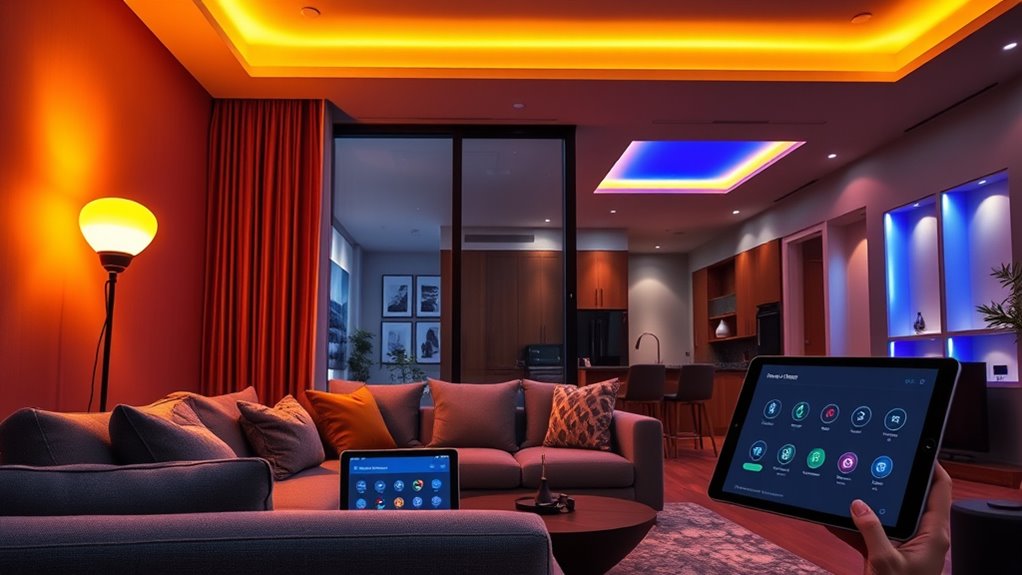
Integrating smart lighting into your existing smart home ecosystem can considerably enhance convenience and automation. With seamless integration, you can control your lights effortlessly through voice control or remote access. To maximize this, consider these key points:
- Compatibility with voice assistants like Alexa or Google Assistant for hands-free control.
- Using remote access to turn lights on or off when you’re away, increasing security.
- Connecting with smart sensors to automate lighting based on movement or ambient light.
- Syncing with other devices, such as smart locks or thermostats, to create cohesive routines.
- Incorporating Free Floating lighting concepts to add flexibility and aesthetic appeal to your outdoor spaces. Additionally, understanding smart home ecosystem compatibility ensures all your devices work harmoniously together, simplifying management and enhancing overall functionality. Recognizing the importance of connectivity standards can further optimize device interoperability and performance. Moreover, aligning your system with popular smart device protocols can facilitate smoother updates and expansions. Ensuring your system supports interoperability across brands and platforms helps maintain a seamless user experience.
This integration not only simplifies daily routines but also enables you to customize your environment effortlessly, making your smart home more intuitive and responsive.
Energy Efficiency and Cost Savings

Smart lighting systems can markedly reduce your energy consumption and lower utility bills. With features like dimming capabilities, you can adjust brightness levels to suit your needs, saving energy when full brightness isn’t necessary. Whole home AI systems optimize lighting based on your habits, further enhancing efficiency. They often include a variety of color options, allowing you to set the mood while avoiding unnecessary energy use. Integrating lighting automation can lead to smarter energy management across your entire home. Implementing these systems also helps reduce energy waste, contributing to both cost savings and environmental benefits. Advances in AI-driven platforms facilitate more sophisticated and personalized lighting solutions that adapt to your lifestyle. Here’s a quick comparison:
| Feature | Smart Bulbs | Whole Home AI System | Cost & Efficiency |
|---|---|---|---|
| Dimming Capabilities | Yes | Yes | Higher initial, better savings |
| Color Options | Limited to specific bulbs | Extensive, customizable options | Cost varies |
| Energy Savings | Moderate | Significant due to automation | Long-term cost reduction |
Long-term Maintenance and Scalability

Long-term maintenance and scalability are critical factors to contemplate when choosing between smart bulbs and whole home AI lighting systems. Smart bulbs often have limited hardware durability, meaning you may need to replace individual bulbs over time. Whole home systems, however, are designed for better durability and easier upgrades. Consider these points:
- Hardware durability impacts how often you’ll need replacements.
- Software updates keep your system secure and compatible with new features.
- Scalability affects how easily you can expand your lighting setup.
- Maintenance complexity varies; whole home systems typically require less frequent attention.
Ultimately, a whole home AI system offers better long-term scalability and lower upkeep, while smart bulbs may need more frequent hardware replacements.
Frequently Asked Questions
Can Smart Bulbs Be Used Without a Central Hub or System?
Yes, you can use smart bulbs without a central hub or system. They connect wirelessly through Wi-Fi or Bluetooth, making setup simple and flexible. This allows you to control energy efficiency and lighting directly from your smartphone or voice assistant. Without a hub, installation is easier, but some advanced features might be limited. Overall, wireless connectivity makes smart bulbs a convenient, energy-efficient choice even without a central system.
How Does AI Adapt Lighting Based on User Behavior?
They say, “The proof of the pudding is in the eating,” and AI adapts lighting by analyzing your behavior and preferences. It learns when you turn on lights, your preferred brightness, and color, adjusting automatically for comfort and efficiency. Through adaptive lighting, AI creates a personalized environment, making your space feel just right without you lifting a finger. This seamless adjustment keeps your home cozy and energy-smart.
Are There Compatibility Issues Between Different Brands of Smart Lighting?
You might face compatibility issues between different brands of smart lighting due to limited brand interoperability and varying wireless standards. Not all smart bulbs or systems work seamlessly together, so check if the products support common protocols like Zigbee, Z-Wave, or Wi-Fi. To avoid problems, choose devices that specify compatibility with your existing ecosystem, or opt for platforms that prioritize interoperability, ensuring smooth integration across your smart home setup.
What Security Measures Protect Smart Home Lighting Systems From Hacking?
You protect your smart home lighting system by using strong encryption protocols that secure data transmission and prevent hacking. Additionally, implement access controls like two-factor authentication and unique passwords to restrict unauthorized entry. Regularly update your device firmware to patch vulnerabilities and disable remote access features if you don’t need them. These measures help guarantee your lighting system remains secure against cyber threats, keeping your home safe and private.
How Do Updates and Firmware Upgrades Affect System Stability?
Did you know that devices with frequent updates experience 30% fewer bugs? Updates and firmware upgrades greatly impact system stability by fixing bugs and improving security. Regular update frequency guarantees firmware stability, reducing crashes and vulnerabilities. When you keep your lighting system up-to-date, you enhance both performance and security, making your smart home safer and more reliable. Neglecting updates can leave your system vulnerable and prone to glitches.
Conclusion
Whether you choose a smart bulb or a whole home AI lighting system, you’re opening the door to a world where your home breathes with light. Think of it as painting your living space with a palette of endless colors and moods, all at your fingertips. Embrace the control and convenience, turning your house into a glowing sanctuary. With the right system, your home becomes a symphony of light, perfectly tuned to your lifestyle.
Flea & tick season Picks
flea and tick prevention
As an affiliate, we earn on qualifying purchases.