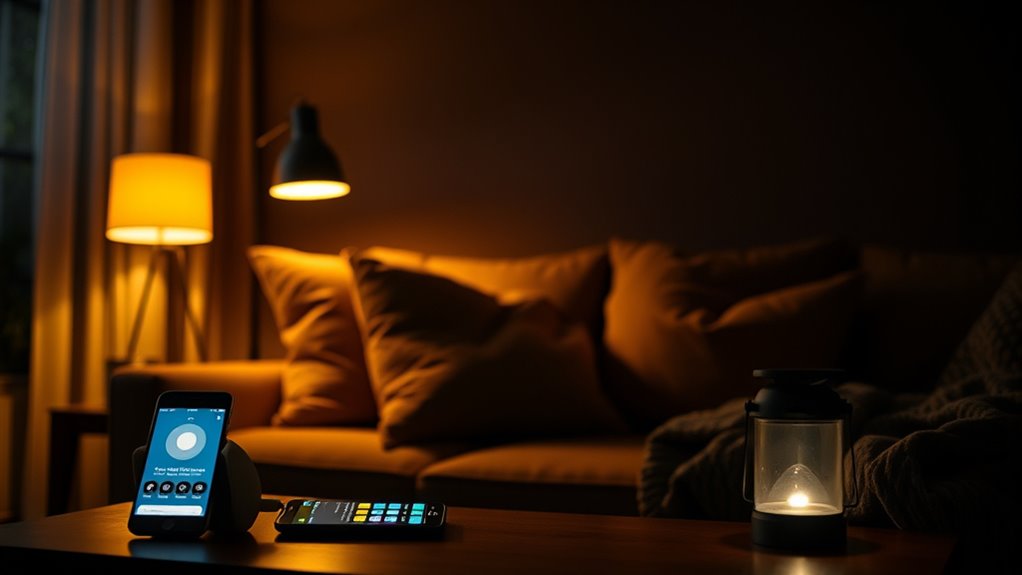

When the lights go out, smart lighting solutions keep your home safe and comfortable. Battery-powered LED bulbs and rechargeable portable lights turn on automatically or can be controlled remotely via smartphone apps. Smart switches and automated systems guarantee your space stays illuminated even during brief outages, with backup power sources for added reliability. Investing in these technologies helps you stay prepared and confident. Keep exploring to discover more ways to enhance your outage safety plan.

Get home appliances delivered free with Prime
- Fast, free delivery on millions of items
- Prime Video, Amazon Music and more included
- Member-only deals all year
Key Takeaways
- Install smart LED bulbs that automatically turn on during power outages for seamless illumination.
- Keep rechargeable flashlights and lanterns accessible, ensuring they are charged and ready for use.
- Use smart switches and automation systems to remotely control and schedule lighting during blackouts.
- Incorporate backup power sources like UPS or solar-charged devices to sustain smart lighting systems.
- Plan and test your smart lighting setup regularly to ensure safety and visibility during unexpected outages.

Have you ever been caught in a power outage unexpectedly? It can be startling and frustrating, especially when you’re unprepared. Suddenly, your entire home plunges into darkness, and you’re left fumbling for flashlights or candles. This kind of situation highlights the importance of smart lighting solutions that can keep you safe, comfortable, and even connected during these unexpected moments. Investing in modern lighting options means you won’t be left in the dark when the power goes out. Instead, you can navigate your home easily, maintain a sense of security, and avoid accidents or injuries caused by tripping over furniture or stumbling in the dark.
Power outages can be shocking—smart lighting keeps you safe, connected, and in control during unexpected darkness.
One of the most effective ways to prepare is to install smart lighting systems that operate independently of your main power supply. These systems often include battery-powered or rechargeable lights that can be activated remotely or through motion sensors. For instance, smart LED bulbs can be programmed to turn on automatically during a blackout, providing immediate illumination without needing manual intervention. These bulbs can be controlled via smartphone apps, allowing you to turn lights on or off from anywhere in your house. This means you don’t have to rush to the switch when darkness falls—your lights will activate as needed, giving you peace of mind.
Another smart solution is to incorporate portable, rechargeable lanterns and flashlights into your emergency kit. Unlike traditional flashlights, these can often be recharged using USB outlets or solar power, ensuring they’re ready whenever you need them. Some models even come with multiple lighting modes, such as dim, bright, or flashing emergency signals, so you can customize your lighting depending on your situation. Keep these devices in easy-to-access places, like your kitchen drawer or a designated emergency kit, so you’re not searching for them in the dark during a stressful moment.
In addition, consider installing smart switches that can be controlled remotely or programmed to turn on at specific times or during power interruptions. These switches can be integrated into your existing lighting system, allowing you to set schedules or activate lights with voice commands or mobile devices. This way, even if the power flickers or goes out temporarily, your smart system can respond automatically, providing continuous illumination. Pairing these switches with backup power sources like uninterruptible power supplies (UPS) ensures the lights stay on longer during outages.
Ultimately, investing in smart lighting solutions means you take control of your safety and comfort during power outages. These technologies offer convenience, peace of mind, and enhanced safety—making sure that when the lights do go out, you’re not left in the dark. An important aspect of home safety is ensuring reliable lighting, especially during emergencies. Instead, you can face unexpected outages confidently, knowing you have reliable lighting ready to guide your way.
smart LED bulbs for power outages
As an affiliate, we earn on qualifying purchases.
As an affiliate, we earn on qualifying purchases.
Frequently Asked Questions
How Long Do Battery-Powered Lights Typically Last During an Outage?
Battery-powered lights usually last between 8 to 24 hours during an outage, depending on the type and quality. If you choose LED flashlights or lanterns, expect longer runtimes, often up to 50 hours on a single set of batteries. Make sure to keep extra batteries or rechargeable options handy. You can also conserve power by turning off unnecessary lights and using energy-efficient devices.
Are Solar-Powered Lights Effective in Prolonged Power Outages?
Yes, solar-powered lights can be effective during prolonged power outages. They charge during the day, providing illumination at night, so as long as there’s enough sunlight, they’ll keep working. However, their effectiveness depends on factors like weather and the size of the solar panel. To guarantee reliable lighting, you might want to have a backup plan, such as extra batteries or portable solar chargers.
What Safety Features Should I Look for in Emergency Lighting?
You should look for emergency lighting with built-in safety features like automatic activation during power failures, high visibility colors, and battery backups. Make certain it has a long runtime, is easy to operate, and meets safety standards. Check for rechargeable batteries and low battery alerts. These features help you stay safe, navigate your surroundings, and ensure your emergency lighting works reliably when you need it most.
Can Smart Lighting Systems Be Used During Power Outages?
Yes, smart lighting systems can be used during power outages if they include battery backup features. When equipped with this, your smart lights stay on even when the main power goes out, providing essential illumination. You can control them remotely via your smartphone or voice commands, ensuring safety and convenience. Make sure to choose models with reliable backup power so you’re never left in the dark during an outage.
How Do I Maintain and Store Emergency Lighting Equipment Properly?
You should regularly inspect your emergency lighting equipment to guarantee it’s functioning properly. Keep batteries charged and replace them as needed, following manufacturer guidelines. Store your equipment in a cool, dry place, and protect it from dust and moisture. Test your lights monthly to confirm they work during power outages. Proper maintenance and storage ensure your emergency lighting is reliable when you need it most, providing safety and peace of mind.
rechargeable LED flashlight with USB charging
As an affiliate, we earn on qualifying purchases.
As an affiliate, we earn on qualifying purchases.
Conclusion
When the lights go out, your smart lighting becomes more than just convenience—it’s a beacon of hope in darkness. It symbolizes resilience, guiding you safely through uncertain times. Embrace these solutions now, so when the power falters, you’re not left in shadows but illuminated by preparedness and calm. Let your smart lights stand as a symbol of your strength, shining bright even when everything else fades into darkness.
smart switches for remote lighting control
As an affiliate, we earn on qualifying purchases.
As an affiliate, we earn on qualifying purchases.
solar rechargeable lantern for emergencies
As an affiliate, we earn on qualifying purchases.
As an affiliate, we earn on qualifying purchases.
NFL season / tailgating Picks
team gear
As an affiliate, we earn on qualifying purchases.