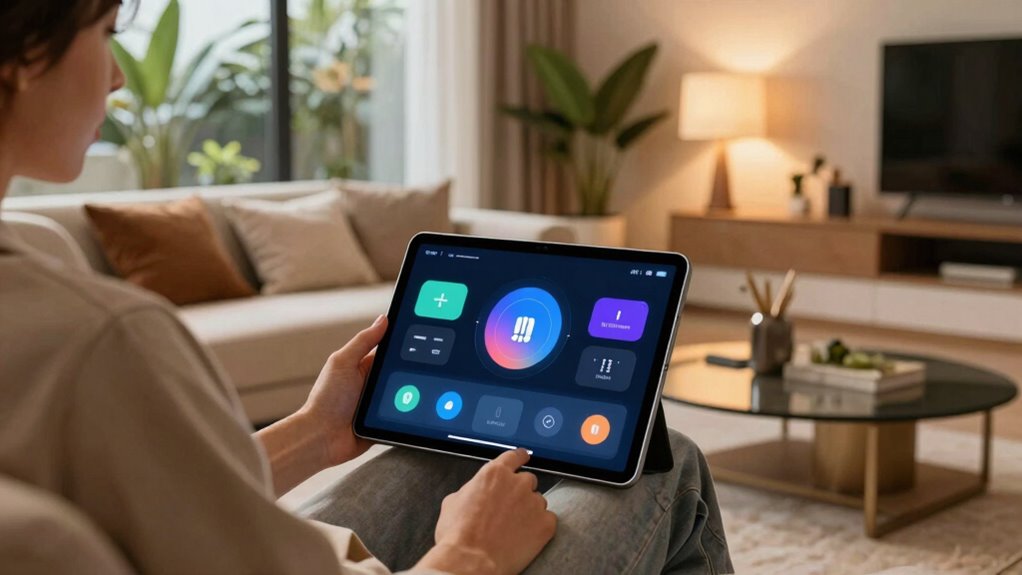

Designing smart home controls for guests is essential to balance convenience, security, and privacy. It allows you to give guests access to certain devices or features without exposing sensitive information or compromising safety. By using temporary permissions and user-friendly interfaces, you can make them feel comfortable while maintaining control. This approach also helps prevent accidental tampering or security breaches. If you keep exploring, you’ll discover how to create a seamless, secure experience for everyone involved.

Get home appliances delivered free with Prime
- Fast, free delivery on millions of items
- Prime Video, Amazon Music and more included
- Member-only deals all year
Key Takeaways
- Enhances guest comfort by allowing easy control of lighting, temperature, and entertainment during their stay.
- Maintains home security by restricting access to sensitive devices and personal data.
- Simplifies management with dedicated guest access features and temporary permissions.
- Protects privacy through compartmentalized controls and access restrictions tailored for guests.
- Promotes a welcoming environment that balances convenience with robust security measures.
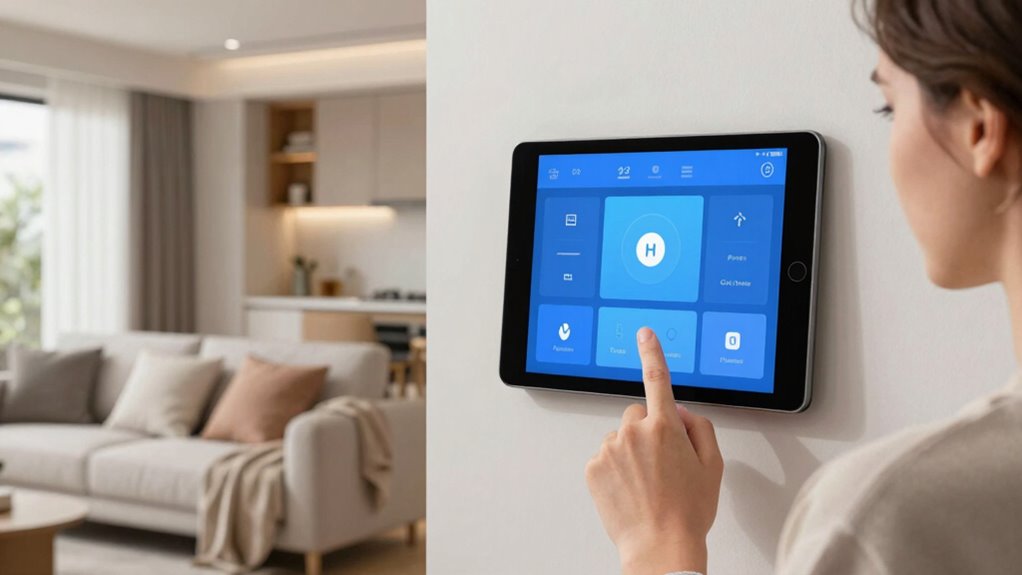
When hosting guests in your smart home, ensuring they can comfortably control devices without hassle is essential. Your goal is to make their experience seamless, so they feel at ease while using your technology. At the same time, you need to regard privacy concerns and access restrictions. You want your guests to enjoy the convenience of smart devices without compromising your home’s security or your personal privacy. Striking this balance can be tricky, but designing your smart home control system with guests in mind benefits everyone.
Firstly, think about how your system handles privacy concerns. You don’t want your visitors to accidentally access private information or settings that are meant for you alone. Your smart home should have a way to compartmentalize access, so guests can control only certain devices or features. For example, you might allow them to turn on lights, adjust the thermostat, or play music, but block access to security cameras, door locks, or personal data. This approach reassures you that your privacy remains protected while offering your guests enough control to feel comfortable. Clear boundaries prevent any accidental mishaps or breaches, ensuring your personal information stays secure. Implementing access management features can help you set these boundaries effectively. Additionally, some systems offer customizable user profiles, allowing you to tailor permissions for each guest.
Limit guest access to specific devices to protect your privacy and maintain security.
Access restrictions play a pivotal role in making your smart home guest-friendly. Modern systems often come with guest modes or temporary access options. These features let you set specific permissions that expire after a certain time or once your guests leave. For instance, you could generate a temporary password or a guest code that grants limited control over smart devices. This way, your visitors can enjoy the convenience without gaining full access to your entire home network. Implementing these restrictions also simplifies your management—once the visit ends, you can revoke access effortlessly, knowing your private settings remain untouched. Incorporating security protocols ensures that even temporary access does not compromise your home’s safety.
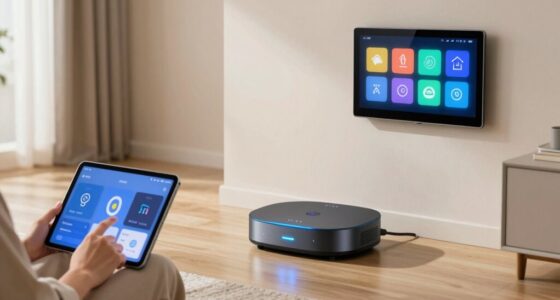
Designing your smart home controls with guests in mind also means making the interface straightforward. Use user-friendly apps or voice commands that your guests can navigate easily. Consider creating a dedicated guest control panel that simplifies device management and clearly indicates what controls are available. With intuitive controls, your visitors won’t feel overwhelmed, and you’ll feel confident that they won’t accidentally tamper with settings that are off-limits. This small step can make a big difference in guest satisfaction and your peace of mind. Moreover, providing clear instructions or a brief guide can further enhance their experience.
smart home guest access control system
As an affiliate, we earn on qualifying purchases.
As an affiliate, we earn on qualifying purchases.
Frequently Asked Questions
How Secure Is Guest Access to Smart Home Controls?
Guest access to smart home controls can be secure if you set up device restrictions properly. You should limit what guests can control, ensuring they only access essential features. Using secure, unique passwords and temporary access codes adds extra layers of protection. Regularly reviewing guest permissions and disconnecting their access after their stay helps keep your smart home secure, preventing unauthorized control or potential breaches.
Can Guests Customize Device Settings During Their Stay?
They say “the proof of the pudding is in the eating,” and with smart home controls, guests can often customize device settings during their stay. You can offer guest personalization by allowing them to adjust lighting, temperature, or music, thanks to device flexibility. This enhances comfort and convenience, making their experience more enjoyable. Just make certain you set clear boundaries, so they can personalize without compromising your security or preferences.
What Privacy Measures Protect Guest Data?
You should guarantee guest data is protected through robust guest data encryption, which secures their information from unauthorized access. Additionally, practicing privacy policy transparency helps build trust, clearly explaining how their data is collected, used, and protected. By implementing these privacy measures, you create a safe environment where guests feel confident using your smart home features, knowing their privacy is a top priority.
How Easy Is It for Guests to Operate the System?
You’ll find that smart home systems are designed for ease of use, with intuitive user interfaces and accessibility features that make operation straightforward for guests. They can quickly adjust lighting, temperature, or entertainment options without needing extensive instructions. Clear icons, voice commands, and simple controls guarantee anyone can navigate the system comfortably, offering a seamless experience that enhances guest convenience and satisfaction during their stay.
Are There Multilingual Options for Guest Users?
Think of your smart home as a global welcome mat—multilingual options make every guest feel at home. Yes, many systems now feature a multilingual interface, allowing you to switch languages effortlessly. With simple language customization, you can tailor the experience to suit international visitors, ensuring they navigate your smart home with the ease of a local. This inclusivity transforms your space into a true global hub, welcoming guests from all walks of life.
temporary smart home device permissions
As an affiliate, we earn on qualifying purchases.
As an affiliate, we earn on qualifying purchases.
Conclusion
Thinking about your guests’ experience isn’t just courteous; it’s essential. When you design your smart home controls to be guest-friendly, you foster comfort and trust, making them feel truly at home. Some might say it’s just convenience, but it’s also about creating genuine connection and hospitality. After all, the true value of a smart home lies in its ability to serve everyone, reminding us that shared spaces are about shared experiences.
As an affiliate, we earn on qualifying purchases.
voice-controlled smart home devices for guests
As an affiliate, we earn on qualifying purchases.
As an affiliate, we earn on qualifying purchases.
Fall Picks
fall essentials
As an affiliate, we earn on qualifying purchases.