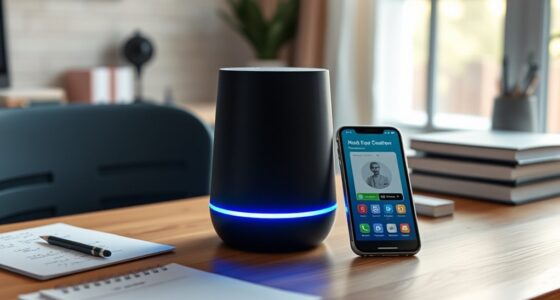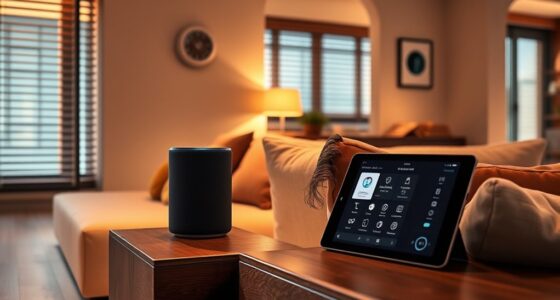
A smart home hub acts as your command center, connecting and managing all your devices effortlessly, so you don’t need multiple apps. It supports voice control and integrates with popular assistants like Alexa or Google Assistant, adding convenience. Security is essential—look for encryption and real-time alerts. Compatibility and easy setup make expanding your system simple. If you want to learn more about choosing the right hub and boosting your home’s safety, keep exploring what’s possible.
Prime for Young Adults — start your free trial
Fast free delivery, streaming and member deals for eligible 18–24 year olds.
As an affiliate, we earn on qualifying purchases.
Key Takeaways
- A smart home hub centralizes control, connecting multiple devices for easier management without multiple apps.
- Supports voice commands via popular assistants like Alexa, Google Assistant, or Siri for hands-free operation.
- Includes security features such as encryption, firmware updates, and real-time alerts to protect your network and home.
- Compatibility with various devices ensures a smooth setup and room for future expansion.
- Easy setup and reliable security protocols help beginners confidently manage their smart home.
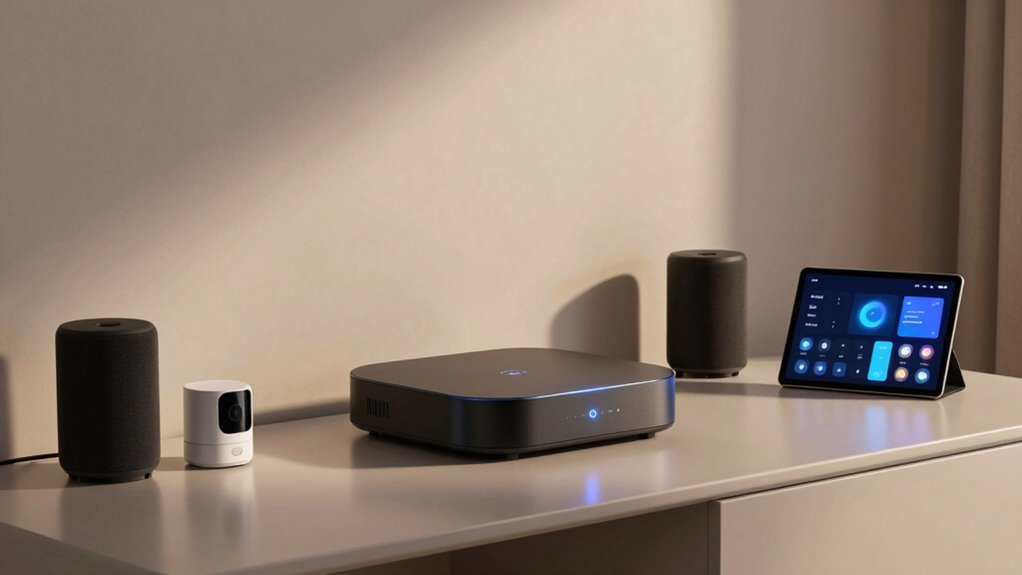
If you’re new to smart home technology, a smart home hub can be a game-changer. It acts as the central command center that connects and manages all your smart devices, making your home more efficient and easier to control. With a hub, you won’t have to juggle multiple apps or control devices individually. Instead, you gain a unified system where everything works seamlessly together. One of the most appealing features of a smart home hub is voice control. With voice commands, you can turn lights on or off, adjust the thermostat, or lock doors without lifting a finger. This hands-free approach adds convenience and accessibility, especially when your hands are full or you’re across the room. Plus, most modern hubs support popular voice assistants like Alexa, Google Assistant, or Siri, so you can choose the one that fits your preferences.
Security features are another critical aspect to ponder when choosing a smart home hub. Many hubs have built-in security layers that protect your network from unauthorized access. These security features often include encryption, secure pairing, and regular firmware updates to patch vulnerabilities. Some hubs even come with integrated alarms or sensors that monitor for intrusions, smoke, or water leaks, providing you with real-time alerts to keep your home safe. With a reliable hub, you can set up automated routines that activate security measures instantly, such as locking doors or turning on outdoor cameras when you leave the house. This not only enhances safety but also gives you peace of mind, knowing your home is protected around the clock. Additionally, understanding the compatibility of your smart home hub with various devices is essential for a smooth setup and future expansion. Being aware of security features is equally important to ensure your system remains protected from potential threats. Moreover, choosing a hub with easy setup can significantly reduce the initial learning curve for beginners. Understanding the network security protocols supported by your hub can further safeguard your entire smart home ecosystem. Incorporating a security-focused hub can further enhance your home’s overall safety and protection.
smart home hub with voice control
As an affiliate, we earn on qualifying purchases.
As an affiliate, we earn on qualifying purchases.
Frequently Asked Questions
Can I Use Multiple Hubs in One Smart Home?
Yes, you can use multiple hubs in your smart home. This setup can enhance device interoperability and improve network performance. Just make certain proper hub placement to prevent signal interference and maintain seamless communication. Strategically placing hubs around your home helps connect various smart devices efficiently, especially if you have a large or complex setup. Keep in mind that managing multiple hubs might require more coordination, but it ultimately offers greater flexibility and coverage.
How Do Hubs Affect My Wi-Fi Network?
Hubs can affect your Wi-Fi network by causing wireless interference, especially if they operate on the same frequency as your router. This interference can weaken your Wi-Fi signal and reduce signal range, leading to slower device responses. To minimize issues, choose hubs that support different frequencies or use wired connections when possible. Proper placement of hubs away from Wi-Fi routers also helps maintain a strong, stable network.
Are Hubs Compatible With All Smart Home Devices?
Hubs aren’t compatible with all smart home devices, but many support a range of brands through device compatibility. When choosing a hub, check its specifications for compatible devices and brand integration. Some hubs are designed for specific ecosystems, like Zigbee or Z-Wave, while others offer broader device compatibility. Always verify that your desired devices work with the hub before purchasing to guarantee seamless integration and smooth operation in your smart home.
What Is the Average Cost of a Smart Home Hub?
A smart home hub usually costs between $50 and $300, acting as the heart of your smart setup. Think of it as the command center for your smart home security and voice control integration. The price varies depending on features like compatibility, brand, and connectivity options. When budgeting, consider the hub’s ability to seamlessly connect all your devices, making your smart home feel like a well-orchestrated symphony.
Do Hubs Require Professional Installation or Setup?
Hubs generally don’t require professional installation; you can set them up yourself using the app. Once connected, you can enable voice control to operate your devices easily. Many hubs also come with security features like encryption and device authentication, helping protect your smart home. Just follow the manufacturer’s instructions, and you’ll have your hub up and running quickly, making your smart home more convenient and secure.
As an affiliate, we earn on qualifying purchases.
Conclusion
In the end, embracing a smart home hub might feel like taking a leap, but it’s really about simplifying your life. Think of it as the central nervous system for your smart devices—connecting, controlling, and making everything work together smoothly. Some say hubs are unnecessary, but history shows us that centralized systems often bring greater efficiency and peace of mind. So go ahead, give it a try—you might just wonder how you ever lived without one.
smart home hub compatible with Alexa Google Siri
As an affiliate, we earn on qualifying purchases.
As an affiliate, we earn on qualifying purchases.
As an affiliate, we earn on qualifying purchases.
NFL season / tailgating Picks
team gear
As an affiliate, we earn on qualifying purchases.