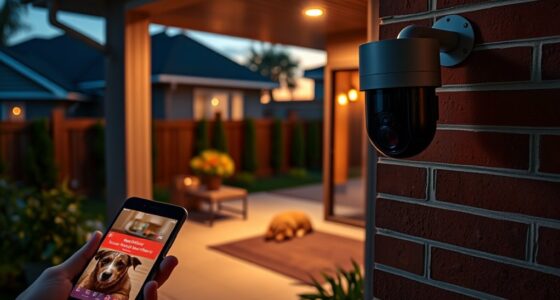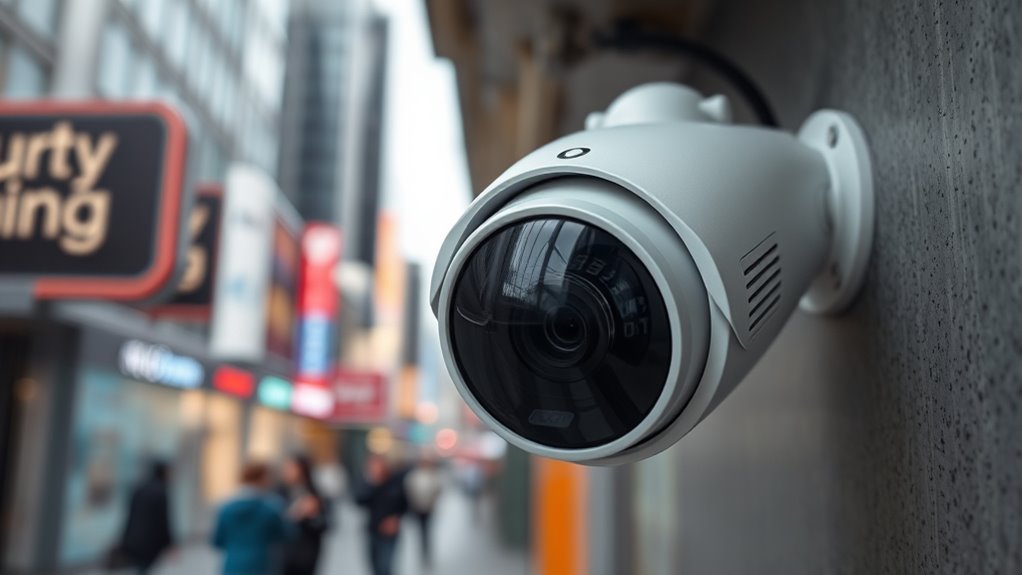

AI security cameras recognize faces by analyzing unique facial features using advanced algorithms that measure distances, angles, and biometric traits like eyes, nose, and mouth. They convert these features into digital data for quick comparisons against large databases, allowing real-time identification. This tech enhances security at airports, stores, and public spaces but raises privacy concerns. If you want to understand how these systems evolve and impact society, there’s more to explore.

Get home appliances delivered free with Prime
- Fast, free delivery on millions of items
- Prime Video, Amazon Music and more included
- Member-only deals all year
Key Takeaways
- AI security cameras analyze facial features using machine learning algorithms to create unique digital facial maps.
- They extract key facial landmarks like eyes, nose, and mouth for accurate identification.
- The system compares live images to stored biometric profiles for real-time recognition.
- Recognition accuracy improves through continuous learning and high-resolution imaging.
- It enhances security by enabling quick identification of individuals in various environments.
AI security camera with facial recognition
As an affiliate, we earn on qualifying purchases.
As an affiliate, we earn on qualifying purchases.
The Technology Behind Facial Recognition

Facial recognition technology works by analyzing unique features of a person’s face, such as the distance between the eyes, the shape of the jawline, and other distinctive patterns. This process is a form of biometric authentication, relying on the uniqueness of facial traits to verify identities accurately. The system uses facial feature mapping to create a detailed digital map of key facial points, capturing subtle differences that set each individual apart. Once these features are mapped, the data is converted into a mathematical representation, allowing the system to compare faces efficiently. This combination of biometric authentication and facial feature mapping enables AI security cameras to identify people quickly and reliably, enhancing security and access control in various environments. Additionally, advancements in technology integration continue to improve the speed and accuracy of facial recognition systems. For example, integrating advanced algorithms enables more sophisticated analysis and reduces errors. Moreover, ongoing research into data privacy measures aims to address concerns related to the ethical use of facial recognition technology.
high resolution facial recognition camera
As an affiliate, we earn on qualifying purchases.
As an affiliate, we earn on qualifying purchases.
How AI Processes and Analyzes Faces

Once a facial map is created, AI systems process and analyze the data to identify individuals quickly and accurately. They examine facial landmarks—key points like the eyes, nose, and mouth—and measure the distances and angles between them. This helps the system build a detailed biometric profile unique to each person. AI compares this biometric data against a database of known faces, looking for matches. Advanced algorithms detect subtle features, such as cheekbone structure or jawline shape, to improve accuracy. These processes happen rapidly, allowing real-time recognition. Efficient processing also depends on optimized system performance, which ensures quick analysis without overloading hardware resources. By analyzing facial landmarks and biometric data, AI security cameras can distinguish familiar faces from strangers, ensuring precise identification while minimizing false positives. Additionally, understanding energyLast can be relevant when considering the data storage and processing power required for such advanced systems. Moreover, incorporating coaching experience insights can also contribute to developing more effective AI recognition systems by refining algorithm accuracy and reliability. Constant innovation in AI technology plays a crucial role in enhancing facial recognition capabilities and overall security effectiveness.
biometric security camera system
As an affiliate, we earn on qualifying purchases.
As an affiliate, we earn on qualifying purchases.
Applications of Facial Recognition in Security
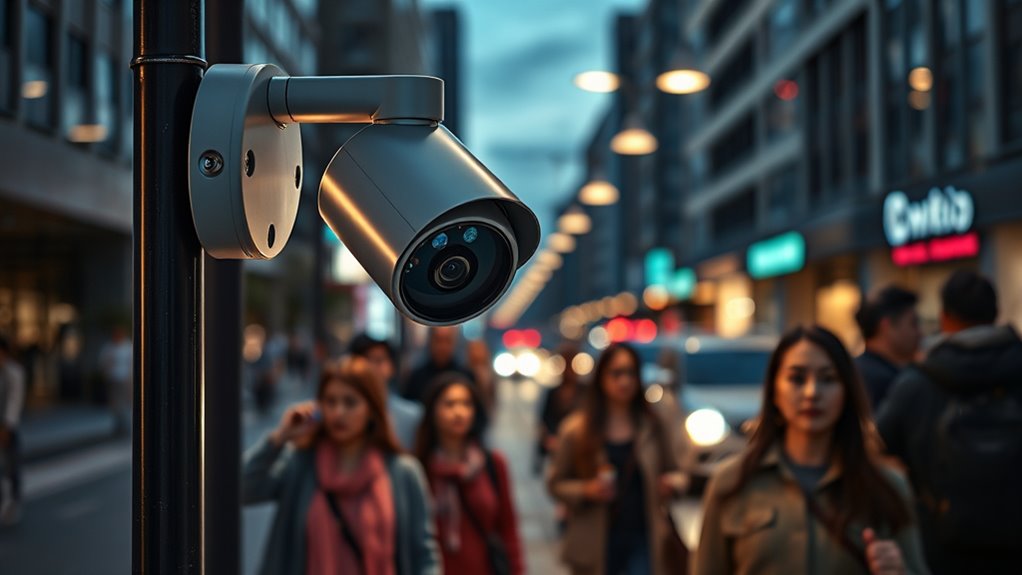
Facial recognition technology has become a vital tool in enhancing security across various settings. You’ll find it used in airports to verify identities quickly, at public events to spot known threats, and in retail stores to prevent theft. Law enforcement agencies use these systems to identify suspects swiftly, improving response times. Additionally, simplifying modern car tech helps drivers understand how these systems work and their implications. These applications often rely on sophisticated image processing algorithms, which analyze facial features with increasing precision. As these systems become more widespread, concerns about accuracy and reliability are growing, emphasizing the need for ongoing improvements. However, these applications raise significant privacy implications, as individuals may be monitored without consent. The implementation of security system integration is crucial for ensuring these tools operate effectively and ethically. Ethical dilemmas also emerge around data collection, storage, and potential misuse. As the accuracy of facial recognition systems continues to improve, concerns about algorithmic bias and fairness become increasingly prominent. While facial recognition can increase safety and efficiency, it’s essential to balance these benefits with respect for individual rights. Understanding how these applications operate helps you see their impact on security practices and the ongoing debates about privacy and ethics in this evolving field.
smart home facial recognition camera
As an affiliate, we earn on qualifying purchases.
As an affiliate, we earn on qualifying purchases.
Privacy Concerns and Ethical Considerations

As AI security cameras become more widespread, concerns about privacy and ethics grow louder. You might worry about how your data privacy is protected when facial recognition systems collect and store your images. These cameras can track your movements without your explicit consent, raising ethical dilemmas about surveillance and personal freedom. You may question who has access to this sensitive data and how it’s used. Privacy breaches could lead to misuse or identity theft, while unchecked surveillance risks infringing on civil liberties. It is crucial to evaluate the balance between security benefits and respecting individual rights. Implementing strict regulations and transparent practices can help address these concerns, ensuring AI security cameras serve the public without compromising your privacy. Additionally, understanding the field‑of‑view and imaging‑scale considerations is essential for assessing how these systems operate in various environments. Proper calibration of these parameters can also help mitigate privacy risks by limiting unnecessary data collection. Recognizing the importance of data security measures is vital in safeguarding the collected information against potential cyber threats. Furthermore, establishing clear privacy policies can provide reassurance to users and promote responsible use of facial recognition technology. Being aware of the potential for bias in AI algorithms is also important to prevent unjust or discriminatory practices.
The Future of AI-Powered Surveillance
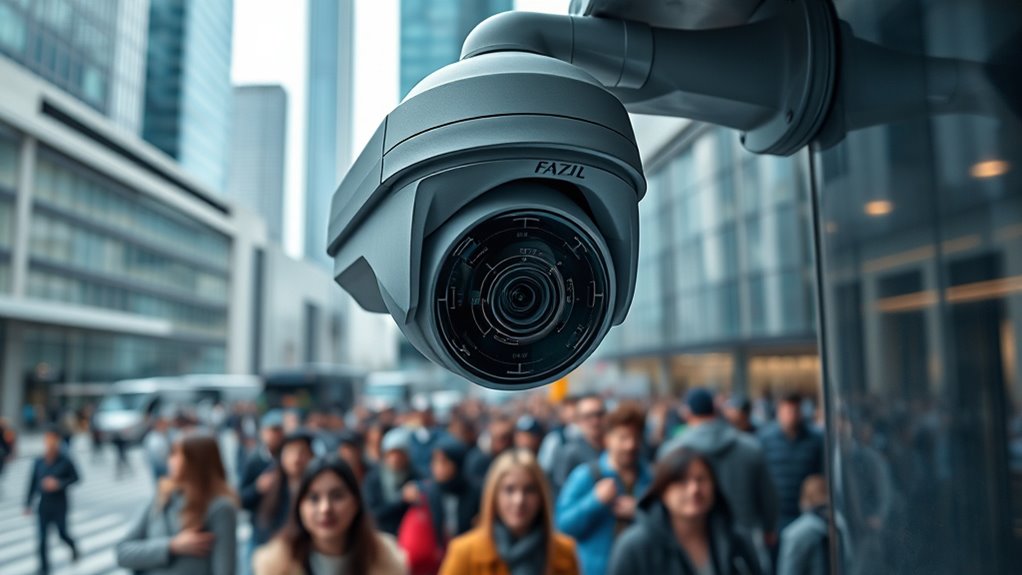
The future of AI-powered surveillance promises enhanced security capabilities, driven by advancements in machine learning and data analytics. You’ll see smarter city planning, where cameras help optimize traffic flow and public safety. Retail analytics will also evolve, allowing stores to analyze customer behavior and improve service. These technologies will integrate seamlessly into daily life, offering real-time insights and proactive responses. As these systems become more organized, they will better support efficient and effective security measures. Increased automation will further improve response times and reduce human error. Additionally, the integration of machine learning algorithms will enable these systems to adapt to new threats and patterns over time. Here’s what to expect:
| Application | Benefit | Impact |
|---|---|---|
| Smart city planning | Reduced congestion, better safety | More efficient urban spaces |
| Retail analytics | Personalized experiences | Increased sales |
| Public safety | Faster incident detection | Safer communities |
| Data integration | Smarter decision-making | Enhanced resource allocation |
Frequently Asked Questions
How Accurate Are AI Facial Recognition Systems in Real-World Conditions?
AI facial recognition systems can be quite accurate, but their performance varies depending on conditions like lighting and angles. In real-world scenarios, you might see some errors due to factors like bias, which can affect certain groups more. Privacy concerns also come into play, so developers work on bias mitigation to improve fairness. Overall, while effective, these systems still face challenges that impact their accuracy and fairness.
Can Facial Recognition Technology Be Fooled or Bypassed?
Yes, facial recognition technology can be fooled through adversarial attacks or spoofing techniques. For example, hackers used printed masks and photos to bypass security at a high-profile event, highlighting vulnerabilities. These methods confuse AI systems, making them believe a fake face is real. To stay secure, you should implement anti-spoofing measures and regularly update systems to defend against evolving adversarial attacks.
What Are the Legal Regulations Governing Facial Recognition Use?
You need to understand that legal regulations around facial recognition focus on privacy concerns and ensuring legal compliance. Many regions require companies to obtain consent before using this technology and limit data storage and sharing. Laws like GDPR in Europe and CCPA in California aim to protect your privacy. Staying informed helps you recognize when facial recognition use is lawful and when it might infringe on your rights, so always check local regulations.
How Is Facial Data Stored and Protected From Misuse?
Your facial data is stored securely through data encryption, locking away sensitive information from unauthorized access. Access controls act like gatekeepers, ensuring only trusted personnel can view or modify the data. Encryption scrambles the information, while access controls set strict permissions. Together, they create a fortress around your facial data, preventing misuse and safeguarding your privacy every time the data is stored or transferred.
What Are the Potential Impacts on Individual Privacy Rights?
Your privacy rights could be impacted by AI security cameras through potential breaches of data privacy and ethical concerns. As these systems collect and analyze facial data, there’s a risk of misuse or unauthorized access, which might infringe on your personal freedoms. It’s vital to stay informed about how your data is used and advocate for transparent policies that protect your privacy rights from unethical surveillance practices.
Conclusion
As AI security cameras become more common, they gently reshape how we feel about safety and privacy. While they quietly enhance security, it’s important to stay mindful of the delicate balance between protection and personal space. By understanding these technologies, you can better navigate the evolving landscape of surveillance. Embrace the benefits responsibly, knowing that thoughtful use of AI can help create a safer, more aware community—without compromising the trust we all value.
Halloween Picks
halloween
As an affiliate, we earn on qualifying purchases.