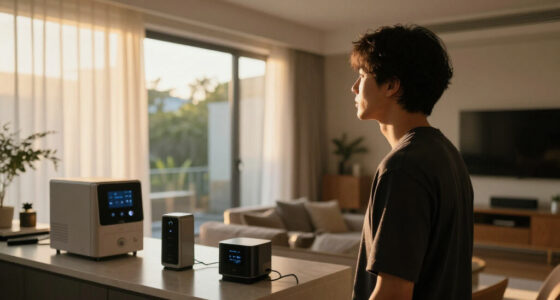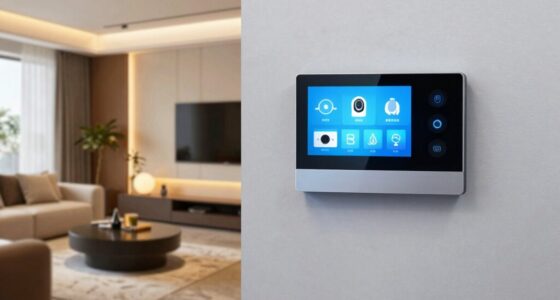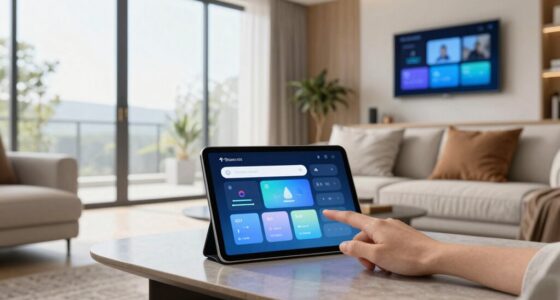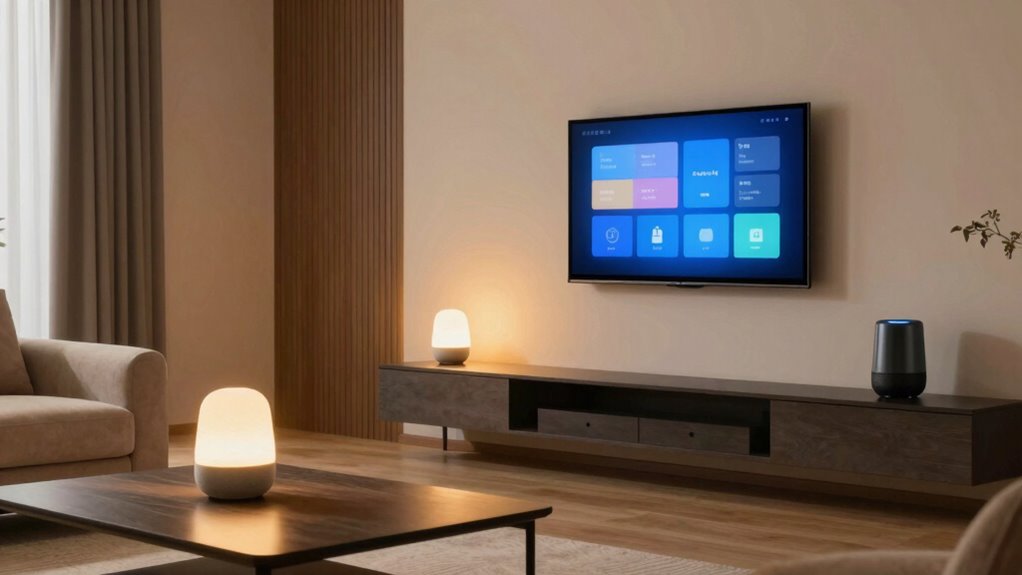
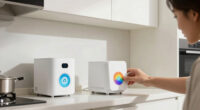
Smart homes grow in stages as you add devices gradually, starting with simple options like voice-controlled speakers and smart lighting. Over time, you can expand to energy-efficient thermostats, cameras, and appliances, building a seamless system that suits your needs and budget. This step-by-step approach helps you avoid feeling overwhelmed while customizing your home automation. Continue exploring to discover how each phase brings you closer to a fully integrated smart home experience.
Open a free Amazon Business account
Business pricing, bulk buying and tax-exempt orders.
As an affiliate, we earn on qualifying purchases.
Key Takeaways
- Smart homes are built gradually, starting with essential devices like voice assistants and smart lighting.
- Energy-efficient devices, such as smart thermostats, are added over time to optimize savings.
- Users expand their systems by integrating more devices like security cameras and smart appliances gradually.
- Upgrades are tailored to specific needs and budgets, avoiding complete overhauls.
- The phased approach reduces overwhelm, allowing seamless, personalized growth toward full automation.

Smart homes don’t become fully automated overnight; instead, they grow in stages as homeowners gradually adopt new technologies. When you start, you might only install a few smart devices, like a voice-controlled speaker or smart lighting. These initial steps make your home more convenient without overwhelming you with complex setups. Voice control, in particular, becomes a natural way to manage your home’s functions, allowing you to turn on the lights, adjust the thermostat, or play music just by speaking. It’s a simple yet effective way to introduce automation into your daily routine.
As you become more comfortable, you might add additional smart devices that enhance energy efficiency. Smart thermostats, for example, help you monitor and control your heating and cooling systems remotely, reducing energy waste. Over time, these devices learn your schedule and preferences, optimizing energy use without sacrificing comfort. This gradual integration not only saves you money on utility bills but also aligns with your desire to live more sustainably. You see the impact of these changes quickly, encouraging you to explore more ways to automate and improve your home.
Your journey into smart home technology often starts with basic devices that are easy to install and use, like smart plugs or voice-activated assistants. These tools serve as gateways, showing you how automation can make life more convenient. As you gain confidence, you might expand your setup to include smart blinds, security cameras, or even smart appliances that can be scheduled or remotely controlled. Each addition builds upon the last, creating a cohesive system that functions seamlessly. Smart home integration is key to creating a truly automated environment.
The beauty of growing your smart home in phases is that it allows you to adapt technology to your needs and budget. You don’t have to overhaul everything at once; instead, you can prioritize what matters most—whether it’s energy efficiency, security, or comfort—and gradually enhance your system over time. This step-by-step approach makes the progression manageable and enjoyable, avoiding the stress of a complete overhaul. Plus, it gives you time to learn about new features and technology advancements, ensuring that each upgrade adds value to your home.
Ultimately, your smart home evolves with you. You start with small, manageable changes, like voice control and energy-saving devices, and then expand as your familiarity and needs grow. This phased approach makes the journey toward full home automation more realistic, less overwhelming, and tailored precisely to how you want to live. Embracing smart home solutions in stages ensures you can enjoy the benefits without feeling overwhelmed by the technology.
As an affiliate, we earn on qualifying purchases.
Frequently Asked Questions
How Long Does Each Stage Typically Take to Complete?
The time each stage takes varies based on your goals and budget. Typically, setting up basic home automation or security systems can take a few days to a week. Upgrading to advanced security systems or integrating smart appliances might take several weeks. You’ll want to plan for a gradual process, allowing time to test and adjust your home automation and security systems along the way.
Can I Skip Stages and Still Have a Functional Smart Home?
You can skip stages, but it might affect your smart home’s overall functionality and security. Jumping ahead could leave security concerns unaddressed and privacy considerations overlooked, making your system vulnerable. To guarantee a safe, smooth experience, it’s better to follow a staged approach, gradually adding features. This way, you can fix security issues early and maintain privacy, creating a truly functional and secure smart home tailored to your needs.
What Are the Costs Associated With Each Stage?
Think of each stage as a new layer in your smart home’s puzzle. Costs vary: initial setups like smart hubs and security cameras may run $100–$300, while adding energy-saving devices like thermostats can cost $50–$200. Security concerns are minimal but grow with each layer, and energy savings increase over time, offsetting costs. Planning your budget helps you grow your smart home gradually, balancing safety and efficiency without overspending.
How Do I Prioritize Which Stage to Start With?
You should prioritize starting with home automation that enhances energy efficiency, like smart thermostats or lighting. These devices offer immediate savings and improve comfort, making them a practical first step. By focusing on energy-efficient automation, you build a foundation for future upgrades. Plus, they’re usually affordable and easy to install, giving you quick benefits while setting the stage for more advanced smart home features later on.
Are There Specific Brands Recommended for Each Stage?
You should consider brand recommendations based on compatibility considerations for each stage. For entry-level smart devices, brands like Amazon and Google offer user-friendly options. As you progress, look into brands like Philips Hue for lighting or Ecobee for thermostats, which integrate well with popular platforms. Always check compatibility with your existing devices and preferred ecosystems to guarantee seamless integration and future expansion.
As an affiliate, we earn on qualifying purchases.
Conclusion
As you gradually build your smart home, remember that Rome wasn’t built in a day. Taking it one stage at a time allows you to adapt and learn, ensuring each addition truly enhances your living space. Patience and planning will pay off, turning your home into a seamless, intelligent haven. After all, slow and steady wins the race—so enjoy the journey as your smart home evolves into the perfect reflection of your needs.
As an affiliate, we earn on qualifying purchases.
As an affiliate, we earn on qualifying purchases.
NFL season / tailgating Picks
team gear
As an affiliate, we earn on qualifying purchases.