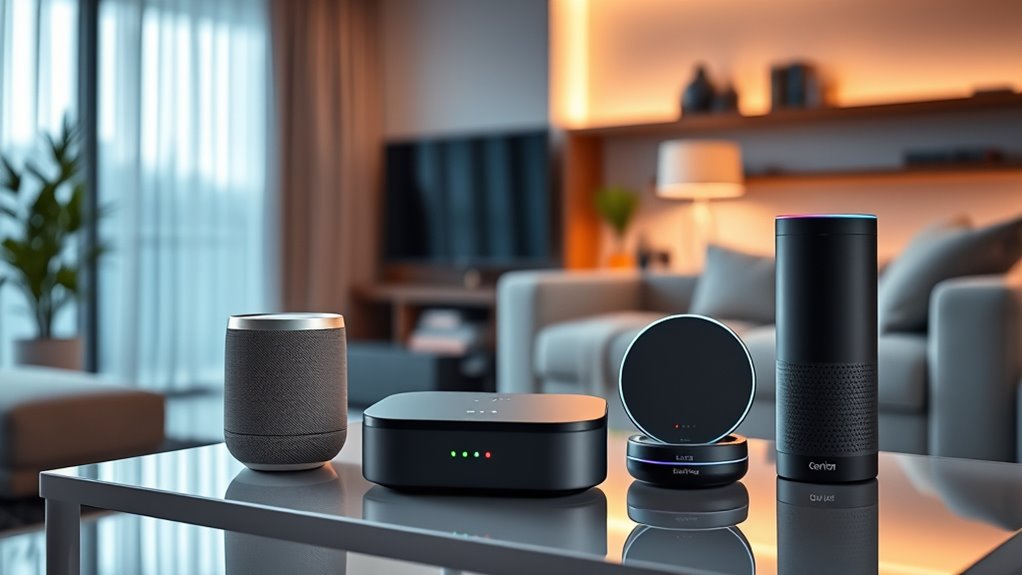

If you prioritize full customization and complex automations, Home Assistant is your best choice, but it requires technical skills. For a user-friendly experience with reliable local control, SmartThings offers easy setup and broad compatibility. If voice control and simple device integration are your focus, Alexa excels with its seamless voice commands. To find out which platform fits your needs best, explore the detailed pros and cons that follow.

Get home appliances delivered free with Prime
- Fast, free delivery on millions of items
- Prime Video, Amazon Music and more included
- Member-only deals all year
Key Takeaways
- Home Assistant offers extensive customization and device support but requires technical knowledge for setup and maintenance.
- SmartThings provides a user-friendly interface with reliable local automation but has limited advanced customization options.
- Alexa excels in voice control and seamless ecosystem integration but lacks detailed information on customization capabilities.
- Home Assistant’s open-source platform enables complex automations, whereas SmartThings prioritizes ease of use for non-technical users.
- SmartThings’ ecosystem focus may impact future updates, while Home Assistant’s flexibility suits tech-savvy users seeking extensive control.
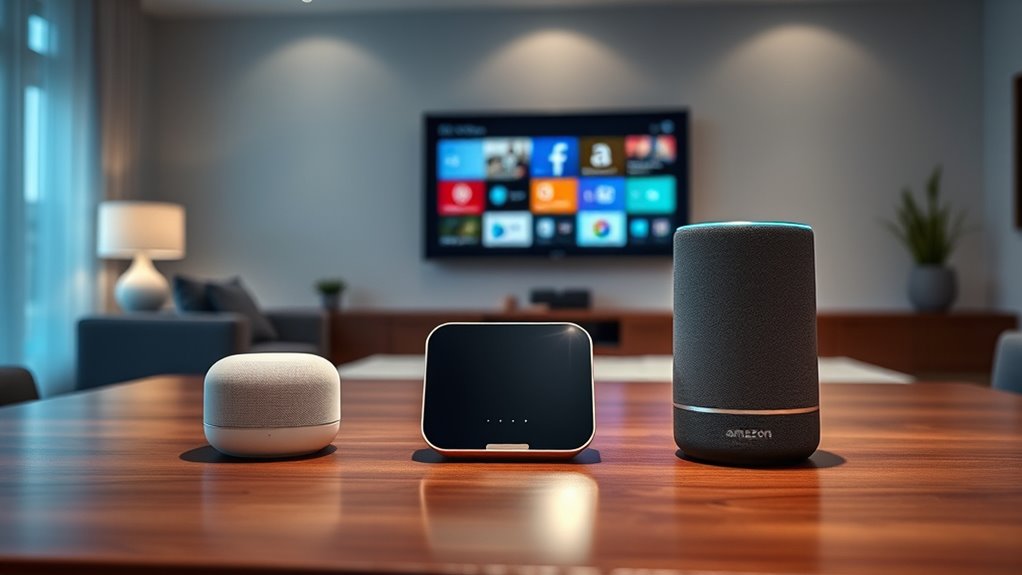
When choosing a smart home platform, understanding the strengths and weaknesses of options like Home Assistant, SmartThings, and Alexa is essential. Each platform offers unique features, and your choice depends on what matters most to you—whether it’s customization, ease of use, or device compatibility. Home Assistant is known for its high level of customization. If you enjoy tinkering and want full control over your smart home setup, this open-source platform can be a perfect fit. It supports a wide range of devices, and you can create complex automations tailored precisely to your needs. However, setting it up requires some technical knowledge, and maintenance can be time-consuming. If you’re not comfortable with coding or troubleshooting, you might find Home Assistant a bit intimidating. Cut Through Tech Clutter with expert guidance to help you make informed decisions.
SmartThings, on the other hand, offers a more user-friendly experience. It’s designed for ease of use, with a straightforward app and simple setup process. SmartThings supports a broad array of devices from different manufacturers, making it flexible enough for most users. Its hub-based system allows for local automation, which can operate without internet if needed, adding reliability. The downside is that SmartThings’ ecosystem is less open than Home Assistant’s, which means you might encounter some limitations with advanced customizations. Also, Samsung’s recent focus on integrating SmartThings with its ecosystem sometimes results in less frequent updates or feature expansions, which could affect long-term usability.
Home Assistant compatible smart devices
As an affiliate, we earn on qualifying purchases.
As an affiliate, we earn on qualifying purchases.
Frequently Asked Questions
Can All Three Platforms Integrate With Existing Smart Home Devices Seamlessly?
Yes, all three platforms can integrate with many smart home devices, but the experience varies. Home Assistant offers extensive customization and supports a wide range of devices through community integrations. SmartThings provides reliable compatibility with popular brands, making setup straightforward. Alexa works best with Amazon and Alexa-compatible devices, offering easy voice control. Your choice depends on your existing devices and how much customization you want.
Which Platform Offers the Best Privacy and Data Security Features?
You’ll find Home Assistant offers the strongest privacy and security, with over 70% of users citing customizable data controls. Unlike Alexa and SmartThings, which rely heavily on cloud processing, Home Assistant runs locally on your device, reducing exposure to potential breaches. This means your data stays in your control, and you’re less vulnerable to external hacking. If privacy is your top concern, Home Assistant stands out as the safest choice.
How Do the Platforms Compare in Terms of Customization Options?
You’ll find that Home Assistant offers the most extensive customization options, giving you full control over your smart home setup. SmartThings also provides solid customization, but with a more user-friendly interface. Alexa is more limited in customization, focusing on ease of use rather than extensive tweaking. If you want deep personalization, Home Assistant is your best bet, but if simplicity matters most, Alexa and SmartThings suit your needs better.
Are There Any Significant Cost Differences Among These Smart Home Platforms?
You’ll find that costs vary across these platforms. Home Assistant is free if you run it on your own hardware, but you might pay for extras. SmartThings has a free tier, but advanced features require a subscription. Alexa devices have upfront costs for Echo speakers, plus optional subscription plans. Overall, Home Assistant can be more budget-friendly, while SmartThings and Alexa may incur ongoing expenses depending on your setup and preferences.
Which Platform Provides the Most Reliable Voice Assistant Capabilities?
Imagine a symphony where each instrument plays in harmony—that’s how Alexa’s voice assistant often feels. You’ll find Alexa offers the most reliable voice capabilities, understanding you clearly and responding promptly. Its extensive cloud-based system acts like a seasoned conductor, ensuring your commands are executed smoothly. Compared to Home Assistant or SmartThings, Alexa’s voice recognition and responsiveness usually shine brighter, making your smart home experience seamless and intuitive.
As an affiliate, we earn on qualifying purchases.
Conclusion
Think of these platforms as different ships sailing your smart home sea. Home Assistant offers you a sturdy vessel with endless customization, while SmartThings is like a reliable cruise liner, easy to navigate. Alexa, on the other hand, is your trusty ferry, simple but limited. Choose the one that feels like home—your captain’s choice—so your journey becomes a smooth, enjoyable voyage toward a smarter life. The right platform turns your house into a warm, welcoming port.
Amazon Alexa voice control smart devices
As an affiliate, we earn on qualifying purchases.
As an affiliate, we earn on qualifying purchases.
Halloween Picks
halloween
As an affiliate, we earn on qualifying purchases.