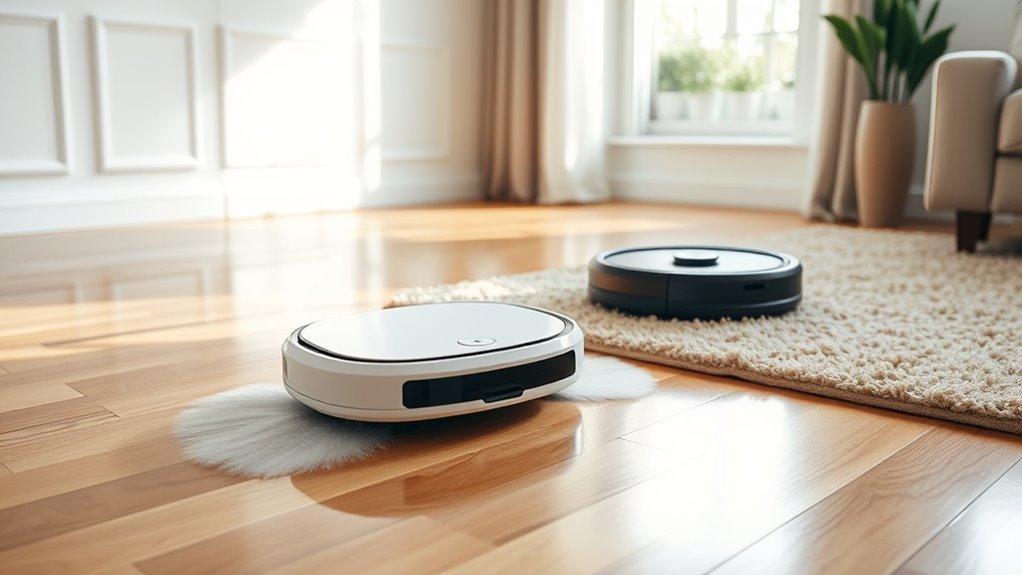

If you want a spotless home, you might need both a robot vacuum and a robot mop. The vacuum handles dust, pet hair, and dirt on carpets and hard floors, while the mop tackles stains, grime, and spills on tiles or hardwood. Using both guarantees your entire home gets thorough cleaning. To discover how to choose the right devices for your needs and maximize their benefits, keep exploring this topic further.

Get home appliances delivered free — and shop member deals
- Fast, free delivery on millions of items
- Access to Prime Big Deal Days deals on October 6–7
- Prime Video, Amazon Music and more included
Key Takeaways
- Robot vacuums are effective for daily removal of dust, pet hair, and loose dirt on carpets and hard floors.
- Robot mops excel at cleaning stains, grime, and spills on hard surfaces like tile and hardwood.
- Using both devices ensures comprehensive cleaning for homes with mixed flooring types and diverse messes.
- Hybrid models offer convenience but may require more maintenance; separate devices can be more specialized.
- Your choice depends on floor types, cleaning needs, and lifestyle; combining both often yields the best results.

When choosing between a robot mop and a robot vacuum, understanding their distinct functions can help you make an informed decision. A robot vacuum is designed to sweep and vacuum dirt, debris, and pet hair from your floors. It uses brushes and suction to lift particles from carpets and hard floors, making it ideal for daily cleaning. These devices are great for maintaining cleanliness, especially if you have pets or high traffic areas, because they can operate regularly without much effort on your part. However, they typically don’t handle stains or sticky spots, which means some messes might require additional attention.
On the other hand, a robot mop specializes in cleaning hard floors with a wet or damp cloth. It’s perfect for removing sticky residue, spills, and stains that a vacuum can’t handle. Many robot mops come with mopping pads or microfiber cloths that rotate or glide across the surface, effectively picking up grime and leaving floors looking fresh. If your home has a lot of tile, hardwood, or laminate flooring, a robot mop can be a valuable addition to your cleaning routine. Keep in mind, though, that robot mops don’t have the suction power needed to pick up loose dirt or pet hair, so they’re not a substitute for a vacuum.
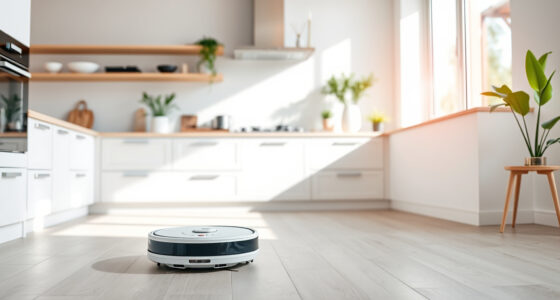
Robot mops excel at cleaning hard floors with damp cloths, removing stains and grime where vacuums can’t reach.
Deciding whether you need both depends on your cleaning priorities and home environment. If your floors tend to get dusty or covered with pet hair daily, a robot vacuum can keep your space tidy with minimal effort. For areas prone to spills, stains, or sticky messes, a robot mop complements the vacuum by deep cleaning those surfaces. Some advanced models combine both functions, offering a hybrid device that vacuums and mops in one pass. These can be convenient but may come with a higher price tag and require more maintenance.
Think about your flooring type, lifestyle, and cleaning habits. If you have mostly carpets and rugs, a robot vacuum is likely your best choice. For homes with extensive hard floors and frequent spills, a robot mop could be a smarter investment. To achieve a truly clean home, many people find that using both devices in tandem offers the best results. The vacuum can handle daily debris, while the mop takes care of deeper cleaning on hard surfaces. Additionally, selecting a model with high-quality sensors can improve navigation and cleaning efficiency. Ultimately, whether you need one or both depends on your specific cleaning needs and how much effort you want to put into maintaining a spotless home.
robot vacuum for pet hair and dust
As an affiliate, we earn on qualifying purchases.
As an affiliate, we earn on qualifying purchases.
Frequently Asked Questions
Can a Robot Vacuum Replace Traditional Mopping Completely?
A robot vacuum can’t fully replace traditional mopping because it mainly cleans dust and debris, not stubborn stains or sticky messes. While it handles daily dirt efficiently, you’ll still need to mop for deeper cleaning and sanitizing. For a truly spotless home, use both tools—vacuum for quick daily cleanups and a mop for thorough, deep cleaning sessions. This combo keeps your floors consistently fresh and spotless.
Are Robot Mops Suitable for All Types of Flooring?
Robot mops work well on tile, vinyl, and sealed hardwood floors, but they’re not suitable for unsealed wood or delicate surfaces. You should consider your flooring type before choosing a robot mop, as some materials may get damaged or not be cleaned effectively. For best results, use a robot vacuum for loose dirt and debris, then follow up with a robot mop on appropriate surfaces for a thorough clean.
How Often Should I Run Each Device for Optimal Cleanliness?
Think of your robot devices as your cleaning partners—schedule them to keep your home shining. Run your robot vacuum 2-3 times a week to pick up dust and debris, especially in high-traffic areas. Use your robot mop once a week or as needed to tackle sticky spots and spills. Regular use guarantees your home stays fresh, turning cleaning into a breeze rather than a storm.
Do Robot Mops and Vacuums Work Well Together?
Yes, robot mops and vacuums work well together. You can set your vacuum to clean floors first, picking up dust and debris, then follow with the mop to tackle stains and sticky spots. This combo guarantees a thorough clean, saving you time and effort. You’ll appreciate how seamlessly they complement each other, leaving your floors spotless and fresh without much manual work.
What Is the Typical Lifespan of These Robot Cleaning Devices?
You can expect your robot vacuum and mop to last around 2 to 5 years with proper care. Regularly clean their brushes and sensors, update the software, and replace worn parts like filters and brushes as needed. Using them on suitable surfaces and avoiding excessive debris helps prolong their lifespan. Investing in quality models and following manufacturer guidelines also ensures your devices stay effective longer.
As an affiliate, we earn on qualifying purchases.
Conclusion
Ultimately, whether you need both a robot mop and vacuum depends on your home’s needs. For example, if you have pets that shed fur and occasionally track in mud, a vacuum quickly handles fur and debris, while a mop tackles stains and sticky spots. Combining both guarantees a thorough clean, saving you time and effort. Investing in both might be ideal for a spotless home—so consider your lifestyle and cleaning priorities before deciding.
As an affiliate, we earn on qualifying purchases.
As an affiliate, we earn on qualifying purchases.
Fall yard work Picks
leaf blowers
As an affiliate, we earn on qualifying purchases.