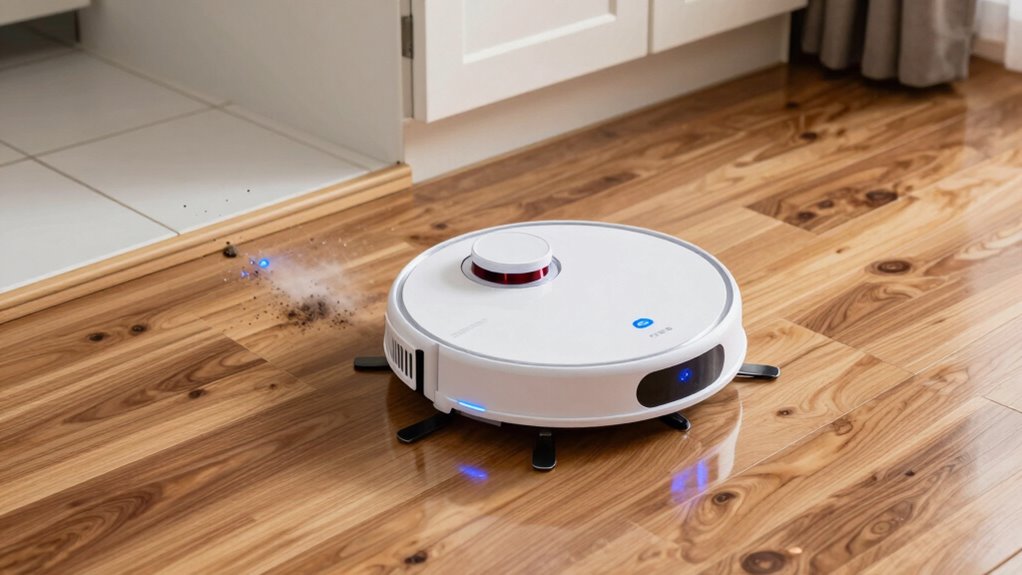

Smart mops use sensors like ultrasound, infrared, and laser to scan your environment, detecting dirt levels, obstacles, and surface types in real-time. They process this sensor data with cleaning algorithms that analyze debris density and traffic patterns to identify areas needing extra attention. They prioritize high-traffic spots or stubborn dirt for thorough cleaning while conserving resources elsewhere. If you want to discover how these smart systems adapt and improve over time, there’s more to explore below.

Get home appliances delivered free — and shop member deals
- Fast, free delivery on millions of items
- Access to Prime Big Deal Days deals on October 6–7
- Prime Video, Amazon Music and more included
Key Takeaways
- Sensors detect debris density and dirt levels to identify areas needing extra cleaning.
- Cleaning algorithms analyze sensor data to prioritize high-traffic and persistently dirty zones.
- Real-time obstacle detection ensures focused cleaning around obstacles and problem spots.
- Machine learning enables the system to recognize and revisit areas that require additional attention.
- Historical data and environmental mapping help optimize cleaning routes and target problem areas.

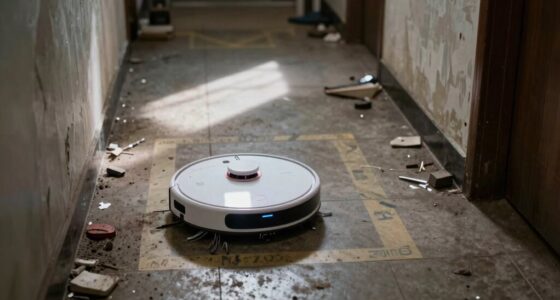
Ever wondered how smart mops know exactly where to focus their cleaning efforts? It all comes down to advanced sensor technology and sophisticated cleaning algorithms. When you start a cleaning session, your smart mop immediately begins scanning your space with a variety of sensors—ultrasound, infrared, and sometimes even laser. These sensors gather real-time data about the floor’s surface, obstacles, furniture, and even areas with different textures or levels of dirt. This instant data collection allows the mop to create a detailed map of your environment, pinpointing spots that need more attention.
Smart mops use sensors like ultrasound, infrared, and laser to map and identify dirt, optimizing cleaning efficiency.
The key to targeting these specific areas lies in cleaning algorithms embedded within the device’s software. These algorithms process the sensor input, analyzing factors like debris density, floor type, and high-traffic zones. For example, if the sensors detect a patch of sticky residue or a buildup of dirt, the algorithms determine that this area requires extra cleaning. They prioritize these spots for more thorough passes or increased suction power, guaranteeing no stubborn dirt gets left behind. Conversely, cleaner sections are approached with a lighter touch to conserve battery life and optimize efficiency.
Sensor technology also plays an essential role in detecting changes as your smart mop moves around. If it encounters an unexpected obstacle, like a chair leg or a rug edge, sensors instantly alert the system to adjust its path without collision. This real-time obstacle avoidance prevents unnecessary repeat cleaning and keeps the device working smoothly. Additionally, sensors can identify areas of water or spills, prompting the mop to switch to a different cleaning mode or to slow down for a more careful clean. Moreover, sensor calibration ensures that the data collected remains accurate over time, maintaining the mop’s precision. Updating the sensor software regularly can help maintain optimal performance and adapt to changes in your environment. Regular maintenance of these sensors is crucial for consistent cleaning performance.
The beauty of these integrated systems is that they learn and adapt over time. Many smart mops keep a virtual map of your home, recognizing high-traffic zones or persistently dirty spots. The cleaning algorithms analyze this historical data to optimize future cleaning routes, focusing more on problem areas and less on spots that stay consistently clean. This means your smart mop becomes more efficient with each session, honing in on spots that need extra attention based on sensor feedback and past performance. To enhance their capabilities, some models also utilize machine learning techniques that enable continuous improvement and smarter decision-making.
In essence, the combination of sensor technology and intelligent cleaning algorithms makes your smart mop incredibly precise. It’s not just randomly wandering around; it’s making smart decisions based on real-time data, delivering targeted cleaning where it’s needed most. That’s how your device guarantees every inch of your floor receives the attention it deserves—efficiently, effectively, and effortlessly.
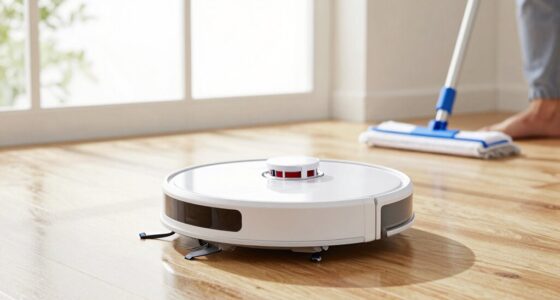
smart mop with sensor technology
As an affiliate, we earn on qualifying purchases.
As an affiliate, we earn on qualifying purchases.
Frequently Asked Questions
Do Smart Mops Need Wi-Fi to Function Properly?
Smart mops typically need Wi-Fi to function properly, especially if you’re using features like Bluetooth connectivity or voice control. Wi-Fi allows the mop to connect to your home network, enabling remote control through apps or voice commands. Without Wi-Fi, some smart features may not work, though basic cleaning functions might still operate offline. To enjoy full capabilities, make sure your smart mop stays connected to a stable internet connection.
How Long Does the Battery Last on a Smart Mop?
Battery longevity varies, but most smart mops run for about 30 to 60 minutes per charge. To maximize battery life, you should practice proper battery maintenance and monitor power consumption. Regularly charging the device before it completely drains prevents damage, ensuring peak operation. Keep an eye on the battery indicator, and avoid overusing the mop to extend its runtime, so you can clean efficiently without interruptions.
Are Smart Mops Suitable for All Types of Flooring?
Smart mops are generally suitable for many flooring types, but you should check their flooring compatibility first. They work well on hard surfaces like tile, vinyl, and laminate, but may not be ideal for delicate or surface-sensitive floors like hardwood or certain stone. Always read the manufacturer’s guidelines to guarantee your smart mop won’t damage your flooring, and adjust cleaning settings accordingly for surface sensitivity.
Can Smart Mops Detect Pet Hair and Debris Effectively?
You watch as the smart mop glides across your floor, its sensors keenly detecting pet hair and debris. With advanced pet hair detection and debris sensing technology, it efficiently targets hidden messes, leaving your floor immaculate. Its smart system responds instantly to every disturbance, ensuring no hair or debris escapes. This intelligent cleaning keeps your home spotless, making pet hair and debris vanish effortlessly, giving you peace of mind and a cleaner space.
How Often Should I Update the Smart Mop’s Software?
You should update your smart mop’s software regularly, ideally every one to three months, to guarantee peak performance. Regular software updates improve cleaning algorithms, fix bugs, and add new features. Incorporate these updates into your maintenance routines to keep your device running smoothly. Check the manufacturer’s instructions for specific update schedules, and set reminders to stay on top of software updates, making sure your smart mop remains effective and efficient.
As an affiliate, we earn on qualifying purchases.
Conclusion
So, as you watch your smart mop effortlessly identify those stubborn spots, it’s almost poetic how technology and daily life collide. It’s as if, in that precise moment, the universe aligns—your cleaning needs and the device’s sensors working in harmony. That coincidence reminds you how innovation can unexpectedly make routines smoother, turning mundane chores into moments of marvel. With smart mops, you’re not just cleaning; you’re witnessing a quiet symphony of intelligence at work, perfectly timed and seamlessly executed.
As an affiliate, we earn on qualifying purchases.
As an affiliate, we earn on qualifying purchases.
NFL season / tailgating Picks
team gear
As an affiliate, we earn on qualifying purchases.