
TL;DR

Get home appliances delivered free — and shop member deals
- Fast, free delivery on millions of items
- Access to Prime Big Deal Days deals on October 6–7
- Prime Video, Amazon Music and more included
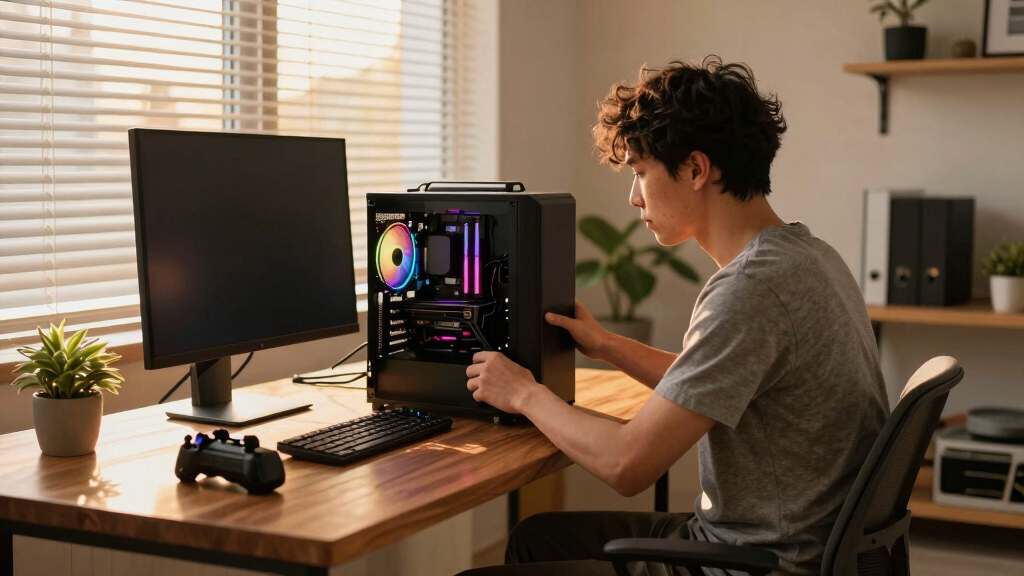
High-end PC and workstation buyers are facing a 2026 price shock as RAM and SSDs take a much larger share of total build costs. The source report says DIY builders are now more exposed than OEMs because they pay retail spot prices while large vendors often buy through contracts and inventory buffers.
High-end PC builders and workstation buyers are facing a sharp 2026 cost increase as memory and storage prices take up far more of a build budget, according to a new Thorsten Meyer AI report on the memory squeeze. The report says the shift matters because buyers who once saved money by building machines themselves may now pay more than some prebuilt systems.
The report cites HP Q1 2026 earnings as saying memory rose from about 15% to 18% of a PC bill of materials to roughly 35% in a single quarter. For builders, that means RAM and SSDs are no longer minor add-ons selected late in the process.
In one 2026 build snapshot cited by the report, a 32GB DDR5 kit was priced around $369, close to the cost of the graphics card in the same parts list. The report says premium builds that cost about $2,000 a year earlier are now landing closer to $2,800 to $4,500, with memory and storage driving much of the increase.
The report also says DIY pricing has become less dependable because major OEMs and system builders may have bulk contracts or inventory purchased before the steepest price moves. Retail buyers, by contrast, often pay the current market price when they add parts to a cart.
The high-end PC & workstation tax
If you build your own machines or spec your team’s workstations, you’re the most exposed buyer in this market — no hedge, no bulk contract, just a parts cart and a number you used to ignore, now the biggest line on the invoice.
OEMs buy on bulk contracts and hold hedged stock; you pay the spot price on the day. The DIY builder is now the most exposed buyer in the chain — and the prebuilt is sometimes cheaper. Price it before you commit.
96GB & 128GB DDR5 RDIMMs are the scarcest, closest to the server memory makers prioritize. 64GB RDIMM could cost 2× by end-2026 vs early 2025. The parts that define a workstation are the ones squeezed hardest.
The squeeze didn’t just raise prices — it inverted the value system of high-end building. Buy big, buy early, build it yourself: each enthusiast virtue is now a way to overpay. Discipline beats ambition in 2026 — right-size hard, buy deliberately, lean on bundles, treat the prebuilt as a real price check. You can’t avoid the AI tax levied a layer up in the fabs; you can refuse to pay more of it than the job needs. Next: Cloud’s Hidden Memory Bill.
DIY Savings Are Less Certain
The change cuts against a long-running assumption in the enthusiast PC market: that building a machine yourself usually beats buying a prebuilt on price. The report says that rule is no longer reliable at the high end, even if DIY still offers component control, easier repairs and more exact configuration choices.
The effect is larger for workstations because professional systems often need 64GB, 128GB or more of memory. Buyers configuring machines for CAD, data analysis, software builds or local AI workloads may see the largest increases because the capacity they need overlaps with the modules in tightest supply.
As an affiliate, we earn on qualifying purchases.
Server Demand Pressures Workstations
The Thorsten Meyer AI report frames the price jump as the fifth part of a series on the 2026 memory crunch, following earlier parts on high-bandwidth memory, RAM and storage. The report links the pressure on consumer and workstation parts to broader demand from AI infrastructure and server buyers.
It says 96GB and 128GB DDR5 RDIMMs are among the hardest-hit workstation parts because they are close to the server memory products manufacturers are prioritizing. The report also cites an outside analysis projecting that 64GB DDR5 RDIMM modules could cost twice as much by the end of 2026 as they did in early 2025.
“Memory’s share of a PC’s bill of materials roughly doubled — now rivaling or beating the GPU.”
— Thorsten Meyer AI report
high performance SSD for gaming PC
As an affiliate, we earn on qualifying purchases.
As an affiliate, we earn on qualifying purchases.
Price Paths Remain Unsettled
It is not yet clear how long the retail memory squeeze will last or whether current prices will stabilize, rise further or fall as supply shifts. The report notes that prices are point-in-time figures from late June 2026 and are moving quickly.
It is also unclear how much of the increase each buyer will see. Final costs depend on capacity needs, motherboard platform, memory type, SSD choice, local availability, retailer pricing and whether a comparable prebuilt workstation is available at a better total price.
As an affiliate, we earn on qualifying purchases.
Buyers Reprice Build Plans
The next step for high-end buyers is a more disciplined buying process: compare DIY parts lists against prebuilts, avoid buying excess memory early, look for CPU and motherboard bundles, and stage upgrades when possible. The report also recommends reusing working parts where practical.
The series is set to continue with a look at cloud memory costs, shifting the focus from local machines to infrastructure bills. For workstation buyers, the immediate milestone is simpler: every new build should be priced with memory and storage treated as major cost drivers, not routine line items.
As an affiliate, we earn on qualifying purchases.
Key Questions
What is the high-end PC and workstation tax?
It is the report’s term for the added cost facing DIY PC builders and workstation buyers as memory and storage prices take a much larger share of total build budgets in 2026.
Is building a PC still cheaper than buying a prebuilt?
Not always, according to the report. DIY systems still offer control and repairability, but some prebuilt systems may now be cheaper because larger vendors can rely on bulk contracts or existing stock.
Which parts are being hit hardest?
The report points to DDR5 memory, SSDs and especially high-capacity RDIMM modules used in workstations and small servers. It says 96GB and 128GB DDR5 RDIMMs are among the tightest parts.
What should buyers do before ordering parts?
Buyers should price a comparable prebuilt, right-size memory capacity, check bundles, avoid front-loading upgrades and reuse parts that still meet the workload. The report’s main advice is to buy for the actual job, not for a broad safety margin.
Source: Thorsten Meyer AI
NFL season / tailgating Picks
team gear
As an affiliate, we earn on qualifying purchases.