Smart lights support your sleep habits by mimicking natural light patterns, helping you stay in sync with your body’s internal clock. They gradually dim in the evening, signaling your body to wind down, and brighten in the morning to promote wakefulness. These lights create a calming environment that encourages relaxation and melatonin release. By automating your routines, they reinforce healthy sleep-wake cycles and reduce the need for harsh alarms. Keep exploring to discover how smart lighting can transform your sleep experience.

Get home appliances delivered free with Prime
- Fast, free delivery on millions of items
- Prime Video, Amazon Music and more included
- Member-only deals all year
Key Takeaways
- Mimic natural light patterns to regulate circadian rhythms, promoting consistent sleep and wake cycles.
- Use warm, soft glows before bed to relax the mind and support melatonin production.
- Gradually increase brightness in the morning to simulate sunrise, easing natural wake-up.
- Automate lighting schedules to reinforce regular sleep and wake routines without manual adjustments.
- Reduce reliance on harsh alarms, creating a calming environment that enhances sleep quality and overall health.
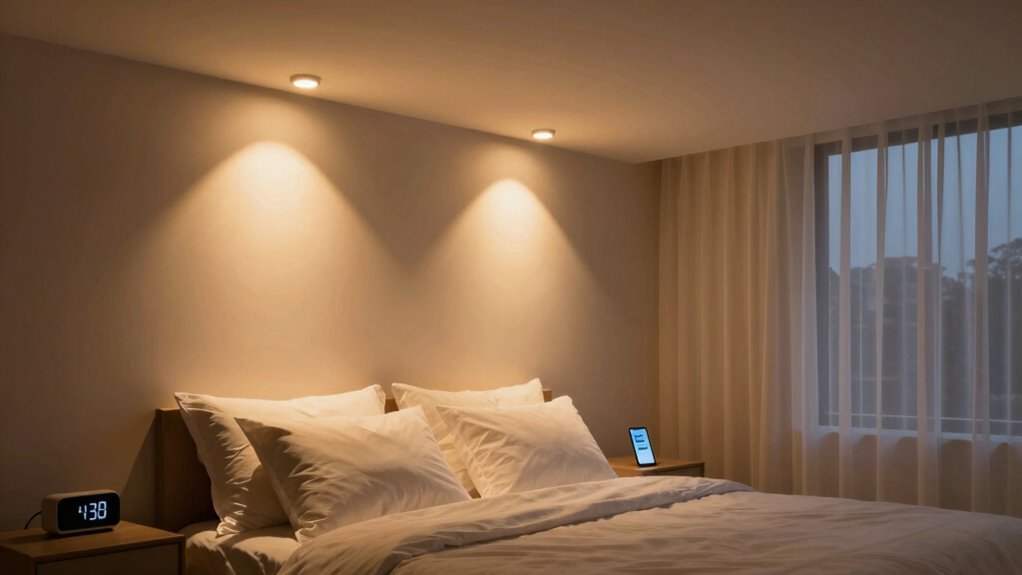
Smart lights are transforming the way you sleep by mimicking natural light patterns that support your body’s circadian rhythm. Your circadian rhythm is the internal clock that regulates your sleep-wake cycle, and maintaining a stable rhythm is essential for restful, restorative sleep. When your sleep environment is optimized with smart lighting, it becomes easier to fall asleep, stay asleep, and wake up feeling refreshed. These lights adjust based on the time of day, gradually dimming in the evening to signal your body that it’s time to wind down and brightening in the morning to help you wake naturally. This synchronization with natural light cues helps reinforce your circadian rhythm, making your sleep more consistent and high-quality.
Smart lights support your circadian rhythm by mimicking natural light patterns for better sleep and wakefulness.
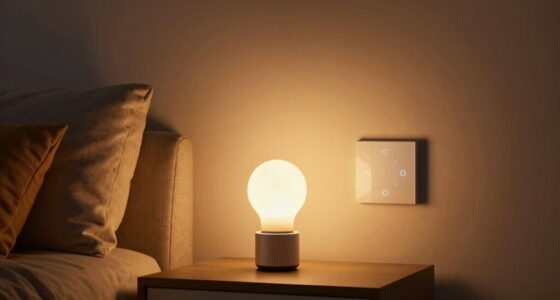
Incorporating smart lights into your sleep environment allows you to create a calming atmosphere before bed. Instead of harsh, bright overhead lights, you can set your smart lights to emit warm, soft glows that relax your mind and body. This gentle lighting reduces the stimulation that often delays sleep onset. As your body responds to these cues, it prepares itself for rest, promoting the release of melatonin—the hormone responsible for sleepiness. Over time, this consistency trains your brain to associate certain lighting conditions with sleep, making it easier to drift off at the same time each night. Additionally, smart lights can help reinforce your circadian rhythm, which is crucial for maintaining a healthy sleep pattern. Properly aligning your exposure to light and darkness supports your overall health and helps prevent disruptions caused by irregular schedules.
In the morning, smart lights can simulate sunrise, gradually increasing in brightness to gently wake you up. This natural progression helps regulate your sleep cycle, making mornings less abrupt and more aligned with your body’s needs. When you wake up with a simulated sunrise, you avoid the grogginess often caused by sudden, artificial alarms. Instead, you start your day feeling more alert and energized, which positively influences your overall sleep schedule. This method of waking is also more sustainable for your circadian health compared to abrupt wake-up calls from traditional alarms. Incorporating light therapy into your routine can further enhance your exposure to natural cues and improve sleep quality. Using smart lighting technology also minimizes energy consumption, making it a more environmentally friendly choice.
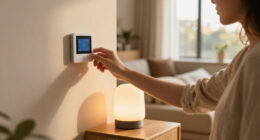
Your sleep environment benefits considerably from the flexibility and automation smart lights offer. You don’t have to manually turn lights on or off or rely solely on alarms. Instead, you can program your lights to adapt to your routine, ensuring a consistent sleep-wake cycle. This consistency strengthens your circadian rhythm over time, leading to better sleep quality and fewer disruptions. With smart lighting, you’re effectively training your body to recognize signals that it’s time to rest and wake, making your sleep environment more conducive to restorative sleep. Ultimately, these subtle adjustments can lead to profound improvements in your overall health and well-being. Incorporating these technologies into your daily routine can also contribute to a broader sustainable living approach by reducing energy consumption through efficient lighting practices.
smart sleep light with sunrise simulation
As an affiliate, we earn on qualifying purchases.
As an affiliate, we earn on qualifying purchases.
Frequently Asked Questions
Can Smart Lights Replace Traditional Blackout Curtains?
Smart lights can’t fully replace traditional blackout curtains, but they do offer flexible solutions. With color customization and mood setting, you can dim or change the light to mimic darkness, helping you relax before sleep. However, for complete darkness, blackout curtains are more effective. You might consider using smart lights in combination with curtains for ideal sleep environment control, balancing light adjustment with physical darkness when necessary.
Are Smart Lights Safe for Children’s Bedrooms?
Yes, smart lights are generally safe for children’s bedrooms when used properly. You should prioritize child safety by choosing lights with adjustable light intensity, so you can set a soft, calming glow for bedtime. Always guarantee the lights are installed securely and use child-friendly settings to prevent any risk of harm. Regularly check the device for safety updates, and educate your children on safe usage to keep their space secure.
How Do Smart Lights Affect Sleep Cycles Long-Term?
Smart lights can subtly influence your sleep cycles by potentially reducing circadian disruption caused by light pollution. Over the long term, if you use them thoughtfully—dimmed and timed appropriately—they may support your natural sleep rhythms. However, improper use, like bright, late-night lighting, could interfere with melatonin production. So, with mindful application, smart lights can be a helpful tool to promote healthier sleep patterns without disturbing your body’s natural clock.
Can Smart Lights Be Controlled Remotely While Traveling?
Yes, you can control smart lights remotely while traveling, thanks to their remote control features through smartphone apps. This travel convenience means you can turn lights on or off, adjust brightness, or change colors from anywhere. You won’t have to worry about leaving lights on or in the dark, giving you peace of mind and added security when you’re away. Smart lights make managing your home effortless, even from miles away.
Do Smart Lights Require Special Wiring or Installation?
Smart lights typically don’t require special wiring or complex installation because they use wireless integration, connecting easily to your existing Wi-Fi or smart home system. You can often set them up yourself with minimal tools. Plus, they’re energy-efficient, helping you save on electricity costs. Once installed, you can control them remotely, customize lighting schedules, and create the perfect sleep environment, all without needing professional wiring or extensive setup.
adjustable warm white smart bulbs for sleep
As an affiliate, we earn on qualifying purchases.
As an affiliate, we earn on qualifying purchases.
Conclusion
Just as the ancient Greeks sought harmony in their lives, smart lights help you craft a balanced sleep rhythm. By adjusting brightness and color, you guide your body’s natural cycle, much like the moon’s gentle influence. Embrace these modern tools to create a sanctuary of restful nights. In doing so, you reveal the secret to waking refreshed—echoing the timeless wisdom that harmony with nature leads to true well-being.
smart lighting system for circadian rhythm
As an affiliate, we earn on qualifying purchases.
As an affiliate, we earn on qualifying purchases.
automated sleep routine lighting
As an affiliate, we earn on qualifying purchases.
As an affiliate, we earn on qualifying purchases.
Halloween Picks
halloween
As an affiliate, we earn on qualifying purchases.