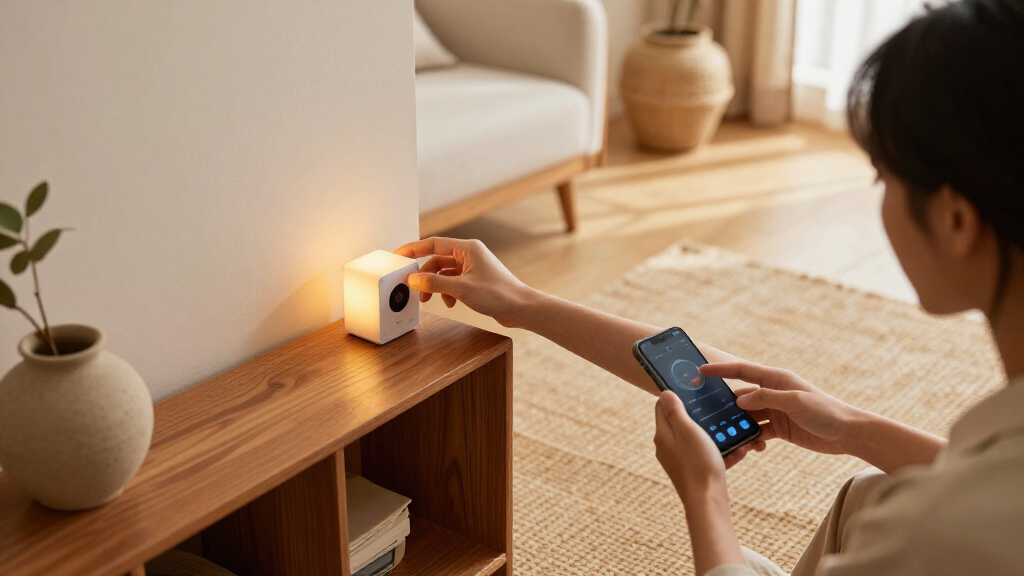

The best smart presence sensors keep lights and automations responsive when you sit still, unlike basic motion sensors that may switch off too soon. My best overall pick is the Aqara Presence Sensor FP2 for its wired mmWave sensing and room-position features; the Aqara FP400 stands out for multi-zone spatial automation, while the Meross MS605 is a compelling choice for battery power and an outdoor-ready IP67 build. The main tradeoffs are power source, smart-home compatibility, setup complexity, and sensing features. A sensor that offers more detailed room tracking may need more configuration, while simpler models can be easier to place and automate. Read on for the full breakdown and a guide to choosing the right sensor for your rooms and routines.

Get home appliances delivered free — and shop member deals
- Fast, free delivery on millions of items
- Access to Prime Big Deal Days deals on October 6–7
- Prime Video, Amazon Music and more included
Complete the kit
![[Genuine] Waterdrop PF-01A Water Filter Replacement for W...](https://m.media-amazon.com/images/I/41+5tl9EiKL._SX342_SY445_QL70_FMwebp_.jpg)


Key Takeaways
- The FP2 and FP400 separate themselves through room-level features: they suit buyers who want more than a single occupied-or-empty signal, though those capabilities may call for extra setup.
- Power is a major dividing line: wired and USB-powered sensors avoid battery changes, while the MS605 and battery-powered THIRDREALITY R2 offer more placement freedom.
- Protocol support can matter more than radar frequency: Matter over Wi-Fi, Matter over Thread, Zigbee, and Bluetooth each fit different hubs and networks, so check your existing setup before buying.
- mmWave and PIR serve different roles: radar can help detect someone sitting still, while PIR can add motion context; combined sensing is useful when automations need both kinds of signals.
- There is no universal best fit for every room: a corded sensor can suit a fixed living-room installation, a compact Zigbee unit may suit a simple automation, and an IP67 battery model fits locations where wiring is awkward.
| SONOFF SNZB-06P Zigbee Human Presence Sensor (1-Pack) |  | Best for Hub-Based Zigbee Setups | Detection technology: 5.8GHz microwave radar | Maximum range: 4 meters | Wireless protocol: Zigbee 3.0 | VIEW LATEST PRICE | See Our Full Breakdown |
| meross Presence Sensor MS600, Matter Over Wi-Fi, 1.5m Corded Motion Sensor |  | Best for Flexible Wi-Fi Placement | Detection technology: Radar, PIR, and light sensor | Motion detection range: Up to 12 meters | Presence detection range: Up to 6 meters | VIEW LATEST PRICE | See Our Full Breakdown |
| GoveeLife Human Presence Sensor, mmWave Radar & PIR Wired Motion Sensor |  | Best for Long-Range Wired Coverage | Detection technology: mmWave radar and PIR infrared | Maximum detection range: 26 feet | Connectivity: 2.4GHz Wi-Fi | VIEW LATEST PRICE | See Our Full Breakdown |
| Meross Presence Sensor MS605, IP67 Battery-Powered, Matter Over Thread |  | Best for Battery-Powered Indoor and Outdoor Use | Detection technology: mmWave, PIR, and light sensing with adaptive AI | Maximum range: 6 meters | Connectivity: Matter over Thread | VIEW LATEST PRICE | See Our Full Breakdown |
| Aqara Presence Sensor FP400 – Multi-Zone Spatial Automation, Thread & Zigbee |  | Best for Multi-Zone Spatial Automation | Radar technology: 60GHz mmWave with 5x point-cloud density | Connectivity: Thread and Zigbee; Matter over Thread | Field of view: 120° | VIEW LATEST PRICE | See Our Full Breakdown |
| Besisglas Zigbee Human Presence Sensor with Millimeter Wave Radar |  | Best for Long Battery Life | Detection technology: 24GHz millimeter wave radar | Maximum range: 7 meters (20 feet) | Power: 2 AAA alkaline batteries, included | VIEW LATEST PRICE | See Our Full Breakdown |
| SONOFF SNZB-06P24 Zigbee Presence Sensor with 24GHz mmWave & Light Sensor |  | Best for Zoned Lighting | Detection technology: 24GHz mmWave radar | Light sensor: Yes | Detection range: 4 meters | VIEW LATEST PRICE | See Our Full Breakdown |
| SwitchBot mmWave Radar Motion Sensor, Bluetooth Presence Sensor with Dynamic Detection & Zone Positioning |  | Best for Flexible Placement | Detection technology: mmWave radar and PIR | Detection angle: 120° | Moving-human range: Up to 8 meters | VIEW LATEST PRICE | See Our Full Breakdown |
| Aqara Presence Sensor FP300 Wireless 5-in-1 Motion Sensor with mmWave |  | Best for All-in-One Room Monitoring | Sensor types: mmWave radar, PIR, light, temperature, and humidity | Connectivity: Matter over Thread and Zigbee | Batteries: 2 x CR2450 | VIEW LATEST PRICE | See Our Full Breakdown |
| THIRDREALITY Presence Sensor R2, 24GHz mmWave Radar |  | Best for Adjustable Sensitivity | Detection technology: 24GHz mmWave radar | Maximum range: 5 meters | Power: 3 AA batteries, included | VIEW LATEST PRICE | See Our Full Breakdown |
| Akamatis Litos v3 mmWave Human Presence & Light Sensor |  | Best for Home Assistant Tinkerers | Radar: HLK-LD2401, 24 GHz mmWave | Maximum range: 20 ft (6 m) indoors | Ambient-light sensor: VEML7700 | VIEW LATEST PRICE | See Our Full Breakdown |
| LWR02 5-in-1 Presence Sensor (PIR + mmWave Radar, Matter over Thread) |  | Best Battery-Powered Multi-Sensor | Sensing technologies: 24 GHz mmWave radar and PIR | Tracked metrics: Presence, motion, temperature, humidity, and ambient light | Detection range: 4 m presence; 8 m motion | VIEW LATEST PRICE | See Our Full Breakdown |
| THIRDREALITY Smart Presence Sensor R3 – 60GHz mmWave Radar, USB-C Powered, RGB Status Light, Zigbee Repeater |  | Best for Zigbee Mesh Expansion | Radar: 60 GHz mmWave | Maximum range: 6 m | Power: USB-C, 5V/1A | VIEW LATEST PRICE | See Our Full Breakdown |
| Aqara Presence Sensor FP2 – mmWave Radar Wired Smart Motion Sensor |  | Best for Multi-Zone Room Automation | Connectivity: 2.4 GHz Wi-Fi | Detection area: Up to 40 sq m (430 sq ft) | People detection: Up to 5 people simultaneously | VIEW LATEST PRICE | See Our Full Breakdown |
| smart presence sensor | Detection technology | Connectivity | Mounting |
|---|---|---|---|
| SONOFF SNZB-06P Zigbee Human P | 5.8GHz microwave radar | — | Wall mount |
| meross Presence Sensor MS600 | Radar, PIR, and light sensor | Matter over Wi-Fi | — |
| GoveeLife Human Presence Senso | mmWave radar and PIR infrared | 2.4GHz Wi-Fi | Wall or ceiling |
| Meross Presence Sensor MS605 | mmWave, PIR, and light sensing with adaptive AI | Matter over Thread | — |
| Aqara Presence Sensor FP400 | — | Thread and Zigbee; Matter over Thread | — |
| Besisglas Zigbee Human Presenc | 24GHz millimeter wave radar | — | Wall mount |
| SONOFF SNZB-06P24 Zigbee Prese | 24GHz mmWave radar | — | Ceiling mount |
| SwitchBot mmWave Radar Motion | mmWave radar and PIR | — | — |
| Aqara Presence Sensor FP300 Wi | — | Matter over Thread and Zigbee | — |
| THIRDREALITY Presence Sensor R | 24GHz mmWave radar | — | Casual placement |
| Akamatis Litos v3 mmWave Human | — | 2.4 GHz Wi-Fi | — |
| LWR02 5-in-1 Presence Sensor | — | Matter over Thread | Adjustable magnetic base, adhesive, or shelf placement |
| THIRDREALITY Smart Presence Se | — | — | — |
| Aqara Presence Sensor FP2 | — | 2.4 GHz Wi-Fi | Ceiling mount |
More Details on Our Top Picks
SONOFF SNZB-06P Zigbee Human Presence Sensor (1-Pack)
The SONOFF SNZB-06P makes sense for buyers who already run a Zigbee system and want a straightforward way to keep lights on when someone stops moving. Its 5.8GHz microwave radar detects stationary presence as well as movement, while the light sensor can prevent daytime lighting automations. Scene automation can also run locally, so it is less dependent on an internet connection than a cloud-led setup.
Compared with the meross MS600, this is a smaller, battery-powered option, but its 4-meter range is much more restrictive and it still needs a separate Zigbee hub. Choose it for a compact room or focused lighting zone; skip it for broad coverage or if you want an out-of-box Wi-Fi setup.
Pros:- Radar detects people who remain still, helping prevent lights from switching off during quiet activities.
- Built-in light detection can keep presence-based lighting from activating in daylight.
- Local scene automation can operate without an internet connection.
- Supports Alexa, Google Home, SmartThings, and Home Assistant.
Cons:- Requires a separate Zigbee hub to operate.
- The 4-meter maximum range is short compared with the meross MS600 and GoveeLife sensor.
- Uses a 9V battery, so buyers need to account for battery replacement.
Best for: People with an existing Zigbee hub who want battery-powered stationary-presence detection for a small room or lighting zone.
Not ideal for: Buyers covering a large room or seeking a hub-free setup, because detection is limited to 4 meters and a Zigbee hub is required.
- Detection technology:5.8GHz microwave radar
- Maximum range:4 meters
- Wireless protocol:Zigbee 3.0
- Power source:1 x 9V battery
- Mounting:Wall mount
- Dimensions:1.73 x 2.32 x 1.73 inches
- Temperature range:-10 to 60 °C
Our verdict“Choose the SNZB-06P for compact, local presence automations if you already have a Zigbee hub and can work within its short range.”
meross Presence Sensor MS600, Matter Over Wi-Fi, 1.5m Corded Motion Sensor
The meross MS600 is the most flexible pick here for buyers who want broad detection without committing to a hub-first setup. It combines mmWave radar, PIR, and a light sensor, distinguishing still presence from motion while giving lighting automations another signal to work with. Its base pivots 180 degrees and rotates 360 degrees, making it easier to aim at a desk, doorway, or open-plan area than the fixed-placement feel of the SONOFF SNZB-06P.
The tradeoff is power: the MS600 needs a continuous wired connection, so placement depends on an outlet and its 1.5-meter cord. It detects motion up to 12 meters, though presence detection is rated to 6 meters. Matter also requires a hub; without one, it still supports several major platforms directly.
Pros:- Combines mmWave radar, PIR, and light sensing for presence-aware lighting automations.
- Supports HomeKit, Alexa, Google Home, Home Assistant, and the Meross app without requiring a hub for those integrations.
- Adjustable base helps aim the sensor across different room layouts.
- Pet-proof shield can help limit false triggers from pets or robot vacuums.
Cons:- Needs continuous wired power, restricting placement to areas near an outlet.
- Matter compatibility requires a hub.
- Presence detection range is up to 6 meters, shorter than its 12-meter motion range.
Best for: Smart-home owners who want multi-sensor detection and broad platform support near a convenient power outlet.
Not ideal for: People who need a battery-powered sensor, concealed cable-free placement, or Matter support without a hub.
- Detection technology:Radar, PIR, and light sensor
- Motion detection range:Up to 12 meters
- Presence detection range:Up to 6 meters
- Connectivity:Matter over Wi-Fi
- Power:Continuous wired power
- Cord length:1.5 meters
- Base adjustment:180° pivot and 360° rotation
- Matter hub requirement:Hub required for Matter compatibility
Our verdict“Pick the MS600 if you want adjustable, multi-technology detection and have a suitable outlet, but choose a battery model for cleaner placement.”
GoveeLife Human Presence Sensor, mmWave Radar & PIR Wired Motion Sensor
The GoveeLife Human Presence Sensor suits buyers who need to monitor a larger area and can keep the unit plugged in. Its mmWave radar and PIR combination detects both motion and stationary presence, while smart target exclusion is intended to reduce triggers from pets and appliances. A 26-foot detection range gives it more reach than the SONOFF SNZB-06P, making it a better fit for larger rooms where a short-range sensor could leave gaps.
The magnetic base folds 120 degrees and rotates 360 degrees, supporting wall or ceiling placement, but the sensor remains tied to a power cable and 2.4GHz Wi-Fi. Unlike the meross MS600, it does not support Home Assistant, which rules it out for some advanced smart-home setups. It is a focused choice for Alexa, Google Assistant, or IFTTT households.
Pros:- Dual mmWave and PIR detection can register both movement and still presence.
- 26-foot maximum range suits larger coverage areas better than the SONOFF SNZB-06P.
- Magnetic base folds and rotates for flexible wall or ceiling positioning.
- Target exclusion can help reduce unwanted triggers from pets and appliances.
Cons:- Requires constant wired power, limiting where it can be mounted.
- Connects only over 2.4GHz Wi-Fi.
- Does not support Home Assistant, unlike the meross MS600.
Best for: Alexa, Google Assistant, or IFTTT users who need wide-area stationary-presence detection and can provide constant power.
Not ideal for: Home Assistant users, people relying on 5GHz-only Wi-Fi, or anyone needing a battery-powered sensor.
- Detection technology:mmWave radar and PIR infrared
- Maximum detection range:26 feet
- Connectivity:2.4GHz Wi-Fi
- Power:Constant wired power
- Mounting:Wall or ceiling
- Base adjustment:120° folding and 360° rotation
- Compatible platforms:Alexa, Google Assistant, IFTTT, and GoveeLife
- Home Assistant support:Not supported
Our verdict“Choose GoveeLife for long-range detection in a powered Alexa or Google setup, but skip it if Home Assistant support or cordless placement matters.”
Meross Presence Sensor MS605, IP67 Battery-Powered, Matter Over Thread
The Meross MS605 is the standout for buyers who want presence sensing without a power cable and may need a sensor in a damp or exposed location. Its mix of mmWave, PIR, and light sensing, plus adaptive AI, is designed to keep lights on when someone is present but still. Unlike the corded meross MS600, it runs on a CR123A battery, with a stated average battery life of three years, and its IP67 rating broadens placement options indoors or outdoors.
Local Matter over Thread control is a strong fit for privacy-minded systems, but it is not a hub-free shortcut: third-party platform use requires a hub that supports both Matter and Thread. Buyers should also account for the reported firmware update needed for stable direct Alexa control. Its 6-meter range is more suited to focused zones than the Aqara FP400’s larger-area spatial coverage.
Pros:- Battery power allows placement away from outlets, unlike the corded meross MS600.
- IP67 protection supports use in wet or exposed environments.
- mmWave, PIR, and light sensing with adaptive AI can help maintain lighting while someone is still.
- Local Matter over Thread control supports low-latency automations and privacy-focused setups.
Cons:- Third-party platform integration requires a hub that supports both Matter and Thread.
- Maximum range is 6 meters, limiting coverage compared with the Aqara FP400.
- Stable direct Alexa control requires a firmware update through the Meross app.
Best for: People who need a cable-free presence sensor for a bathroom, covered outdoor area, or other location where water resistance matters.
Not ideal for: Buyers without a Matter-and-Thread-capable hub or those needing broad, multi-zone coverage beyond 6 meters.
- Detection technology:mmWave, PIR, and light sensing with adaptive AI
- Maximum range:6 meters
- Connectivity:Matter over Thread
- Power source:CR123A battery, included
- Average battery life:3 years
- Water resistance:IP67
- Compatible platforms:Home Assistant, Alexa, Google, and HomeKit
- Dimensions:1.38 x 1.91 x 3.03 inches
Our verdict“Pick the MS605 for cable-free, water-resistant presence sensing when you already have a compatible Matter-and-Thread hub.”
Aqara Presence Sensor FP400 – Multi-Zone Spatial Automation, Thread & Zigbee
The Aqara FP400 is the most capable pick here for automations that depend on where people are, not just whether a room is occupied. Its 60GHz mmWave radar supports custom detection zones and headcount tracking for up to 10 people, giving it a different job from simpler sensors such as the SONOFF SNZB-06P. Aqara says its AI-assisted setup can generate room boundaries and zones quickly, while a 120-degree field of view and several mounting positions help cover larger layouts.
That spatial control comes with a more involved setup. The FP400 requires a compatible Aqara hub and recent app version; not every Aqara hub works, and syncing zones directly to Matter platforms also requires a Thread Border Router. Platform features vary, so this is a better fit for buyers willing to build around Aqara than for someone seeking a simple plug-in presence trigger.
Pros:- Custom detection zones allow automations to respond to where someone is in a room.
- Headcount tracking supports up to 10 people.
- 60GHz radar and a 120-degree field of view target larger, more detailed coverage than the SONOFF SNZB-06P.
- Magnetic base supports side, corner, and ceiling mounting.
Cons:- Requires a compatible Aqara hub and Aqara Home App version 6.4.1 or later.
- M1S, M2, G2H, and G3 hubs are not compatible.
- Direct zone syncing to Matter platforms requires a Thread Border Router, and feature availability varies by platform.
Best for: Aqara users and automation enthusiasts who want room zones, occupancy location, or headcount data for a larger space.
Not ideal for: Buyers seeking simple hub-free setup or those with an unsupported Aqara hub, since platform and zone features depend on compatible hardware and software.
- Radar technology:60GHz mmWave with 5x point-cloud density
- Connectivity:Thread and Zigbee; Matter over Thread
- Field of view:120°
- Maximum headcount:Up to 10 people
- Coverage:Up to 10 x 8 meters side-mounted; 7 x 7 meters corner-mounted; 5–6 meters ceiling-mounted at 3 meters height
- Sensitivity:3 adjustable levels
- Compatible platforms:Apple Home, Home Assistant, Google Home, Alexa, and SmartThings
- Compatible hubs:Aqara Hub M3, M200, M100, Camera G350, Doorbell G410, and Thermostat W200
- App requirement:Aqara Home App v6.4.1 or later
Our verdict“Choose the FP400 when location-aware zones and headcount are worth a more demanding Aqara-based setup.”
Besisglas Zigbee Human Presence Sensor with Millimeter Wave Radar
The Besisglas pairs 24GHz mmWave detection with a claimed two-year run on standard AAA batteries, making it a practical choice for rooms where wiring is inconvenient and people may sit still. Unlike PIR-only sensors such as the SONOFF SNZB-06P, it can keep presence-based automations active when someone is reading or working without much movement. Its 20-foot stated range also suits a typical room, while Zigbee support gives it options across Home Assistant, SmartThings, Hubitat, Tuya, and compatible Echo devices. The tradeoff is the required Zigbee hub, which adds setup and another piece of equipment if your home lacks one. I’d also be cautious about treating the battery-life claim as guaranteed, since actual use can vary. Compared with the zone-focused SONOFF SNZB-06P24, this is a simpler, battery-minded pick rather than a sensor built around detailed room zoning.
Pros:- Detects stationary people, helping prevent lights from switching off while someone stays still
- Uses two standard AAA batteries, with a stated typical life of up to two years
- Works with several Zigbee ecosystems, including Home Assistant, SmartThings, and Hubitat
- Stated detection range reaches 20 feet
Cons:- Requires a separate compatible Zigbee hub
- Does not list configurable detection zones or self-learning calibration
- Battery life will depend on use and network conditions
Best for: People who want stationary-person detection in a room without running power and already own a compatible Zigbee hub.
Not ideal for: Shoppers without a Zigbee hub or anyone who needs adjustable detection zones and detailed room-level control.
- Detection technology:24GHz millimeter wave radar
- Maximum range:7 meters (20 feet)
- Power:2 AAA alkaline batteries, included
- Typical battery life:Up to 2 years
- Mounting:Wall mount
- Compatible platforms:Home Assistant, SmartThings, Aeotec, Homey, Hubitat, compatible Echo devices, and Tuya
- Operating temperature:-10 to 65 °C
- Dimensions:0.79 x 0.98 x 2.76 inches
Our verdict“Choose the Besisglas if you want battery-powered stationary-presence detection with broad Zigbee support and can supply the hub.”
SONOFF SNZB-06P24 Zigbee Presence Sensor with 24GHz mmWave & Light Sensor
The SNZB-06P24 is the strongest fit here for automations that need to distinguish parts of a room: it supports up to seven configurable zones, along with a light sensor and self-learning calibration. That combination can help tailor lighting to where someone is and the ambient brightness, rather than treating the whole space as one detection area. Compared with the Besisglas, which emphasizes battery life and broad room coverage, the SONOFF gives more control over detection behavior but lists a shorter 4-meter range. Its ceiling-mount design suits fixed indoor installations, though it offers less placement flexibility than the SwitchBot mmWave Radar Motion Sensor. Setup may also be more involved for newcomers, and a compatible Zigbee hub or ecosystem is required. I’d pick it for carefully tuned lighting, not for a hub-free or especially simple setup.
Pros:- Supports up to seven configurable detection zones
- Combines mmWave presence detection with ambient light sensing
- Self-learning calibration is designed to reduce false triggers
- Lists compatibility with Home Assistant, Alexa, and SmartThings
Cons:- Requires a Zigbee hub or compatible ecosystem
- Detection range is limited to four meters
- Ceiling mounting and setup may be less convenient for beginners
Best for: Smart-home owners who want to divide a room into detection zones and use presence and ambient light to shape lighting automations.
Not ideal for: Beginners seeking a quick, standalone setup, or buyers who need coverage beyond four meters or a flexible placement style.
- Detection technology:24GHz mmWave radar
- Light sensor:Yes
- Detection range:4 meters
- Field of view:110°
- Configurable zones:Up to 7
- Mounting:Ceiling mount
- Calibration:Self-learning
- Compatibility:Zigbee, Home Assistant, Alexa, and SmartThings
Our verdict“Choose the SNZB-06P24 for customizable, light-aware room zones, but favor the Besisglas for longer stated range and AAA battery operation.”
SwitchBot mmWave Radar Motion Sensor, Bluetooth Presence Sensor with Dynamic Detection & Zone Positioning
The SwitchBot stands out for placement flexibility: its magnetic base supports wall mounting or flat placement, so it is easier to position around furniture and room layouts than the ceiling-mounted SONOFF SNZB-06P24. Its listed range separates moving from stationary detection—up to eight meters for moving people and five for someone still—which helps set realistic expectations for presence automations. A two-year battery-life claim adds convenience, and AI anti-interference is intended to limit unwanted triggers. The compatibility list includes Apple Home, Alexa, Google Home, and Home Assistant, but full functionality depends on a compatible hub, including the SwitchBot Matter Hub. Compared with the multi-sensor Aqara FP300, this model focuses more on installation flexibility than environmental monitoring. Range can vary by room, and the hub requirement and setup may complicate things for beginners.
Pros:- Offers magnetic, wall-mounted, and flat-placement installation options
- Lists separate ranges for moving and stationary people
- Battery life is stated at up to two years
- Supports several platforms when paired with compatible equipment
Cons:- Full functionality requires a compatible smart-home hub
- Detection range may vary with the room and installation
- Setup may be complex for people new to smart-home integrations
Best for: People who want to reposition a battery-powered sensor easily and need stationary detection in a room with changing furniture or mounting options.
Not ideal for: Buyers who need a fully standalone sensor, guaranteed coverage in a specific layout, or temperature and humidity readings alongside presence.
- Detection technology:mmWave radar and PIR
- Detection angle:120°
- Moving-human range:Up to 8 meters
- Stationary-human range:Up to 5 meters
- Battery life:Up to 2 years
- Installation:Magnetic base, wall mount, or flat placement
- Compatibility:Apple Home, Alexa, Google Home, Home Assistant, and SwitchBot Matter Hub
- Interference control:AI anti-interference
Our verdict“Choose the SwitchBot if flexible placement matters more than the FP300’s added environmental sensors and you have a compatible hub.”
Aqara Presence Sensor FP300 Wireless 5-in-1 Motion Sensor with mmWave
The FP300 brings presence detection together with light, temperature, and humidity sensing, so one device can support more than occupancy-triggered lighting. Its mmWave radar and PIR combination is intended to detect presence accurately, while the stated six-meter range and 120° field of view suit many rooms. Connectivity is another differentiator: it supports Matter over Thread and Zigbee, giving it more protocol options than the Zigbee-only Besisglas or SONOFF SNZB-06P24. The claimed battery life reaches three years in Zigbee mode and two years in Thread mode, using replaceable CR2450 cells. The tradeoff is that full functionality still depends on a compatible hub or border router, and some advanced features may need firmware updates. Compared with the SwitchBot, the FP300 offers more environmental data but fewer listed placement configurations.
Pros:- Combines mmWave, PIR, light, temperature, and humidity sensing
- Supports both Matter over Thread and Zigbee
- Lists up to three years of battery life in Zigbee mode
- Provides a six-meter range and 120° field of view
Cons:- Requires a compatible hub or border router for full functionality
- Battery replacement is part of long-term ownership
- Some advanced features may depend on firmware updates
Best for: Aqara and cross-platform smart-home owners who want presence detection plus room light, temperature, and humidity readings from one wireless unit.
Not ideal for: Shoppers without a compatible hub or border router, or those who want a sensor focused only on simple presence automations.
- Sensor types:mmWave radar, PIR, light, temperature, and humidity
- Connectivity:Matter over Thread and Zigbee
- Batteries:2 x CR2450
- Battery life:Up to 3 years in Zigbee mode; up to 2 years in Thread mode
- Detection range:6 meters (20 feet)
- Field of view:120°
- Installation:Wireless wall, ceiling, or corner mounting
Our verdict“Choose the FP300 if you want presence and environmental monitoring in one device and can support Thread or Zigbee.”
THIRDREALITY Presence Sensor R2, 24GHz mmWave Radar
The THIRDREALITY R2 makes sense for buyers who want to tune detection sensitivity rather than rely on fixed behavior. Its battery-powered design avoids a nearby outlet, and the product description says its radar can detect through non-metallic materials—useful for some placements where direct line of sight is awkward. Compatibility includes Home Assistant, SmartThings, Homey, Hubitat, and Echo devices with built-in Zigbee hubs. That flexibility comes with a familiar catch: it still requires a Zigbee hub, and its listed five-meter range is shorter than the Besisglas’s seven-meter maximum. The manufacturer also notes that repetitive motion, such as a fan, may trigger detection, so sensitivity adjustment does not remove every source of false activation. Compared with the zone-based SONOFF SNZB-06P24, the R2 prioritizes adjustable response over configurable room zones.
Pros:- Adjustable sensitivity allows detection behavior to be tailored
- Battery-powered operation avoids wiring or a nearby outlet
- Listed compatibility spans Home Assistant, SmartThings, Homey, and Hubitat
- Radar detection is described as working through non-metallic materials
Cons:- Requires a compatible Zigbee hub
- Maximum listed range is five meters
- Strong or repetitive movement, such as a fan, may trigger detection
Best for: Zigbee users who want a battery-powered presence sensor with adjustable sensitivity for a specific room or placement.
Not ideal for: People without a Zigbee hub, buyers needing a range beyond five meters, or rooms with repetitive moving objects that may cause triggers.
- Detection technology:24GHz mmWave radar
- Maximum range:5 meters
- Power:3 AA batteries, included
- Sensitivity:Adjustable
- Mounting:Casual placement
- Compatible devices:Home Assistant, SmartThings, Homey, Hubitat, Aeotec, and compatible Echo devices
- Dimensions:1.18 x 2.56 x 2.56 inches
- Weight:4.8 ounces
Our verdict“Choose the R2 if adjustable sensitivity matters more than the Besisglas’s longer stated range or the SONOFF’s configurable zones.”
Akamatis Litos v3 mmWave Human Presence & Light Sensor
The Akamatis Litos v3 suits buyers who want presence detection and light-aware automations in a compact Home Assistant setup. Its 24 GHz mmWave radar can detect stationary presence as well as motion, while the VEML7700 sensor lets you trigger routines based on room brightness—not just occupancy. It arrives with ESPHome pre-flashed, which avoids a firmware setup step, though you still need an existing Home Assistant installation and some technical familiarity.
Compared with the LWR02, the Litos v3 is a wired-in smart-home project rather than a multi-platform, battery-powered sensor; that makes it a better fit for ESPHome users but a narrower choice for beginners. Its external antenna supports Wi-Fi stability, while the 3D-printed front panel looks less refined than a molded housing.
Pros:- Detects stationary presence as well as motion, supporting more reliable occupancy automations.
- VEML7700 ambient-light sensing enables brightness-based routines alongside presence triggers.
- ESPHome comes pre-flashed, reducing the work needed to get started.
- External antenna supports Wi-Fi range and connection stability.
Cons:- Requires an existing Home Assistant installation and basic technical familiarity.
- The 3D-printed front panel may look less polished than molded alternatives.
Best for: Home Assistant users comfortable configuring ESPHome who want presence and ambient-light data from one compact sensor.
Not ideal for: Smart-home beginners or shoppers who need a battery-powered, broadly compatible sensor without a Home Assistant installation.
- Radar:HLK-LD2401, 24 GHz mmWave
- Maximum range:20 ft (6 m) indoors
- Ambient-light sensor:VEML7700
- Controller:Seeed XIAO ESP32-C3
- Connectivity:2.4 GHz Wi-Fi
- Firmware:ESPHome, pre-flashed
- Compatibility:Home Assistant required
- Color:White
Our verdict“Choose the Litos v3 if you already run Home Assistant and want ESPHome presence and light sensing in one device.”
LWR02 5-in-1 Presence Sensor (PIR + mmWave Radar, Matter over Thread)
The LWR02 stands out for combining five readings—presence, motion, temperature, humidity, and ambient light—in a compact, battery-powered device. Its mmWave and PIR pairing is designed to catch stationary occupancy while also sensing movement, giving automations more context than a motion-only sensor. With up to two years of operation from two AAA batteries and support for rechargeable cells, it also avoids a permanent power cable.
Compared with the USB-C-powered THIRDREALITY R3, the LWR02 is easier to place where outlets are inconvenient and supports several Matter-compatible ecosystems. The tradeoff is a required Thread border router, so “no new hub” does not mean no compatible network gear. Its IPX3 rating handles splashes, not direct or sustained water exposure.
Pros:- Combines presence, motion, temperature, humidity, and ambient-light sensing.
- Dual mmWave and PIR sensing targets both stationary occupancy and movement.
- Runs for up to two years on two AAA batteries, with rechargeable batteries supported.
- Matter over Thread supports a broad range of listed smart-home platforms, with local data processing.
Cons:- Requires an existing Thread border router.
- IPX3 protects against splashes but is not suited to full water exposure.
Best for: Households with a Thread border router that want battery-powered presence detection plus room climate and light readings across compatible platforms.
Not ideal for: Buyers without Thread infrastructure or anyone planning to install a sensor where it may face direct water exposure.
- Sensing technologies:24 GHz mmWave radar and PIR
- Tracked metrics:Presence, motion, temperature, humidity, and ambient light
- Detection range:4 m presence; 8 m motion
- Field of view:Approximately 120°
- Connectivity:Matter over Thread
- Battery:2 AAA batteries; up to 2 years; rechargeable batteries supported
- Water resistance:IPX3
- Mounting:Adjustable magnetic base, adhesive, or shelf placement
- Compatible platforms:Apple Home, Amazon Alexa, Google Home, Samsung SmartThings, Home Assistant, and Homey
Our verdict“Pick the LWR02 if you have Thread already and want flexible battery placement with more than occupancy data.”
THIRDREALITY Smart Presence Sensor R3 – 60GHz mmWave Radar, USB-C Powered, RGB Status Light, Zigbee Repeater
The THIRDREALITY R3 makes sense when you want continuous, stationary-presence detection and another powered node in a Zigbee network. Its 60 GHz mmWave radar detects subtle movement such as breathing, so a seated person is less likely to disappear from an automation simply by staying still. The RGB status light provides a visible indication of device state, and the sensor also reports ambient light and TVOC where the chosen platform supports those readings.
Unlike the battery-powered LWR02, the R3 needs a USB-C cable, which limits placement to spots near power. In return, it runs continuously and doubles as a Zigbee repeater. That combination favors a powered Zigbee setup over buyers seeking a flexible, cable-free sensor; Lux and TVOC access also varies by platform.
Pros:- 60 GHz mmWave detects stationary presence through subtle movement.
- Acts as a Zigbee repeater as well as a presence sensor.
- USB-C power avoids battery changes and supports continuous operation.
- RGB status light offers a quick visual device-state cue.
Cons:- Wired USB-C power restricts placement compared with battery-powered options such as the LWR02.
- Lux and TVOC data availability depends on platform support.
Best for: Zigbee households with an outlet nearby that want stationary-presence detection and an additional repeater for the mesh.
Not ideal for: People who need cordless placement or whose smart-home platform does not expose the R3’s Lux and TVOC readings.
- Radar:60 GHz mmWave
- Maximum range:6 m
- Power:USB-C, 5V/1A
- Protocol:Zigbee 3.0
- Additional sensing:Ambient light (Lux) and TVOC
- Dimensions:1.42 × 2.64 × 2.76 in
- Weight:4.8 oz
- Compatible platforms:Home Assistant (ZHA and Z2M), SmartThings, Aeotec, supported Echo devices, and Homey
Our verdict“Choose the R3 if you have a compatible Zigbee hub, a nearby outlet, and value mesh support alongside presence sensing.”
Aqara Presence Sensor FP2 – mmWave Radar Wired Smart Motion Sensor
The Aqara FP2 is the most room-focused choice here: it can track up to five people across an area of up to 430 sq ft and supports up to 30 custom zones. That makes it better suited than the compact Akamatis Litos v3 for automations tied to particular parts of a room, such as separate seating or work areas. It also adds light sensing and, when ceiling-mounted, fall detection and non-wearable sleep monitoring. Local automations can keep running without an internet connection, and the listed ecosystem support does not require a separate hub.
This broader coverage comes with setup and placement commitments. The FP2 needs continuous wired power and a stable 2.4 GHz Wi-Fi connection within 6 meters of the router. Its fall-detection feature depends on ceiling mounting, so buyers wanting a small, easily relocated battery sensor may prefer the LWR02.
Pros:- Supports up to 30 custom zones for room-specific automations.
- Detects up to five people at once across areas up to 430 sq ft.
- Local automations can continue without an internet connection.
- Works with HomeKit, Alexa, Google Home, and Home Assistant without a separate hub; IPX5 rating suits humid environments.
Cons:- Requires continuous wired power, and the 5V/1A adapter is not included.
- Fall detection works only when ceiling-mounted.
- Stable Wi-Fi requires placement within 6 meters of the router.
Best for: Smart-home users who want to divide a large room into zones and build occupancy automations around multiple people or specific areas.
Not ideal for: Anyone needing a battery-powered sensor, flexible placement far from a router, or fall detection without ceiling mounting.
- Connectivity:2.4 GHz Wi-Fi
- Detection area:Up to 40 sq m (430 sq ft)
- People detection:Up to 5 people simultaneously
- Custom zones:Up to 30
- Power:DC, 5V/1A adapter not included; continuous power required
- Compatible ecosystems:HomeKit, Alexa, Google Home, and Home Assistant
- Water resistance:IPX5
- Dimensions:2.51 × 2.51 × 1.14 in
- Mounting:Ceiling mount
Our verdict“Choose the FP2 if multi-person, zone-based room automations matter more to you than cordless placement.”

How We Picked
I ranked these sensors by how well their stated capabilities address the main presence-sensing problem: detecting a person who remains relatively still, then making that signal practical to use in home automations. I weighed sensing approach and room-level features alongside power, connectivity, placement flexibility, and the likely setup demands. I also looked at whether the product’s distinguishing features solve a real buyer need, rather than treating extra sensors or a higher radar frequency as automatic advantages.
The ordering favors useful capability paired with a clear role. The FP2 leads for wired room sensing, while the FP400 earns attention for multi-zone spatial automation; neither is the right choice for every hub or installation. Other picks rank higher for particular constraints, such as outdoor exposure, battery placement, or a simpler Zigbee setup. Product names and listed capabilities are used as the basis for comparison; compatibility, required hubs, and power needs should be checked against the specific setup before purchase.
| smart presence sensor | Mounting |
|---|---|
| SONOFF SNZB-06P Zigbee Human P | Wall mount |
| meross Presence Sensor MS600 | — |
| GoveeLife Human Presence Senso | Wall or ceiling |
| Meross Presence Sensor MS605 | — |
| Aqara Presence Sensor FP400 | — |
| Besisglas Zigbee Human Presenc | Wall mount |
| SONOFF SNZB-06P24 Zigbee Prese | Ceiling mount |
| SwitchBot mmWave Radar Motion | — |
| Aqara Presence Sensor FP300 Wi | — |
| THIRDREALITY Presence Sensor R | Casual placement |
| Akamatis Litos v3 mmWave Human | — |
| LWR02 5-in-1 Presence Sensor | Adjustable magnetic base, adhesive, or shelf placement |
| THIRDREALITY Smart Presence Se | — |
| Aqara Presence Sensor FP2 | Ceiling mount |
Factors to Consider When Choosing Best Smart Presence Sensors
A presence sensor works best when its sensing behavior, placement, and smart-home connection fit the room and the automation you want. Before choosing a model, decide whether you need a simple occupied signal or more detailed zones, and check what your hub can actually use.
Match the sensing approach to the room
mmWave radar is useful when a person may remain still for long stretches, such as at a desk or on a sofa. PIR responds to changes in heat and movement, so it can work well for entryways and rooms where people are usually moving. Combined PIR and mmWave models aim to use both kinds of signals, but more sensing inputs do not guarantee better results in every room. Fans, moving curtains, pets, and reflections from nearby surfaces can affect behavior, depending on placement and settings. Think about the activity the sensor must detect, then choose the sensing approach to match it. Avoid treating “presence” as a promise that one sensor will reliably distinguish every person and movement in a busy space.
Check protocol and hub compatibility before buying
A sensor’s protocol determines how it joins your smart home and what it can trigger, so start with the hub, platform, and router already in use. Zigbee models may require a compatible hub, while Thread devices need a suitable Thread network and controller; Matter support alone does not remove those requirements. Wi-Fi can simplify direct network access, but it adds another device to the home network. Bluetooth-based features may have different range or control requirements from a hub-connected setup. Check support for the exact platform and automation you care about, not just a broad compatibility label. If you use more than one ecosystem, confirm whether the functions you want are available across each one.
Choose between wired reliability and battery flexibility
Wired sensors can stay in a fixed position without battery changes, making them a natural fit for rooms with a convenient outlet. A cord, however, limits placement and can be awkward near a doorway, ceiling, or outdoor location. Battery-powered models can go where wiring is inconvenient, but battery life and replacement access become part of ownership. An IP rating such as IP67 is especially relevant where dust or water exposure is a concern; it does not remove the need to follow the maker’s installation guidance. Before buying, map the intended location and check for an outlet, suitable mounting surface, and practical access for maintenance. A sensor with advanced features is a poor match if it cannot be placed where it can sense the area cleanly.
Decide whether you need zones or just an occupied signal
Many automations need only a basic occupied-or-clear state: keep the lights on while someone is in the room, then turn them off after the space is empty. Spatial or multi-zone features can be useful when a room has distinct areas and different actions should follow a person’s location. That detail adds configuration work, so it may be unnecessary for a small room or a simple lighting routine. Consider how many separate automations you will actually build before paying attention to zone count or positioning features. Also check whether those features work in your chosen platform, since a sensor’s hardware capability may not map neatly to every app. Start with the simplest behavior that solves the problem, then add room segmentation only when it serves a clear purpose.
Plan placement and tune sensitivity for the real room
Sensor location has a direct effect on what it detects, so avoid choosing a model before deciding where it will sit. Aiming across the main occupied area may work better than pointing toward a hallway, window, fan, or moving object that could create unwanted triggers. Sensitivity and detection-zone controls can help tailor behavior, but they may take trial and adjustment rather than working perfectly out of the box. If you need coverage in a complicated room, consider whether one sensor can cover it or whether separate zones or devices make more sense. Do not assume the widest advertised range means the best result in your particular layout. Leave room to reposition the unit and test automations at different distances and while occupants are sitting still.
Think through privacy, maintenance, and automation fallback
Presence sensing can influence lighting, heating, and security routines, so decide how much room detail you want the system to track. A basic occupancy signal may be enough when the goal is a light timer, while location-aware features can offer more control at the cost of additional configuration. Review what data the device and its connected platform use, as well as whether its functions depend on cloud access or a local hub. Plan what should happen if the sensor loses power, drops off the network, or reports an empty room at the wrong time. A manual switch or a reasonable delay before lights turn off can make an automation less frustrating. Maintenance is not just replacing batteries; it also includes keeping integrations and automations working after changes to your network or hub.
Frequently Asked Questions
Will a presence sensor keep lights on while I sit still?
That is a key reason to choose presence sensing rather than relying only on a conventional motion sensor. mmWave radar models are designed to detect subtle movement, which can help when someone is reading or working at a desk. Results still depend on placement, sensitivity, and the room itself, so no model should be assumed to behave perfectly without adjustment. Test the sensor during the quietest activity you need it to recognize. Set a suitable delay or manual override so an occasional missed detection does not leave someone in the dark.
Do I need a hub for a Matter presence sensor?
Possibly: Matter is a connectivity standard, not a guarantee that a sensor works without supporting home-network hardware. Thread-based devices need a compatible Thread border router, and platform features may depend on a controller or hub. Matter over Wi-Fi has different network needs from Matter over Thread. Before buying, check the product’s exact connection method and whether your existing controller supports the automations you want. Also confirm whether setup requires a separate app or hub even if the device later appears in Matter.
Should I choose a battery-powered sensor or a wired model?
Choose based on where the sensor needs to go, not only on convenience during setup. A wired model avoids battery replacement and can suit a permanent position near an outlet, but the cord can constrain placement. A battery unit is easier to place away from power, though you will need to plan for battery checks and replacement. For exposed locations, verify the device’s stated environmental rating and installation instructions rather than assuming every battery model is suitable outdoors. If the sensor will be hard to reach, a powered option may reduce maintenance friction.
Are room-zone features worth choosing over basic occupancy detection?
They are useful when automations should respond to where someone is, not just whether the room is occupied. For example, separate areas may let a system control lighting differently across a larger room. If you only need one light to stay on while the room is occupied, zone setup may add work without improving the result. Check that your smart-home platform exposes the zone features you want, as hardware capabilities and app support can differ. For a first installation, a single dependable occupancy routine is often easier to tune than several location-based rules.
Can one presence sensor cover an entire open-plan room?
It depends on room shape, furniture, mounting position, and the sensor’s detection controls; a published coverage figure cannot answer that on its own. Walls, partitions, reflective surfaces, and activity outside the intended area can affect detection. In a large or irregular space, one sensor may miss a seated area or trigger from an adjacent zone. Consider whether adjustable zones or more than one sensor would better match the layout. If possible, plan a placement that can be repositioned and test each occupied area before building rules around it.
Conclusion
For the broadest mix of room-aware sensing and practical smart-home use, I’d start with the Aqara FP2 as the best overall pick, provided its wired placement and platform support suit your setup. The SONOFF SNZB-06P is my best value-style choice for buyers who want a straightforward Zigbee presence sensor and already have a compatible hub; the Aqara FP400 is the best premium fit for those who want multi-zone spatial automation. Beginners should favor the simplest sensor that works with their existing hub, rather than buying extra room-mapping features they may not use. For flexible placement or exposed locations, look at the Meross MS605; for a fixed outlet location, compare the corded Meross MS600 and GoveeLife. Choose by room, power access, and ecosystem first—those factors will shape the result more than a feature list alone.
NFL season / tailgating Picks
team gear
As an affiliate, we earn on qualifying purchases.