
TL;DR

Get home appliances delivered free with Prime
- Fast, free delivery on millions of items
- Prime Video, Amazon Music and more included
- Member-only deals all year
A DIY featured by Hunker shows how to turn a clean, intact sock into a small cylindrical pillow for storing bracelets. The no-sew version uses scrap fabric or ribbon for stuffing and ties the sock’s cut ends together; a small box can hold the pillow and conceal its knot.
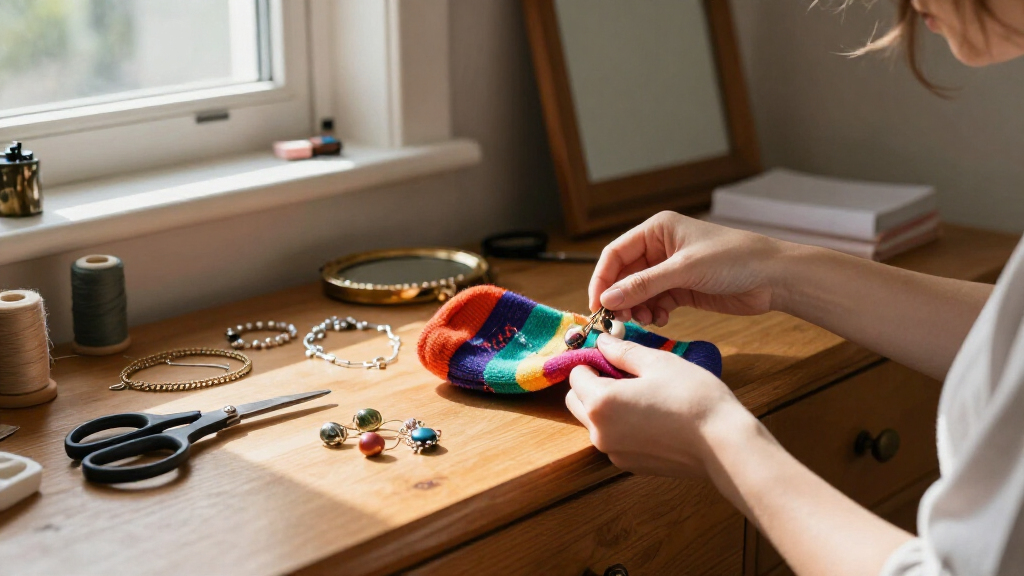
A DIY featured by Hunker shows how to repurpose an old sock into a small bracelet-storage pillow, giving people a way to keep bracelets together without sewing a new organizer. The method, demonstrated by Instagram creator Annie Lynn, uses scissors, fabric scraps and a sock, with an optional small box to hold the finished piece.
The sock’s existing tube shape forms the base of the organizer. Hunker reports that crew-length or longer socks work better than ankle socks, which may not leave enough material to cut and tie. The source also advises choosing a sock without holes, tears or discoloration; a colorful pattern or attractive material can make the finished holder more suitable for display.
In the no-sew method, the maker trims the top of the sock, makes cuts that divide the end into four fabric sections, then fills the tube with scrap fabric or ribbon. The filling should make the pillow firm and evenly shaped rather than floppy. The four sections are tied across the opening in pairs, knotted again to secure them, and trimmed; the knot can be pushed inside the pillow to hide it.
Bracelets can then be slipped around the cylindrical form. Annie Lynn’s example places the pillow in a small wooden box, which can help disguise an uneven tied end and keep the organizer contained. Hunker also suggests a decorated shoebox or another small cardboard box. People who sew can instead stitch the end closed for a neater finish and use the pillow on a vanity, in a drawer or on a counter without a box.
A Small Reuse for Unmatched Socks
The project offers a practical alternative to discarding single or unwanted socks and gives bracelets a defined place instead of leaving them loose in a dish or drawer. Keeping the jewelry on a soft cylindrical holder may also make individual pieces easier to see and reach, although the source does not report testing the organizer or measuring any effect on tangling.
Its materials are ordinary household items: one sock, scraps for filling and scissors. A box is optional, and the article mentions both wooden and cardboard options. That makes the idea adaptable to what a person already has, rather than dependent on buying a purpose-made jewelry stand. Any cost or environmental benefit will depend on whether materials are reused or purchased; the supplied report does not quantify savings or waste avoided.
Products Worth Considering

Samsung Galaxy Tab S10 Lite – 6 GB RAM, 128 GB storage, up to 2 TB microSD, 10.9‑inch LCD, Gray

Samsung Galaxy Tab A11+ 11-Inch Tablet, 6GB RAM, 128GB Storage, Expandable, Gray

DJI Osmo Mobile 7P Smartphone Gimbal Stabilizer with Mic Mini Transmitter, Infinity Black
As an affiliate, we earn on qualifying purchases.
How the Sock Becomes a Holder
Hunker’s report presents the idea as one way to reuse older clothing, particularly socks that have lost their matching pair. The sock replaces the need to measure and sew a separate pillow shape: its tube becomes the bracelet support, while the cut fabric at one end is tied to close it.
The source names a Crafters Square Wooden Box sold at Dollar Tree for $1.25 as one possible container and mentions acrylic wood-stain paint sold there at the same listed price per tube. Those are specific examples in the report, not necessary parts of the method, and availability and prices may change. A shoebox or another small container can serve the same basic purpose.
Limits of the DIY Instructions
The report does not provide measurements for the sock, the amount of filling, or the dimensions of a suitable box. Results will vary with the sock’s length, stretch and thickness, and the article does not establish how securely the ties hold up with repeated use or heavier bracelets. It also does not compare the organizer with commercial storage products or document tested effects on jewelry condition.
The cited Dollar Tree prices reflect the source’s report and may not be current. The supplied material gives no publication date, so the present availability of the named box and paint is unclear. The project itself is a craft suggestion rather than a product announcement or independently evaluated consumer test.
Try the Method With Household Materials
Readers who want to try the idea can begin by selecting a clean, intact crew sock and checking that its length leaves enough material to cut and tie. Use scissors carefully, add scrap fabric gradually until the shape feels firm, and test the pillow with a bracelet before making more. A small box can be added if the tied end needs concealing or the organizer needs to stand upright.
No follow-up testing, scheduled update or product release is identified in the source. The next practical step is simply to adapt the instructions to the materials on hand; people seeking a smoother finish can hand-sew the opening instead of tying it.
Key Questions
What kind of sock works best?
Hunker recommends a crew sock or a longer garment because it provides more material to shape and tie. Ankle socks may be too short. Choose one without holes, rips or discoloration.
Do I need to sew the sock closed?
No. The featured version ties the four cut sections together to close the pillow. Sewing is an optional alternative for people who want a neater end and plan to use the holder without a box.
What can I use to stuff the pillow?
The report suggests scrap fabric or ribbon; it also mentions using other old socks. Add enough filling to create an even, firm cylinder that holds its shape.
Does the project require a wooden box?
No. A wooden box is one option for containing the pillow and hiding the knot. A shoebox or another small cardboard box can work, and a sewn pillow can also sit in a drawer or on a vanity without a container.
Source: hunker.com